Leaders of the future will not be the smartest in the room - they’ll be the most human
Roshni Kavina, National Creative Director, Saatchi & Saatchi India, reflects on how leadership must evolve over the next decade, not just change
 by
by
Published: Mar 26, 2026 8:23 AM | 2 min read
 Follow Us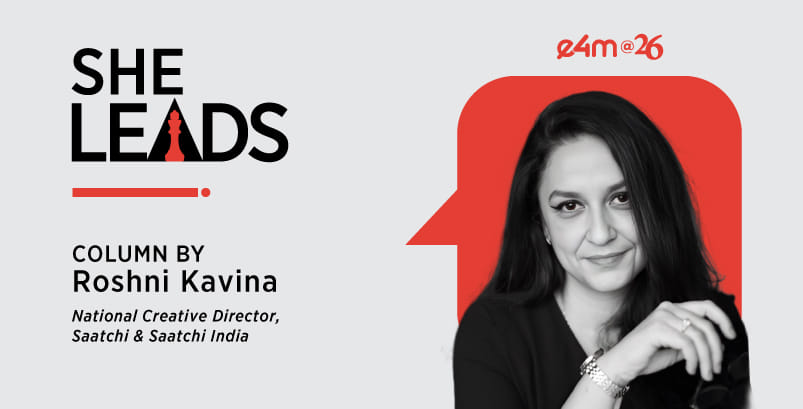

Leadership, to me, has never been about hierarchy, but about humanity. I firmly believe that respect, empathy, and ethics are not “soft skills”; they are, in fact, the foundation of strong, enduring leaders and teams. No designation, title, or age should determine how we treat one another. And hence, as a leader, I see my role as being the biggest cheerleader for my team, someone who creates the right conditions and opportunities for them to grow, succeed, and become the best versions of themselves. Because ultimately, strong teams build strong, future-ready organisations.
As we look towards the next decade, the question is not just how leadership will change, but how it should evolve. AI will not replace leaders, but it will certainly redefine what makes a great one. It will take over repetitive decision-making and data-heavy analysis, and increasingly, many aspects of content creation. This shift will require leaders to move away from transactional roles and instead deepen their focus on emotional intelligence, critical thinking, and intuitive decision-making – areas where human capability still far outweighs machines.
As this revolution unfolds, Gen Z will play the most important role. Fiercely independent and deeply driven by a sense of purpose, they are not satisfied with just doing the work. They want to understand why their work matters. Their relationship with technology allows them to adapt seamlessly and grow alongside AI. Along with the current wave of tactile and physical experiences with an IRL philosophy, Gen Z cannot help but circle back to their comfort zone of being attached to technology. An unstoppable combination if they set their minds to focus.
This is where the current leadership comes in. It can be tough to retain the attention of Gen Z because they don’t work for loyalty, they work for growth; and fair enough, why should they not? They don’t believe in autocracy or hierarchy but understand only equality. It is up to today’s leaders to channel Gen Z’s talents towards purpose-driven goals that will create a new breed of powerful leaders.
In an AI-driven world, empathy will become a competitive advantage. While technology can optimise processes, it cannot replace human connection, trust, and encouragement.
Read more news about Marketing News, Advertising News, PR and Corporate Communication News, Digital News, People Movement News
For more updates, be socially connected with us onInstagram, LinkedIn, Twitter, Facebook, YouTube & Google News