How beverage brands are shaping summer playbooks amid rising demand
Although the category faces regulatory pressures, including a 40% GST on carbonated beverages, brands are focusing on increasing consumption frequency rather than relying solely on penetration
 by
by
Published: Mar 24, 2026 9:59 AM | 7 min read
 Follow Us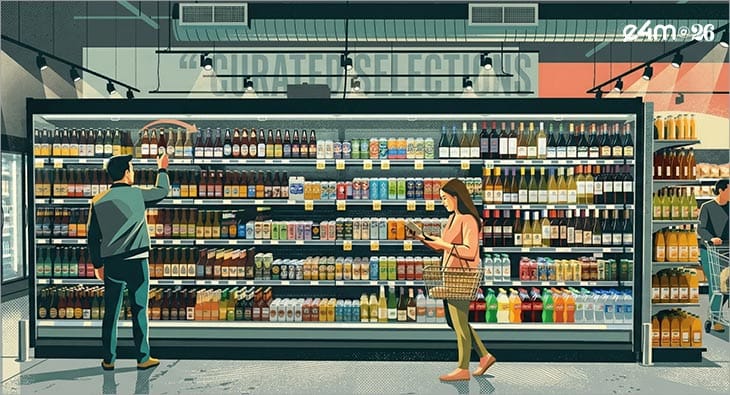

As India heads into what is expected to be a harsher-than-usual summer, the beverage market finds itself at a crucial intersection of opportunity and intensity. Despite being the world’s second-most populous country, India’s per capita soft drink consumption remains significantly lower than that of China and the United States.
According to Systematix Institutional Equities report, the Indian soft drink industry is projected to reach ₹1.4 trillion by 2026-2027, with a 10% growth anticipated in 2026, driven by rising disposable incomes, urbanization, and youth demographics. While carbonated drinks hold a 40–45% market share, per capita consumption remains low, with high growth in healthier, low-sugar, and regional, non-fizz alternatives.
Although the category continues to face regulatory pressures, with GST on carbonated beverages at 40%, brands are betting big on increasing consumption frequency rather than just penetration.
Against this backdrop, the timing of aggressive summer campaigns is no coincidence. The India Meteorological Department has forecast above-normal heatwave days between March and May, particularly across central, eastern and northwestern regions, setting the stage for a high-stakes battle for consumer attention.
Thums Up Sets the Tone with a High-Decibel Anthem
Kicking off the summer race, Thums Up delivered one of the earliest and most talked-about activations of 2026. Reviving its iconic “Aaj Kuch Toofani Karte Hain” anthem, the brand collaborated with Hanumankind and Vishal Dadlani, blending raw hip-hop energy with mainstream appeal to reconnect with today’s youth.
By amplifying the campaign during the India, Pakistan clash at the ICC Men's T20 World Cup, the brand extended its presence beyond screens into a live, emotionally charged environment. The move underlined a larger shift—from passive consumption to immersive brand experiences.
Greishma Singh, Vice President, Marketing at Coca-Cola India and Southwest Asia, said, “Young consumers are increasingly moving from passive viewership to active participation. They seek moments that pull them in, move fast, and feel real. That belief has shaped the ‘Taste the Thunder’ anthem. ‘Aaj Kuch Toofani Karte Hain’ is a shout out for shared energy, friends coming together, instinct kicking in. All things Toofani!”
Sukesh Nayak, Chief Creative Officer at Ogilvy India, added, “Today’s youth aren't just spectators, they are the main event. They crave experiences that are fast, visceral, and unapologetically real. This hunger for action is the pulse of the ‘Taste the Thunder’ anthem. ‘Aaj Kuch Toofani Karte Hain’ is not just a tagline, it is a rallying cry for shared adrenaline, instinctive moves, and the raw energy of friendship.”
Pepsi Leans into Gen Z Culture with New-Age Faces
Meanwhile, Pepsi is doubling down on youth culture with its collaboration featuring Ahaan Panday and Aneet Padda. Rather than opting for a traditional reveal, the brand created intrigue through a “biggest trailer yet” teaser, sparking curiosity and conversation across digital platforms.
Mohak Bhatia, Brand Lead, Pepsi Cola at PepsiCo India, said, “Pepsi has always partnered with gen-next talent who shape youth culture rather than simply reflect it. We wanted to break through the noise and flipping the script felt like the freshest way to shake up the feed. Ahaan and Aneet bring an effortless, unfiltered chemistry that reflects the unapologetic spirit of Pepsi.”
View this post on Instagram
A spokesperson from PepsiCo India added, “As temperatures soar across India, we are well positioned to cater to rising demand with refreshing choices for every taste and occasion. We have also rolled out a robust lineup of campaigns across brands, with Pepsi driving engagement through new ambassadors Ahaan Panday and Aneet Padda, while 7UP sharpens its ‘super-duper refreshment’ proposition for peak summer moments. Alongside this, we continue to strengthen our innovation pipeline with launches such as Adrenaline Rush, as we look to build meaningful consumer connections through culturally relevant storytelling.”
Nostalgia Meets Local Flavour with Jeera
While some brands chase newness, others are tapping into memory. Coca-Cola India’s relaunch of RimZim Jeera leans into nostalgia while aligning with the growing demand for local, flavour-led beverages.
Backed by a 360-degree campaign and priced accessibly, the brand is attempting to bridge generational gaps, reconnecting with older consumers while introducing the product to younger audiences. Moreover, its full-funnel approach across digital, influencer, outdoor and in-store channels signals a clear intent to drive both recall and conversion.
In contrast to high-decibel campaigns, Lahori Zeera is taking a more grounded route. After the success of its previous campaign, the brand is doubling down on retail visibility and distribution strength.
Nikhil Doda, Co-Founder & Chief Operating Officer of Lahori Zeera said, "this year’s summer push comes with added complexity. With fluctuating market conditions, evolving consumer sentiment, and rising competition from both global and regional players, the industry is far more dynamic than ever before. Almost every player, including legacy brands, is adapting rapidly through new product launches, revised pricing strategies, and more accessible SKUs to drive volume and reach.
For us, the approach remains grounded in simplicity and consistency. Rather than dramatically shifting gears, we are staying true to our core ethos and focusing on executing fundamentals exceptionally well. Our priority this season is aggressive on-ground expansion, enhancing retail visibility by increasing shelf presence, widening outlet coverage, and strengthening our footprint across modern trade and institutional channels.
From a marketing standpoint, we believe in being precise and effective. A significant portion of our media investment is directed toward in-store and in-shop branding, ensuring visibility at the most critical moment, where the consumer makes a purchase decision.
While we do invest selectively in high-impact platforms like our association with Shark Tank India, we are clear that such spends are aimed at long-term brand building rather than immediate ROI. Ultimately, in a crowded market, we believe consistency, sharp execution, and strong on-ground presence will drive meaningful differentiation and sustained growth.”
The company also acknowledges that while below-the-line efforts can drive immediate sales, above-the-line spends serve as long-term brand-building tools.
Sprite, Fanta Influencer Playbook: From Being Seen to Being Shared
While celebrity-led campaigns and nostalgia plays dominate the top funnel, influencer marketing is emerging as a powerful mid-to-bottom funnel driver.
Fanta, for instance, tapped into the festive momentum of Holi with a creator-first strategy, flooding social media with bite-sized, high-energy content. Instead of a single hero film, the brand relied on multiple creators to localise storytelling and drive relatability.
View this post on Instagram
Similarly, Sprite adopted a digital-first approach by pairing Samay Raina with Sahiba Bali. Built around “Sahi se cool down kar,” the campaign uses humour, chaos and even horror-inspired scenarios to mirror the tone of short-form content. Conceptualised by Ogilvy India, it deliberately trades polish for authenticity, making the content feel native to platform behaviour.
View this post on Instagram
This strategy builds on earlier successes. Pepsi’s collaboration with Yashraj Mukhate had already demonstrated how meme-driven, music-led content can transform brand messaging into viral cultural currency.
Together, these approaches underline a clear shift. Influencer marketing is no longer an add-on but a core pillar—helping brands move from visibility to virality, and ultimately, to purchase.
View this post on Instagram
Global Push
Beyond the domestic battlefield, brands are also scaling globally. STING Energy, for instance, expanded into China ahead of the Formula 1 Chinese Grand Prix 2026, introducing a new “energising CSD” category.
Through immersive fan experiences and strategic partnerships, the brand is blending functional benefits with entertainment-led marketing to appeal to younger consumers.
Weiwei Yao, President of International Beverages Franchise and CEO of Greater China Beverages at PepsiCo, said, “We are marking a significant milestone with the official launch of STING® in China as we celebrate 45 years of PepsiCo in the market. As one of the fastest-growing beverage brands globally, STING brings strong international credentials while leveraging deep local insights to introduce a new ‘energising CSD’ category tailored for China’s young consumers,”
As the mercury rises, so does the intensity of competition. Although campaigns are becoming louder, sharper and more culturally embedded, the real question remains unchanged, what truly drives a consumer to pick one bottle over another at the shelf?
While Thums Up bets on cultural scale, Pepsi leans into Gen Z relatability, Coca-Cola taps nostalgia, and Lahori Zeera focuses on retail muscle, influencer-led campaigns are quietly bridging the gap between discovery and decision.
Read more news about Marketing News, Advertising News, PR and Corporate Communication News, Digital News, People Movement News
For more updates, be socially connected with us onInstagram, LinkedIn, Twitter, Facebook, YouTube & Google News
