India is the most important market for us: Ravi Kunwar, HMD Nokia
Ravi Kunwar, VP and CEO, HMD India, APAC and ANZ, says HMD is rolling out a 360-degree marketing approach that combines digital marketing with traditional media and on-ground activations
 by
by
Published: Apr 17, 2026 8:53 AM | 5 min read
 Follow Us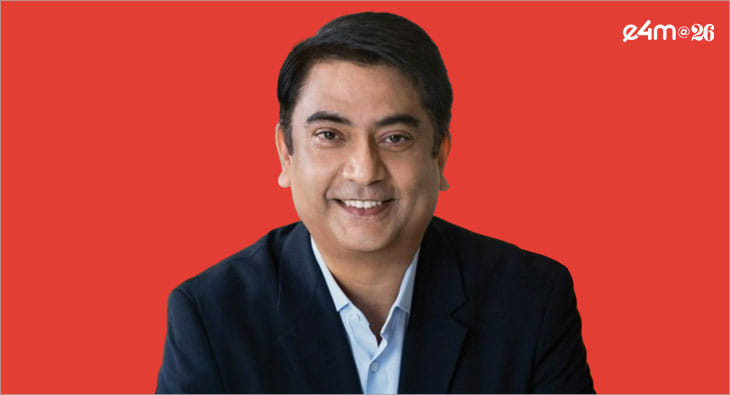

As HMD scales its presence in India, the company is positioning itself around trust, accessibility and mass-market innovation, even as it navigates a highly competitive smartphone landscape dominated by global players.
India, according to Ravi Kunwar, VP and CEO, HMD India, APAC and ANZ, is central to the company’s global ambitions, not just as a large consumer market but as a strategic hub for product development, manufacturing and exports.
“India is the most important market for us. We are increasingly following an India-first approach across product design, supply chain and innovation,” Kunwar said.
The company is also leveraging India as a base to export devices to regions such as the Middle East and Africa, further strengthening its role within HMD’s global ecosystem.
Feature phones v/s smartphones
Despite the industry’s smartphone focus, HMD continues to see strong opportunity in feature phones, particularly in non-metro markets.
The segment accounts for around 60 million units annually, driven by a large base of users in smaller towns and rural areas, including over 200 million 2G subscribers.
Innovation is also reshaping the category, particularly through AI integrations and digital capabilities such as UPI. Through its partnership with Sarvam AI, the company is enabling AI-powered interactions in 13 Indian languages on entry-level devices. This expands the role of feature phones beyond basic communication to more functional use cases such as accessing government schemes, farming information and insurance support, in line with its broader push to democratise technology.
“No one imagines AI on a Rs 1,000 phone, but that is the direction we are taking - making technology accessible to everyone,” Kunwar said, underscoring the brand’s focus on democratising technology.
On the smartphone side, HMD is navigating a more complex landscape. While long-term growth remains intact, short-term momentum may soften due to memory and chip shortages, as well as rising prices.
Brand play
HMD is leveraging Nokia’s longstanding trust equity while building its own identity around authenticity, trust and human-centric innovation, with a focus on sustainability and repairability.
“Trust and authenticity are critical. Trust is built over time through product quality, after-sales service and overall consumer experience,” Kunwar said.
The company’s positioning is anchored in its “human mobile devices” philosophy, with a focus on meaningful technology use.
“We are human-first. The idea is to create technology that is relatable and useful for people,” he added.
Nokia’s nostalgic value continues to linger strongly in India, where the brand is still associated with durability, simplicity and a time when mobile phones felt more personal. That emotional recall gives HMD a distinct advantage, especially among consumers who grew up with the brand. The larger question, however, is whether that nostalgia can be translated into renewed relevance in today’s smartphone-first market. HMD’s current strategy suggests an attempt to bridge that gap by pairing legacy trust with contemporary features and design, effectively testing whether nostalgia can evolve into active consideration rather than just memory.
Strategy
HMD’s smartphone strategy is closely aligned with evolving consumer expectations, especially among Gen Z and millennials who prioritise personalisation and self-expression.
The company has undertaken extensive consumer research and focus group discussions to understand how younger audiences engage with smartphones, from content consumption habits to design preferences.
“Every individual today wants a phone that reflects their personality. From colours and materials to camera design, we have built products keeping these emotional and functional needs in mind,” Kunwar noted.
This focus on individuality is also reflected in the broader brand narrative, which aims to position devices not just as utility products but as extensions of personal identity.
Media mix and spends
To support its expanding portfolio, HMD is rolling out a 360-degree marketing approach that combines digital performance marketing with traditional media and on-ground activations.
Campaigns for smartphones lean more heavily on digital, OTT and e-commerce integrations, while feature phone marketing relies on print, radio and hyperlocal outreach to reach mass audiences.
The company is strengthening its offline presence through retail visibility and in-shop branding, while simultaneously scaling its digital footprint via HMD.com. It is also leveraging sports marketing, including its association with the Rajasthan Royals, to drive mass visibility.
Kunwar further emphasised that India will continue to see sustained marketing investments as the brand scales.
“Marketing dollars are never enough in this category, but we will continue to invest to build the brand,” he said.
As part of its effort to build cultural relevance, HMD has onboarded actor Raghav Juyal as brand ambassador, aligning with its focus on authenticity and relatability.
Kunwar said Juyal’s journey and versatility reflect the brand’s own evolution, making him a natural fit for its youth-focused positioning.
For Juyal, the association is rooted in shared values of individuality.
“I’m a 90s kid, and back then everyone had their own style and their own phone. That individuality is something I connect with,” he said.
He added that relatability, rather than stardom, defines both his journey and the brand’s appeal.
Juyal said, “A star is made by their journey. People have seen where I come from, and that’s what makes you relatable.”
Distribution scale and non-metro demand drive growth
HMD’s growth strategy is underpinned by its extensive distribution network, which spans over 120,000 retail outlets across India, alongside a growing presence on e-commerce and quick commerce platforms.
The company is seeing strong traction from smaller towns, particularly in the Rs 10,000–15,000 smartphone segment, driven by increased digital adoption and wider access through online platforms.
While feature phone demand remains heavily skewed towards non-metro markets, smartphones are witnessing a more balanced uptake across both urban and emerging regions.
As HMD strengthens its foothold in India, its strategy reflects a dual focus on mass accessibility and aspirational relevance. By combining feature phone innovation, smartphone expansion, deep distribution and a trust-led brand narrative, the company is positioning itself to compete across segments, while betting on India as both a growth engine and innovation hub for its global ambitions.
Read more news about Marketing News, Advertising News, PR and Corporate Communication News, Digital News, People Movement News
For more updates, be socially connected with us onInstagram, LinkedIn, Twitter, Facebook, YouTube & Google News