Blue Star summer marketing playbook: Not IPL, but 50% digital media, says Girish Hingorani
Girish Hingorani, VP – Marketing (Consumer Products) & Corporate Comms at Blue Star, on how shifting media dynamics and unpredictable demand patterns have prompted a rethink of the company’s strategy
 by
by
Published: Apr 10, 2026 9:40 AM | 5 min read
 Follow Us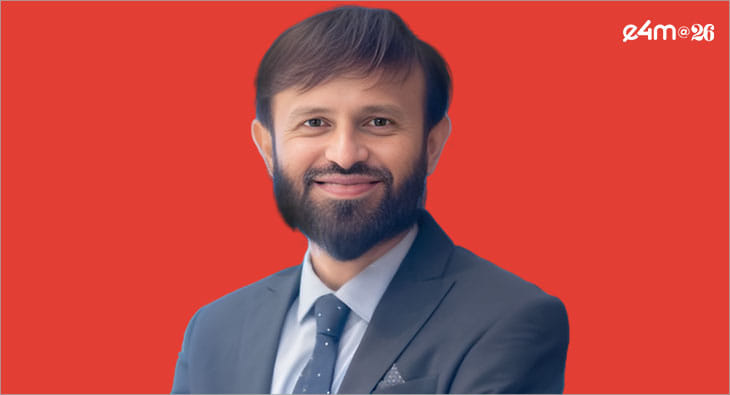

Blue Star has opted out of the Indian Premier League (IPL) this season, redirecting a significant portion of its advertising budget to digital platforms, as learnings from its 2024 IPL investments exposed key challenges around measurement, flexibility, and ROI.
The move marks a strategic shift for the air-conditioning major, which has traditionally relied on IPL as a high-impact summer advertising vehicle. However, changing media dynamics and unpredictable demand patterns have prompted a rethink.
Girish Hingorani, Vice President – Marketing (Consumer Products) & Corporate Communications, Blue Star Limited, said, “IPL used to be a big part of our media mix. Nearly 70% of our summer spend was going there. The company’s total annual advertising outlay stands at around ₹60 crore, of which nearly ₹40 crore is deployed during the summer, its most critical sales period, contributing close to two-thirds of annual demand."
According to Hingorani, the key learning from 2024 was the growing fragmentation of IPL viewership across platforms.
This has been exacerbated by a shift in how CTV inventory is sold. Earlier, advertisers could buy fixed-duration ad spots, ensuring predictable exposure.
“CTV was sold as a 10-second slot earlier, similar to linear TV. That gave us certainty, if the ad played, viewers would see it,” he said.
However, the transition to a cost-per-impression (CPM) model has changed the equation.
For Blue Star, which is in a category where repeated exposure during peak demand is critical, Hingorani said, “You cannot switch campaigns on or off during IPL. If there are external disruptions like unseasonal rains, your investments continue regardless,” he said.
This became particularly relevant last year, when erratic weather conditions impacted cooling demand, limiting the effectiveness of large-scale media spends. Air conditioners remain a sharply seasonal category, with demand closely tied to temperature spikes.
“Roughly 66% of our sales happen during peak summer. Heat is the trigger, we see spikes when temperatures go beyond 40°C during the day and 25°C at night,” Hingorani said. “We need to be visible exactly at that moment,” he added.
Digital offers agility and efficiency
These learnings have led Blue Star to prioritise digital media, which now accounts for nearly 50% of its summer advertising budget.
Digital platforms, particularly video, offer the flexibility that IPL lacks. Campaigns can be activated or paused in real time, aligned with weather patterns and regional demand fluctuations.
“With digital, we can switch campaigns on and off, optimise in real time, and tailor messaging geographically. That’s critical for a seasonal category like ours,” Hingorani said.
YouTube forms the backbone of this strategy, accounting for nearly 70% of digital spends, supported by display and influencer-led campaigns. The brand has invested in one ambassador, Virat Kohli, since 2019.
Beyond flexibility, cost efficiency is another advantage.
“At a CPM level, digital is significantly more cost-effective for the same target group compared to traditional channels,” he added.
Television continues to play a role, with a large share allocated to general entertainment channels, news, and free-to-air movie platforms, while out-of-home (OOH) is used selectively.
The shift in media mix also aligns with Blue Star’s focus on expanding beyond metros. With AC penetration still low, around 35 million households out of 350 million, the next phase of growth is expected from smaller towns.
“The opportunity lies in Tier 2 and Tier 3 and beyond, where a large set of first-time buyers will come from over the next few years,” Hingorani said.
To address this, the company is tailoring its communication for two key consumer segments. First-time buyers prioritise performance and value, while repeat buyers look for premium features such as smart connectivity and AI-driven cooling.
The brand is also reusing its Virat Kohli-led ‘Garmi Ki Chhutti’ campaign from last year, whose visibility was limited due to unseasonal rains, and amplifying it through digital channels this season.
While brand-building spends remain concentrated in the summer, Blue Star continues to invest in performance marketing throughout the year, allocating 20–25% of its budget to e-commerce platforms such as Amazon and Flipkart.
“These are in-market consumers actively looking to buy, even outside the peak season,” Hingorani said.
As the company targets a market share increase from 14.3% to 15% by FY27, its media strategy is becoming more aligned with measurable outcomes rather than scale alone.
Blue Star has expanded its residential portfolio with the launch of a comprehensive range of 125 new room air conditioner models, marking one of its most extensive product rollouts to date.
A key highlight of this lineup is the introduction of the premium ‘Iconia’ series of split air conditioners, designed to blend performance with aesthetics. Featuring an elegant Midnight Silver finish, the range is positioned to appeal to discerning consumers seeking both advanced cooling and a more sophisticated, modern design language.
When asked about the absence of a new campaign for the flagship range, Hingorani said the product primarily targets consumers already familiar with the brand who are likely to be repeat buyers. Positioned as a premium offering, the range benefits from strong existing brand awareness, reducing the need for a separate, large-scale campaign.
The broader AC industry is expected to grow robustly; however, increasing volatility driven by weather, war and input costs makes agility a key differentiator.
For Blue Star, the decision to skip IPL this year reflects a larger shift in thinking.
“The focus is on being present when demand peaks and ensuring every rupee spent delivers value,” Hingorani said, underscoring a move from high-visibility advertising to high-efficiency marketing.
Read more news about Marketing News, Advertising News, PR and Corporate Communication News, Digital News, People Movement News
For more updates, be socially connected with us onInstagram, LinkedIn, Twitter, Facebook, YouTube & Google News