‘If the product isn’t right, no amount of marketing can save it’
At the e4m D2C Revolution Summit 3.0, industry leaders shared insights on mastering digital marketing for D2C success
 by
by
Published: Sep 20, 2024 1:29 PM | 4 min read
 Follow Us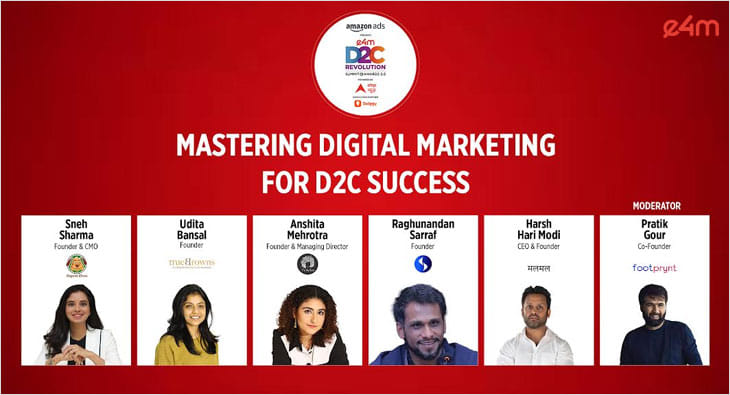

“In today’s digital landscape, personal touch plays a crucial role in how brands market themselves online,” said Pratik Gour, Co-Founder of Footprynt, in his opening remarks at the e4m D2C Revolution Summit and Awards 3.0.
“Personal touch has gotten to the point where your audience becomes your real-life influencer, marketing your product for you and also paying for it. It’s a brand’s dream that only a few have been able to achieve.”
To explore this further, Gour introduced a panel of founders who have successfully built brands where customers are among their biggest promoters, online and offline. The panel discussed how they built customer loyalty using digital marketing.
Sneh Sharma, Founder and CMO, Dogsee Chew, shared Dogsee Chew’s journey in disrupting the pet care industry with healthy, nutritious treats. “Around 10 years ago, we were one of the initial brands in this category. There was no established trajectory to guide us,” she said, explaining how they had to reinvent the wheel. Sharma highlighted the unregulated nature of the industry at the time, where raw hides and other by-products were sold as dog treats. Dogsee Chew wanted to change this, introducing healthier alternatives like Churpi, a high-protein Himalayan Yak chew.
Sharma emphasized the importance of a quality product: “No amount of good marketing can help you succeed if your product itself is not good.” Dogsee Chew first gained credibility in international markets before earning the trust of Indian consumers. Sharma credited online platforms like Amazon and methods such as A/B testing, influencer marketing, testimonials, and SEO optimization for their promotional success.
Udita Bansal, Founder, TrueBrowns echoed Sharma’s sentiment, emphasizing the role of product quality in TrueBrowns’ success. “If your product is not right, no amount of digital marketing will work for you,” she said. TrueBrowns positioned itself as a brand offering “Urban Ethnic Wear” that resonates with modern, independent women.
Bansal emphasized the importance of clear communication in their digital marketing efforts, which focused on storytelling to build a strong brand-consumer relationship. Influencer marketing has been a key driver for TrueBrowns, but Bansal stressed the need to collaborate with the right influencers who align with the brand's message.
Anshita Mehrotra, Founder and MD, Fix My Curls, commented that influencer marketing is at the core of their strategy. Anshita Mehrotra explained how they carefully select influencers who represent their target customer personas. “It’s easy to find people with curly hair but it’s not easy to find someone who resembles the customer persona you’re chasing after,” she noted. Fix My Curls uses three types of influencers: relatable customers, hair care experts, and mega influencers for outreach.
Mehrotra underscored the importance of authenticity and relatability in influencer marketing, noting that smaller influencers with under 400k followers are often more effective because their audience is less fragmented.
Raghunandan Saraf, Founder, Saraf Furniture discussed the role of data in Saraf Furniture’s digital marketing strategy. The brand’s focus on wooden furniture and its longevity is matched by a marketing strategy that targets key pain points consumers face with other materials like plywood. Saraf shared how their marketing becomes more aggressive during the monsoon season, highlighting their product’s resilience against common issues like creaking.
He advised new consumer brands to focus on both consumer behavior and product data to craft effective digital strategies. “We tried to incorporate ads placements at times when consumers would be most likely to pay attention,” Saraf explained.
Harsh Hari Modi, CEO and Founder, Mulmul, said that the challenge lay in offering ethnic wear that appeals to different customers with diverse perspectives. Harsh Modi emphasized the technical expertise behind their in-house production of specialized fabrics and how it differentiates Mulmul in the market. The brand’s size-inclusive range and quick delivery times also set them apart from competitors.
Modi pointed out that Mulmul doesn’t pay celebrities to endorse their products; instead, they focus on delivering high-quality garments that celebrities purchase on their own. “Our product is a good quality, comfortable and pleasing garment that we don’t pay any celebrities for,” he stated, reinforcing the importance of product credibility in building a loyal customer base.
Throughout the panel, a common theme emerged: the product must be of high quality before any digital marketing efforts can succeed. From influencer marketing to leveraging data and consumer behaviour, each founder shared how they’ve navigated the digital marketing ecosystem to build lasting customer loyalty. As Pratik Gour concluded, mastering digital marketing in the D2C space is about understanding the customer, staying authentic, and consistently delivering value through both the product and the brand’s story.
Read more news about Marketing News, Advertising News, PR and Corporate Communication News, Digital News, People Movement News
For more updates, be socially connected with us onInstagram, LinkedIn, Twitter, Facebook, YouTube & Google News