Cleartrip is all about data: Govind Bansal, Head of Brand Marketing
In a chat with e4m, Cleartrip’s Govind Bansal shared how the brand is using AI and customer-first strategies to boost growth and ease pain points in India’s fast-growing travel market
 by
by
Published: Sep 23, 2025 9:32 AM | 7 min read
 Follow Us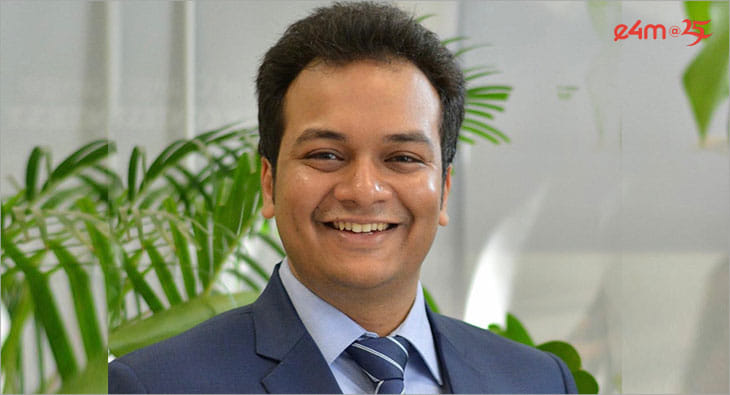

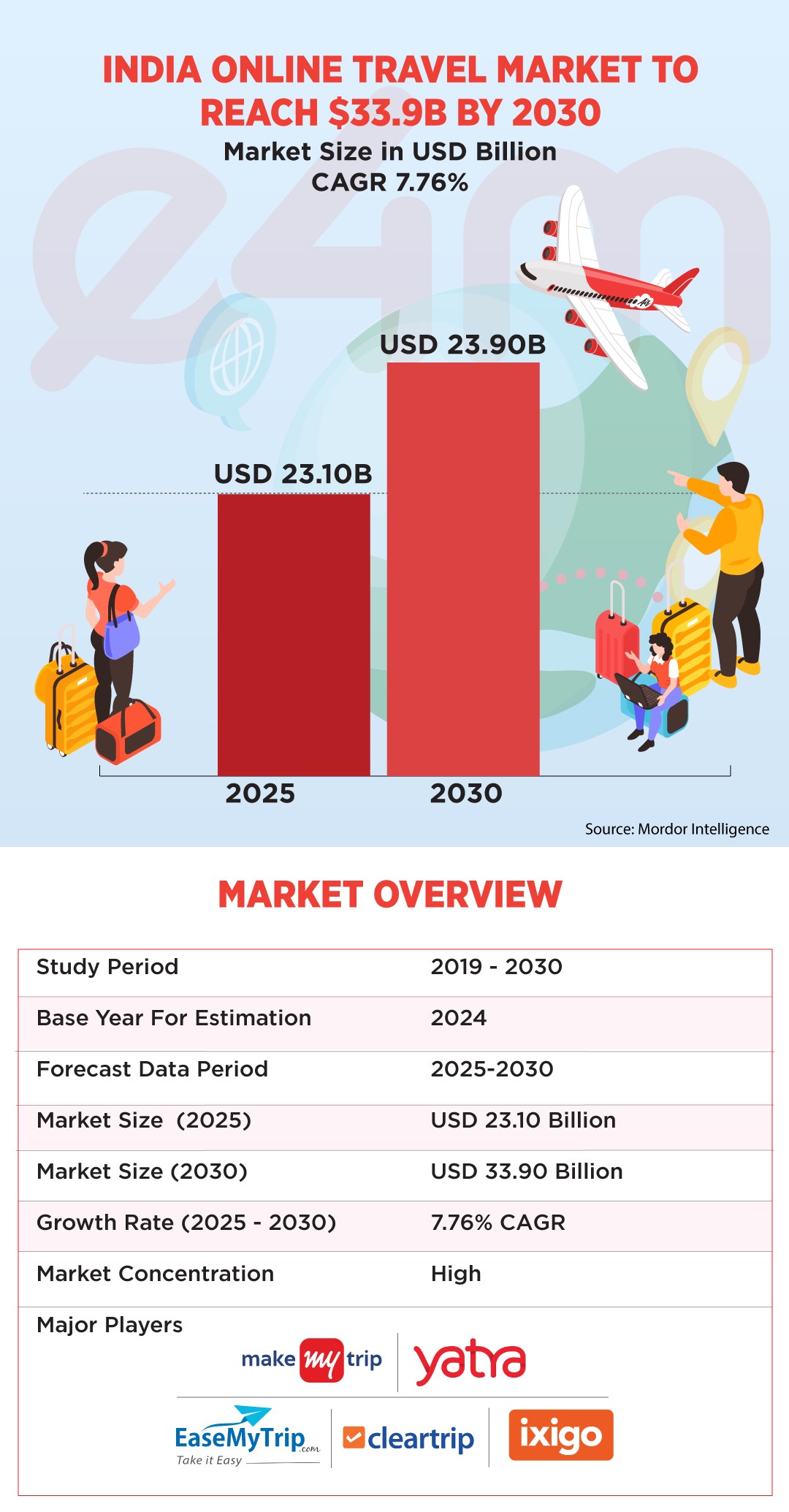
Despite recent headwinds such as inflationary pressures, fluctuating airfares, and geopolitical uncertainties impacting global travel sentiment, India’s online travel market has continued on a steady growth trajectory. Consumer sentiment has remained positive, on the back of disposable incomes, deeper smartphone penetration, and a strong shift towards mobile-first, digital bookings. According to Mordor Intelligence, the market is expected to reach $33.9 billion by 2030, with players like MakeMyTrip, EaseMyTrip, Ixigo, Cleartrip, and Yatra leading the space.
Interestingly, within this competitive landscape, Cleartrip has secured the second spot among OTAs, growing at 3X the industry average over the last 12–18 months. Known for its attractive discounts, the platform’s verticals are firing on all fronts. As per the company, flights remain at its core with 16% YoY growth, hotels have broken out with 3.8X growth in the past year, and MICE bookings have tripled since launch.
Flipkart owned Cleartrip has positioned itself as a one-stop digital travel platform, offering everything from flights and hotels to holiday packages, activities, and insurance add-ons. Today, it boasts 50 million+ app downloads, 25 million+ travellers served, and a strong B2B network with 20,000+ agents and 4,000+ enterprises onboarded.
Read More: We have an ambitious vision on growth; building awareness & consideration: Cleartrip
One of the key drivers of this momentum has been its focus on new-age marketing strategies, conversational commerce, AI for smarter booking journeys, and rolling out customer-first features like Visa Denial Cover. Adding further thrust to this is the recent appointment of Govind Bansal as Head of Brand Marketing, who steps in at a time when travel marketing is being reshaped by technology and evolving consumer expectations.
In an exclusive conversation with e4m, Bansal spoke about Cleartrip’s recent marketing strategies, its customer-first philosophy, AI- and mobile-first playbook, and more.
Turning pain points into opportunities
Since taking charge as Head of Brand Marketing, Bansal has been sharpening Cleartrip’s focus on addressing consumer pain points with sharper and more empathetic solutions. He believes that while the number of “new-to-digital” travellers has slowed, existing users are transacting more frequently and are responding positively to advanced features designed to make travel hassle-free.
“We realised customers face niche but very real problems. For example, travellers usually book tickets before applying for a visa, and if the visa gets rejected, the money is gone. To solve this, we launched a free visa denial cover, an industry-first move that addresses a key anxiety point,” Bansal told e4m.
He added that just like this, many other recent initiatives of Cleartrip are shaped directly by consumer feedback and a close observation of travel anxieties. For instance, he added, on low-cost carriers where add-ons like meals and seat selection have become paid, Cleartrip offers free meal or free seat options—especially for festive season.
To address concerns around fluctuating fares and cancellations, the brand has also introduced a seat upgrade feature, which allows customers to pay a nominal fee (around ₹100) and get up to three reschedules or, in some cases, cancellations, this as per Bansal significantly helps easing price and cancellation anxiety.
Another initiative is the Child Flies Free campaign, where children under 12 can travel free with a parent’s booking during festive periods. According to Bansal, this offer has consistently generated strong emotional resonance, “Whenever a family grows, there’s obviously financial pressure. That’s where our Child Flies Free offer has struck a chord, parents see real value in it, and we have always received a lot of positive feedback.”
Read More: ‘Cleartrip focusing on emotional connections, stories instead of just promoting offers’
Cleartrip’s digital-first, video-heavy media mix
Cleartrip has deliberately adopted a digital-first media strategy, with nearly 99% of its spends directed towards digital platforms. According to Bansal, television advertising is “a large hammer” that doesn’t align with the brand’s precision-first approach. Instead, Cleartrip leans on digital segmentation — slicing audiences by geography, behaviour, interests, and even device type.
Its campaigns are designed in modular formats so that they can be sliced into different edits: 6-second cut downs for YouTube pre-rolls, 15-second reels for Instagram, and 30-second storytelling cuts for YouTube or OTT. This ensures Cleartrip’s message of affordable, everyday travel stays consistent while avoiding fatigue, he added.
Influencer marketing has also been re-engineered. He mentioned, instead of chasing follower counts, Cleartrip treats influencers as content creators and then scales their content through paid amplification. “We treat influencer work as platform-native assets and put media money behind them so that they deliver both engagement and scale.”
Though the brand is almost 100% digital, it keeps <5% of its budget for tactical offline activations like metro station takeovers, outdoor hoardings, and print inserts. This strategy has also helped the OTA to expand reach among affluent urban travellers and first-time online bookers in Tier II/III markets.
Building on its video-first approach, the brand has also launched two festive campaigns for its Big Billion Days recently. Rather than glossy escapism, the films focus on exaggerated yet familiar family dynamics, everyday annoyances, and humour. “This festive campaign is about making travel more accessible, rewarding, and worry-free for customers. Our immediate goal is to provide significant savings and convenience so that more people can confidently plan their festive trips, whether it’s a last-minute getaway or a long-awaited family holiday,” he said. Short-format storytelling, influencer collaborations, and interactive content have brought the campaigns to life digitally.
Cleartrip’s real-time marketing advantage
Beyond media choices, Cleartrip is investing heavily in AI and predictive analytics to anticipate travel demand and personalise marketing in real time. “Cleartrip is all about data. We look at industry-wide trends, our own user signals, and supplier-side shifts, but the real power is in making these insights actionable instantly,” Bansal explained.
Instead of waiting to react to broad seasonal peaks, its engine continuously scans for micro-triggers. For example, when an IPL or cricket match is suddenly announced in a city, the system detects the surge in related bookings and instantly switches to hyper-personalised ads. Instead of a generic promotion like “Fly from Bangalore to Thailand,” travellers see specific ads such as “Book your Bangalore–Agartala trip now.” This predictive, machine learning-led targeting, as per Bansal, ensures sharper conversions and keeps campaigns hyper-relevant.
By combining AI-driven agility with its digital-first creative playbook, Cleartrip has built a marketing model that is both performance-oriented and brand-building, designed to resonate with GenZ travellers, millennial families, and the fast-digitising audiences in smaller cities alike.
He also highlighted Cleartrip’s growing reliance on creative automation, which has transformed the way the brand approaches advertising. Instead of relying on generic, one-size-fits-all messaging, Cleartrip now uses data signals to generate hyper-personalised creatives in real time. For example, if a user has been searching for flights between Delhi and Bangalore, they are shown an ad that says, “Delhi–Bangalore from ₹5,233,” making the offer immediately relevant and actionable. “Early experiments with automated creative generation have delivered 40–50% higher ad performance compared to traditional campaigns. Click-through rates are sharper, conversion intent is higher, and the overall cost of acquisition has reduced,” Bansal added.
Cleartrip’s approach to growth and distinction
According to Bansal, Cleartrip’s biggest differentiator has been its sharp efficiency in marketing spends. Unlike competitors that spread budgets thin, Cleartrip takes a “no spray-and-pray” approach, optimising every rupee across both performance and brand channels. This disciplined, data-driven execution has also helped the OTA grow 3–4X faster than industry trends, with FY24 revenues reportedly jumping to 69% YoY to ₹217 crore.
Going forward, the OTA is expanding beyond its core flights vertical and is putting greater energy into buses, holiday packages, and other new lines of business, with the larger goal of becoming India’s one-stop digital travel platform within Flipkart’s ecosystem.
A key part of Cleartrip’s expansion strategy going forward is its investment in AI-first advertisements. By using AI to automate creative generation, ad targeting, and real-time personalisation, the OTA aims to run campaigns at scale with speed and relevance. Bansal explained that not all AI-driven ads are consumer-facing yet; many are used behind the scenes to optimise campaign performance and day-to-day operations, such as streamlining hotel video content or producing modular ad edits. These AI tools improve efficiency and allow Cleartrip to scale marketing across multiple travel verticals, geographies, and customer segments, making expansion more strategic and manageable.
Read more news about Marketing News, Advertising News, PR and Corporate Communication News, Digital News, People Movement News
For more updates, be socially connected with us onInstagram, LinkedIn, Twitter, Facebook, YouTube & Google News