Taking India Habitat Centre Back to Its Core Purpose is the Vision- Prof. K.G. Suresh
Media is a mission for social change, not a tool for sensationalism or agenda setting, says the veteran media educator in an exclusive conversation with Samachar4Media.
 by
by
Published: May 24, 2025 3:10 PM | 9 min read
 Follow Us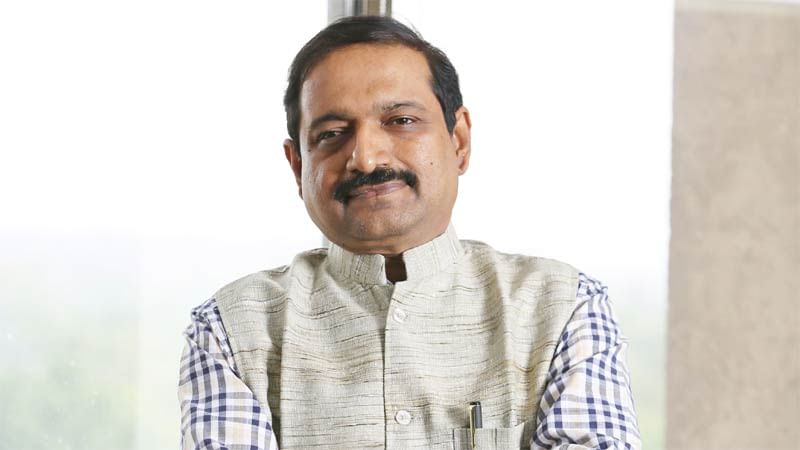

Renowned media educator, communication expert, and now the Director of India Habitat Centre (IHC), Prof. (Dr.) K.G. Suresh recently shared his insights with Samachar4Media in an exclusive interview. In a candid conversation held at IHC’s campus in Delhi, Prof. Suresh reflected on his new role, the changing media landscape, cultural leadership, and the importance of national consciousness. Here are key excerpts from the discussion:
Congratulations on your new role as Director of India Habitat Centre. How is this responsibility different from your previous roles?
Thank you very much. This role is quite distinct from my previous responsibilities, which is precisely what makes it exciting. My career has included journalism, heading the Indian Institute of Mass Communication (IIMC), and serving as Vice Chancellor of Makhanlal Chaturvedi University. Now, I lead an intellectual and cultural institution. Each role has offered me new perspectives and challenges, enriching my experience. India Habitat Centre is a platform where intellectual discourse, cultural preservation, and social change intersect. It offers a unique opportunity to blend my experiences in journalism and education to create something impactful.
You’ve handled diverse roles with ease. How have those experiences shaped your current role?
The credit goes to my journey in journalism. As a journalist, I travelled widely and interacted with people from all walks of life, from the poor to the elite, intellectuals to politicians. This gave me deep insight into society's complexities and diversity, instilling confidence and adaptability. From reporting on crime to covering the Prime Minister’s Office, I learned to understand both grassroots realities and policy-making. Teaching at Delhi University, IIMC, and Makhanlal University further prepared me for educational and administrative responsibilities. These experiences now form the foundation of my role at IHC, where I aim to foster intellectual dialogue and cultural initiatives while catering to over 9,000 members.
How did your interest in education and administration evolve?
I began as a journalist. Initially, teaching was a way to supplement income. But over time, I found deep joy in it, shaping young minds and engaging with their ideas. My administrative experience came through roles like Senior Consulting Editor at Doordarshan and later as Director General of IIMC. I believe that a good communicator naturally becomes an effective administrator. Communication is the key to solving problems, between people, communities, and nations. This belief, rooted in journalism, has informed my administrative roles.
Do you still identify primarily as a journalist?
Absolutely. My core identity remains that of a journalist. When I was appointed DG of IIMC, many newspapers highlighted my background as a former PTI journalist. That was a matter of pride. Journalism gave me a lens to understand society and the ability to present complex issues simply. Whether in education, administration, or other fields, the journalist in me remains active, committed to truth and societal responsibility.
Which of your many roles did you enjoy the most?
It’s hard to say, each role had its unique rewards. In journalism, I travelled the world, learned something new every day, and experienced life at its most dynamic. Teaching brought the joy of inspiring the youth. Administration allowed me to bring about larger changes. Now at IHC, I’m part of intellectual and cultural innovation. Every role has taught me something new, which has been the greatest joy of all.
What is your vision for India Habitat Centre?
IHC is a unique institution in Lutyens' Delhi, established in 1993 as a think tank for urban planning, housing, environment, and sustainable development. Some see it as just a restaurant, convention, or office complex, but it is much more. My vision is to take IHC back to its original purpose, as a hub for intellectual and cultural innovation. I want it to be relevant not only for policymakers and scholars but for all sections of society. My goal is to position it on a global platform as a symbol of India’s intellectual strength, focusing on deep discussions around environmental, urban, and cultural issues that reach the grassroots.
What initiatives have you started toward this vision?
Within 15 days of taking charge, we launched the 'Bharat Bodh Kendra', aimed at promoting awareness of India’s cultural and intellectual heritage. It was inaugurated by Union Housing Minister Shri Manohar Lal Khattar. The centre is part of IHC’s library and research wing. It seeks to balance India’s rich traditions with modern challenges and encourage intellectual dialogue that can drive social change.
How can these ideas reach the common people?
Ideas are meaningless unless they reach the people. Communication is the most vital tool for change. IHC houses several think tanks like India Foundation, RIS, and TERI. Their ideas must be conveyed in simple, relatable language. As a communicator, I’ve always believed in the power of dialogue. Whether it’s about social issues or cultural awareness, communication is the bridge. We will use both digital and traditional media to reach every section of society.
IIMC has recently announced its Ph.D. program. How do you see this development?
It’s a major milestone. During my tenure, we laid the foundation for this by actively engaging with UGC, resulting in the Letter of Intent for Deemed University status, a complex but essential process. The launch of the Ph.D. program is a natural progression. I’ve taught at IIMC since 1998, focusing on industry-oriented training. But this academic evolution into research and higher education will provide greater opportunities for students and faculty alike and enhance IIMC’s global reputation.
How have your initiatives in regional language journalism at IIMC impacted the media landscape?
Earlier, IIMC only offered courses in English and Hindi. I introduced Marathi (Amravati), Malayalam (Kerala), Urdu, and Sanskrit (Delhi). For Sanskrit, we collaborated with Lal Bahadur Shastri Sanskrit University, and the first batch even received certificates from Sumitra Mahajan. Though the Sanskrit course was discontinued, the others continue successfully. These programs have strengthened regional media and brought local issues to national attention. I recommend expanding such courses and integrating them with digital journalism to prepare regional media for modern challenges.
What were your key achievements as Vice Chancellor of Makhanlal Chaturvedi University?
My tenure was marked by innovation, establishing new campuses in Bhopal, Rewa, and Datia, with a state-of-the-art 50-acre campus in Bhopal. We led the implementation of the National Education Policy, introduced a four-year UG program, launched Radio Karmveer community station, and completed 36 pending Ph.D. theses. We hosted major events like *Chitra Bharati* film festivals featuring Akshay Kumar and Vivek Agnihotri. We also launched departments for film studies in Indian languages and a Sindhi language department. These steps enriched the university academically and culturally.
Do you feel something remained unfinished?
A committed individual never feels completely satisfied. I’m glad the initiatives I started are thriving, like the Community Radio Empowerment & Resource Centre at IIMC, now a national workshop hub for the Ministry of I&B. But given more time, I would have launched additional innovations, more regional courses, research centres for digital media. Still, I take pride in having set a strong direction for these institutions.
What new skills and courses are essential for media students in the age of social media and AI?
An extremely relevant question. Media is evolving rapidly, and so must curricula. I once proposed that just as industry professionals teach in academia, educators should intern in the industry to understand real-world demands. Unfortunately, that hasn’t progressed much. Universities need basic infrastructure, studios, editing software, data journalism tools. Students must be trained in digital journalism, data analytics, and AI to stay industry-ready.
Do you believe media education needs a regulatory body?
Absolutely. Like the National Medical Commission for medical education or the Bar Council for law, media education needs a dedicated regulator. Today, many media colleges operate without proper infrastructure or quality standards, which harms students and weakens the industry. A regulatory body could ensure quality curricula, facilities, and faculty, enhancing both student outcomes and the credibility of Indian media education.
How do you see your role amid changes in media, culture, and education?
I still consider myself a student of media. People call me a ‘media guru,’ but I believe in continuous learning. I actively adapt to new tools like social media and AI. Whether it’s mentoring the next generation, contributing to platforms like the Ramnath Goenka Awards, or leading IHC into the future, I am committed to using my experiences to drive positive change and promote India’s cultural and intellectual legacy.
How do you view the evolving nature of media and education?
Technology is playing a growing role, but in a country like India, newspapers and TV still hold relevance. Here, bullet trains and bullock carts coexist. My biggest concern is the erosion of journalistic values. Journalism is not about sensationalism or serving agendas, it’s a mission for social change. During the freedom struggle, journalism inspired society, and we must continue to uphold that legacy. Journalists must present facts but also influence thinking and bring about positive change.
What are your top priorities as Director of IHC?
My first priority is to establish IHC as India’s premier intellectual centre, focusing on urban planning, environment, and sustainable development. Second, enhancing facilities and experiences for our 9,000 members, so they feel proud to be part of IHC. Third, to develop it as a cultural hub, reviving endangered folk arts, music, and traditions. I want IHC to preserve India’s cultural heritage and foster contemporary intellectual discussions.
Your biggest advice for the new generation of journalists?
Focus on language. Be it Hindi, English, or regional languages, spelling, pronunciation, and expression are declining, and that worries me. Language is a journalist’s greatest weapon. Also, bridge the gap in research. We used to spend hours in libraries and archives; today, technology makes things easier, but depth is still essential. Young journalists should cultivate a deep understanding of literature, history, and social issues to make their work impactful and credible.
Read more news about Industry Briefing, Internet Advertising, Marketing, PR & Corporate Communication, Television Media
For more updates, be socially connected with us onInstagram, LinkedIn, Twitter, Facebook YouTube & Google News