The digital-first world demands a level of cross-functional understanding: Vikram Sakhuja
At the e4m Confluence 2024, Vikram Sakhuja, Group CEO of Madison Media and OOH at Madison World, shared his insights on leadership in a digital-first world and more
 by
by
Published: Nov 12, 2024 9:29 AM | 5 min read
 Follow Us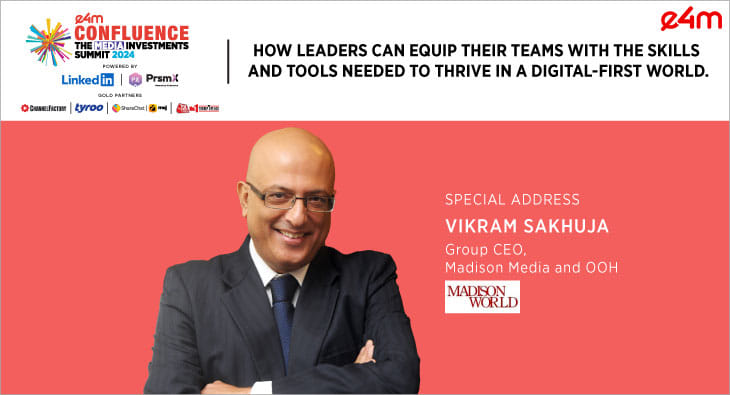

As the media landscape continues to evolve rapidly, the demand for digital proficiency and innovative approaches to leadership has never been greater. At the e4m Confluence 2024: The Media Investments Summit, Vikram Sakhuja, Group CEO of Madison Media and OOH at Madison World, presided over a masterclass on how leaders can empower their teams to thrive in a digital-first world.
The session highlighted the essential skills, mindset shifts, and tools that are reshaping the future of media investment and team management.
Sakhuja opened the session by addressing the digital transformation that has swept across industries, especially media. He described this shift as an incredible opportunity and a formidable challenge for companies navigating the "digital-first" paradigm. "In today’s environment, the lines between traditional and digital media have blurred," he noted. "Leaders are tasked not only with keeping pace but also with anticipating the next wave of changes and equipping their teams accordingly."
He emphasized the necessity of a proactive approach to digital readiness, noting that organizations need more than just technical skills to stay competitive. "Digital isn’t just about the tools; it's about the mindset we bring to those tools," he said. This emphasis on adaptability and strategic foresight became a recurring theme throughout his discussion.
To thrive in this fast-changing landscape, Sakhuja argued that leaders must prioritize continuous learning and skills development within their teams. "The media industry is evolving so rapidly that what we knew yesterday may not hold tomorrow," he observed. Leaders, he suggested, should foster a culture of curiosity and innovation to prepare their teams for these shifts.
Sakhuja stressed that leaders must set an example in embracing change and demonstrating adaptability. "If leaders are not open to learning and evolving, how can we expect our teams to do the same?" he questioned. He encouraged leaders to be mentors and guides rather than just managers, noting that "the most successful teams are those where the leader is invested in each member's growth journey."
Addressing the essential skills needed for a digital-first world, Sakhuja highlighted critical areas like data literacy, agility, and the ability to harness analytics for decision-making. "Data is no longer a support tool; it's at the center of every strategic decision we make," he asserted. "Being data-literate isn’t optional; it’s fundamental."
He further emphasized the importance of agility, describing it as a skill that allows teams to pivot quickly in response to new data or unexpected shifts in the market. "In a digital world, agility isn’t just about speed; it’s about knowing when to change course based on the insights we gather," Sakhuja explained. "It’s about having a mindset that is comfortable with uncertainty."
Beyond technical skills, Sakhuja spoke on the value of critical thinking and collaboration. "The digital-first world demands a level of cross-functional understanding. Teams need to break out of silos and work together more seamlessly," he remarked. This approach, he argued, would enable teams to respond more effectively to complex challenges and leverage diverse perspectives.
While skills are crucial, Sakhuja didn’t downplay the role of technology in the transformation journey. He acknowledged that digital tools, when used effectively, can unlock tremendous value. "Technology enables us to achieve efficiencies and insights that would be unimaginable a decade ago," he stated. However, he cautioned against relying on technology alone, suggesting that it should complement, not replace, human judgment and creativity.
"AI and automation can handle repetitive tasks, but creativity and strategic thinking are irreplaceable," he pointed out. This balanced perspective on technology underscored his belief that while digital tools are powerful, the human element remains essential in media investment and management.
One of the most insightful portions of Sakhuja’s session focused on overcoming resistance to change—a common obstacle in many organizations. He acknowledged that the transition to a digital-first approach often meets with scepticism, especially from those accustomed to traditional methods. "Change can be uncomfortable, especially for people who have been in the industry for a long time," he said.
To counter this, Sakhuja advised leaders to communicate the benefits of digital transformation clearly and transparently. "People need to see how change will impact them positively," he explained. "It’s the leader’s job to make the case for why this shift is necessary and how it will help both the organization and the individual." By framing change as an opportunity rather than a threat, he argued, leaders can ease the transition and gain buy-in from their teams.
His message was clear: in an industry that changes at lightning speed, the most successful leaders will be those who not only keep up with these changes but also inspire their teams to embrace them. "Digital transformation isn’t a one-time shift; it’s an ongoing journey.”
In his closing remarks, Sakhuja looked ahead to the future of media investment, suggesting that the industry’s digital evolution is far from over. "We are only scratching the surface of what’s possible with digital," he said. As AI, machine learning, and other technologies continue to advance, he predicted that the media investment landscape would become even more dynamic and data-driven.
However, he remained optimistic about the role of human insight in this future. "No matter how advanced technology becomes, the best decisions will always come from a blend of data and human intuition," he affirmed. This sentiment reflects his balanced approach to digital transformation, which values both technological advancement and the irreplaceable qualities of human creativity and leadership.
Read more news about Digital Media, Internet Advertising, Marketing News, Television Media, Radio Media
For more updates, be socially connected with us onInstagram, LinkedIn, Twitter, Facebook, YouTube & Google News
