Open internet gets 50% of eyeballs, yet just 15% of ad spend: Tejinder Gill, Trade Desk
Programmatic market is no longer constrained by consumer behaviour—it is constrained by outdated buying models, says the Managing Director of Trade Desk in an exclusive interview with e4m
 by
by
Published: Dec 17, 2025 9:01 AM | 6 min read
 Follow Us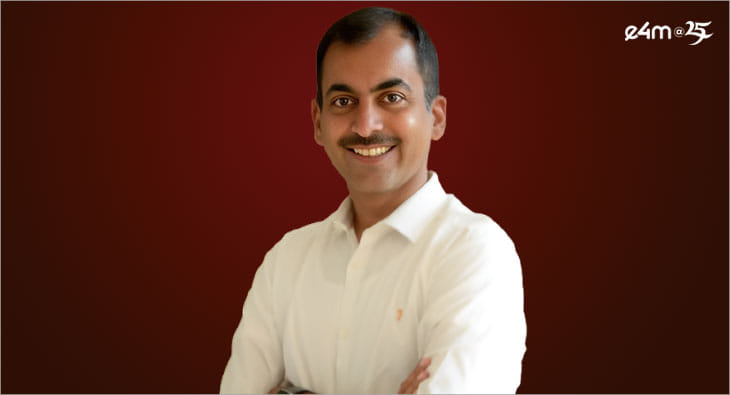

As India’s digital consumption accelerates across OTT, connected TV, premium news, audio, gaming and apps, advertising investments are struggling to keep pace. While consumers now spend nearly half their online time on the open internet—beyond search and social—only a fraction of advertising budgets follow. This growing disconnect, industry leaders argue, signals a critical inflection point for programmatic advertising in India.
In an interview with e4m, Tejinder Gill, Managing Director India, at The Trade Desk (a global AdTech company that operates a leading demand-side platform), unpacks why India is poised for its next phase of programmatic growth, the shifting balance between walled gardens and the open internet, and the rising demand for transparency, performance and accountability.
Consumer behaviour moved decisively ahead of media buying practices
As India’s digital consumption fragments across OTT, connected TV, premium news, audio, gaming and apps, advertising models are being forced to confront a structural lag. According to Gill, the signals are now unmistakable: consumer behaviour has moved decisively ahead of media buying practices, setting the stage for large-scale programmatic adoption.
“Consumers now spend over half of their online time across OTT/CTV, premium news, audio, gaming and apps—well beyond search and social. Yet only around 15% of ad spend reaches the premium open internet,” Gill says. “That gap is the clearest signal that India is ready for its next phase of programmatic growth.”
Gill argues that traditional, media-first programmatic guaranteed buying models are no longer equipped to deal with today’s fragmented journeys. “Brands are increasingly demanding audience-first strategies, cross-channel measurement, real-time optimisation and the ability to activate first-party data at scale,” he adds. “Consumer behaviour has moved toward premium, fragmented digital environments, while media buying models have lagged. That mismatch is driving a fundamental rethink of programmatic.”
From Cheap Reach to Accountable Performance
The reallocation of budgets away from walled gardens and toward the open internet, Gill says, is already underway—and faster in India than in many mature markets. “India has a significant imbalance between where consumers spend their time and where advertising budgets are allocated. But here, that gap is even wider, creating a clear opportunity to move spend toward premium open-internet environments.”
At the heart of this shift is growing performance pressure. “Advertisers are realising that low CPMs don’t automatically deliver strong business outcomes,” he says. “Over-reliance on walled gardens and programmatic guaranteed deals limits choice, transparency and the ability to optimise across channels.”
Gill notes early momentum from sectors such as CPG, automotive and consumer tech. “The next wave will come as more marketers prioritise quality reach over cheap scale, and demand measurable outcomes with full transparency into performance. For Indian advertisers, this isn’t just an evolution—it’s a competitive advantage ready to be scaled.”
AI Is Not Automation—It’s Advantage
One of the most persistent misconceptions holding the market back, Gill believes, is the way AI in programmatic is understood. “Many still think AI is rules-based automation operating within fixed settings. In reality, programmatic is evolving into a truly AI-optimised environment.”
He points to The Trade Desk’s AI engine, Koa, which “analyses trillions of ad impressions every day to inform smarter bidding decisions, creative rotation and budget pacing—outcomes that simply aren’t possible with manual optimisation.”
Equally misplaced, he says, is the fear that AI will replace marketers. “It won’t. What it will do is give a clear advantage to those who know how to use it well. AI works best when guided by human expertise, strong data and clear business objectives.”
The Skill Gap Holding Back Scale
Despite rising intent, Gill says Indian advertisers still face fundamental capability gaps—particularly in understanding how the digital advertising ecosystem actually functions. “When a single big tech platform controls the media, data, buying tools and measurement, advertisers lose visibility and control. Platforms end up grading their own homework.”
Another major gap lies in understanding the opportunity of the premium open internet. “As consumption fragments across OTT/CTV, premium news, audio and apps, advertisers need stronger skills in omnichannel planning, cross-channel measurement and first-party data activation.”
To address this, The Trade Desk has invested heavily in education through initiatives such as the Edge Academy. “The goal is not just knowledge, but confidence—empowering marketers to take back control of their data, media decisions and brand growth.”
India Is Ready for Sophisticated Ad-Tech
The Trade Desk’s investments in engineering, client services and local teams, Gill says, reflect strong conviction in India’s readiness. “The market has scale, a rapidly growing pool of savvy advertisers, and consumers spending more time across premium digital environments.”
“What brands are demanding today is transparency, control and measurable business impact—no longer just cheap reach,” he adds. “Our investments are about meeting that demand on the ground as India moves toward audience-led, outcome-driven programmatic at scale.”
Building a Privacy-Forward Data Future
Looking ahead, Gill stresses the importance of consent-led data infrastructure. “India is moving toward a privacy-conscious digital ecosystem, making first-party data and trusted brand-consumer relationships more important than ever.”
Open identity frameworks such as Unified ID 2.0, he says, will be critical. “They create a common, privacy-conscious currency for the open internet—allowing consumers to control their data while enabling responsible targeting and monetisation.”
Can India Shape the Global Playbook?
Gill is unequivocal about India’s potential. “India has all the ingredients to emerge as a global innovation hub for programmatic advertising—scale, digital-native consumers, fast-growing OTT and CTV ecosystems, and a maturing marketer base.”
What will unlock it, he says, is a decisive shift to audience-first buying, sustained investment in skills, and deeper collaboration across brands, publishers and platforms. “If India gets this right, it won’t just follow global best practices—it can help define the future of programmatic advertising for the open internet.”
--
Read more news about Digital Media, Internet Advertising, Marketing News, Television Media, Radio Media
For more updates, be socially connected with us onInstagram, LinkedIn, Twitter, Facebook, YouTube & Google News