Hybrid model, CTV surge power JioStar’s biggest quarter yet: Kevin Vaz
Kevin Vaz described the April–June period as the company’s biggest quarter so far
 by
by
Published: Jul 21, 2025 10:24 AM | 6 min read
 Follow Us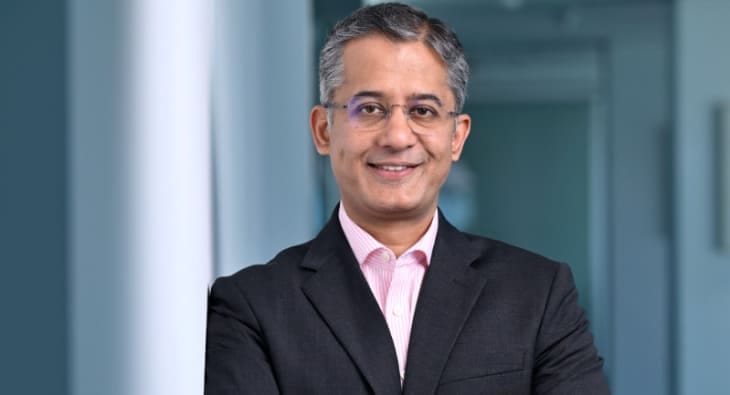

A bold bet on a hybrid streaming model and a massive surge in Connected TV (CTV) consumption have propelled JioStar to its most successful quarter yet, said Kevin Vaz, CEO – Entertainment. Describing the April–June period as the company’s biggest quarter so far, Vaz credited the record performance to “India’s biggest cricketing event, the IPL,” which delivered unprecedented reach, engagement, and monetization across both digital and television platforms.
“This is not only our most important quarter, it is also our biggest,” he said, highlighting how the momentum generated during IPL25 has helped set the tone for the rest of the financial year.
The company reported record revenues of Rs 11,222 crore and an EBITDA of Rs 1,017 crore for the quarter, buoyed by a blockbuster IPL season and rising traction across digital and linear platforms.
Speaking on JioStar’s Q1 FY26 earnings call, Vaz said, “All this was led by a unique proposition- a hybrid model between AVOD and SVOD. Just to elaborate a little bit, we believe that if you let people consume, loyalty will help build subscribers.”
Every piece of content on the platform was available to all users for free for four hours. After that, it moved into pay mode. “We believe that once people are used to the content, they are more willing to pay for it—and that’s what helped us deliver these numbers.
"The result? Paid subscribers reached 287 million during the IPL. To put that in perspective, Netflix globally has around 300 million. In India alone, we have 287 million digital subscribers,” he said.
CTV also saw explosive growth, he said.
“We recorded 6.4 billion hours of watch time, a 49% increase in CTV and a 29% year-on-year growth overall. Live video viewers reached 652 million, with a 64% rise in CTV viewership and 28% growth year-on-year. JioStar is now available in 99% of CTV households. Each user doubled their engagement over the previous year,” Vaz added.
Calling IPL25 a game-changer, Vaz said the quarter was not just the company’s biggest but also its most defining.
“JioStar is barely eight months old, and our new platform, Jio Hotstar, is just five months old. This was our first major quarter. And if you ask me, it's not just the most important quarter—it’s our biggest. I say important because what we achieve in this quarter sets the pace for the entire year. And biggest, because it includes India’s biggest sporting event—the IPL—which runs over two months and 74 matches. That makes all the difference,” he said.
Explaining how IPL performance was measured, he said, “We divided it into three parts—the opening weekend, the tournament as a whole, and the finale. For a tournament of this scale, having the biggest opening is critical.”
“If you look at our numbers, we delivered 1.4 billion digital views. On television, our reach was 253 million. The total watch time for the opening weekend alone was 49.6 billion minutes,” he noted.
“The tournament recorded the highest-ever digital reach at 652 million and 537 million on TV. That gave us a record cumulative watch time—just short of a billion minutes. This could’ve been even higher if there hadn’t been a slight disruption due to geopolitical factors. We believe we could have surpassed even those numbers.”
As for the finale, Vaz said, “It became the most-watched IPL match ever. In fact, it was the most-watched T20 match in history. For comparison, even the India World Cup final had lower viewership. The IPL finale had a peak concurrency of 55 million users enjoying a seamless experience.”
Performance on linear TV was also robust.
“We had the best opening weekend on television with a 7.44 TVR—representing 39% year-on-year growth. The IPL finale reached 189 million viewers, up 12% from the previous record. Across sports, digital, and linear TV, IPL25 was the biggest in terms of both viewership and monetization,” Vaz said.
Beyond the IPL, JioStar also hosted other marquee events such as the ICC World Test Championship and acquired digital rights for the India–England series currently underway.
“On the digital front, we averaged 460 million monthly active users. And there was a pivot in digital subscriptions,” Vaz noted.
Entertainment—both Indian and international—also played a critical role.
“JioStar scaled up across movies, series, international, and regional content,” he said. “Criminal Justice was announced by Ormax as the biggest series of 2025—and also the biggest on our platform. Kesari 2 became the highest-viewed film on the platform across all languages. Mufasa, an international title dubbed in multiple Indian languages, also broke records. Even our regional content in Tamil and Malayalam saw record-breaking viewership.”
Now that IPL is over, JioStar is gearing up for a packed lineup of shows.
“This quarter will see the launch of Bigg Boss across five to six languages on the platform. Special Ops, which launches today, could surpass even Criminal Justice in impact—definitely worth catching over the weekend,” Vaz said.
The theatrical release of Jolly LLB is also planned for this quarter, along with Trial, an adaptation of an international show starring Kajol.
And then came the big teaser:
“Lastly, the biggest highlight for this quarter—a show that resonates in every Indian household. A show that launched 25 years ago and changed the way we watched TV. We’re relaunching it on July 29 across Jio Hotstar and Star Plus. We believe it will redefine viewing habits once again.”
On the linear side, too, JioStar made moves.
“We launched Star Utsav in the free-to-air market and became the No. 1 channel from the first week itself. In 9 out of 10 markets, we’re the leader across languages—and we hold 7 of the top 10 shows in most of them,” he said.
“For the first time, we’ve seen strong subscription growth across all operators in India—thanks to the power of the network. Both TV and digital subscriptions posted record growth. The IPL generated the highest revenues yet, with strong year-on-year growth.”
However, he acknowledged some pressure in TV advertising.
“In the TV entertainment ad segment, yes, we’ve seen softness in the FMCG sector. Over the last two quarters, FMCG spends have been somewhat subdued, which impacted our entertainment ad revenues. But things are stabilizing, and with the upcoming festive season, we’re hopeful of stronger numbers,” Vaz concluded.
Read more news about Digital Media, Internet Advertising, Marketing News, Television Media, Radio Media
For more updates, be socially connected with us onInstagram, LinkedIn, Twitter, Facebook, YouTube & Google News