How politicians, cricketers & creators in India are fighting for same attention economy
On YouTube, creators are redefining the leaderboard, with Tahir Jasus dominating at 441.2 mn video views, beauty influencer Parul Garg at 247 mn, and PM Modi at 144.4 mn views
 by
by
Published: Sep 11, 2025 9:18 AM | 6 min read
 Follow Us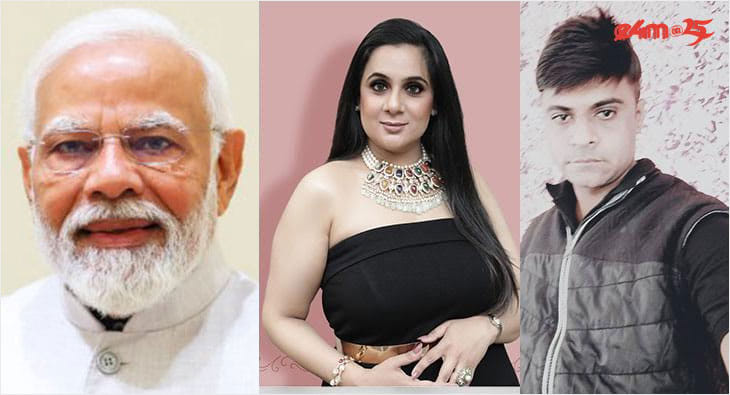

From Prime Minister Narendra Modi and Hardik Pandya to celebrity content provider Tahir Jasus, and makeup influencer Parul Garg, India’s digital ecosystem has today evolved into a fiercely contested battleground.
With 465 million social media users and 89% penetration, India has become one of the world’s most competitive digital markets. A single scroll can seamlessly move from a Prime Minister’s campaign video to a cricket reel celebrating a six, and finally to a beauty creator’s viral demo — each fighting to capture those fleeting seconds of engagement.
The race is no longer for billboards in Bandra or 30-second TV spots during cricket finals or number of followers on social media platforms; it’s about disrupting the scroll, owning the screen, and leaving a lasting impression in an attention-driven economy. The latest Comscore Social Influencers Report 2025 highlights this convergence, revealing how influence today transcends professions, platforms, and content genres.
.png)
Prime Minister Narendra Modi continues to dominate engagement charts, topping both Facebook and X. On Facebook, Modi recorded 5.4 million monthly user actions (engagements) this April, followed by Samajwadi Party chief and former chief minister of Uttar Pradesh Akhilesh Yadav at 4.7 million and actor Siddharth Nigam at 3.3 million.
On X, PM Modi is far ahead with others with 10.8 million monthly actions, followed by Akhilesh Yadav with 1.3 million and main opposition leader Rahul Gandhi with 1.2 million.
While Facebook and X remain politically charged platforms for years shaping national narratives, Instagram reflects an entirely different influence hierarchy. Here, cricketer Hardik Pandya leads with 42.5 million monthly actions, followed by AIMIM chief Asaduddin Owaisi at 30.9 million, KL Rahul at 25.2 million, PM Modi at 23.8 million, and actor Rashmika Mandanna at 21.3 million.
On YouTube, creators are redefining the leaderboard altogether, with the celebrity-content channel of Tahir Jasus dominating at 441.2 million video views, beauty influencer Parul Garg at 247 million, and Modi himself pulling in 144.4 million views.
.png)
To truly measure an influencer’s impact on social media, brands and marketers need to look beyond basic vanity metrics like views and follower counts.
Comscore report notes that "engagement" plays a critical role in understanding how users interact with content, offering deeper insights into genuine audience behavior. Equally important is "sentiment analysis", which evaluates the emotional tone of user responses — whether positive, negative, or neutral — helping brands assess the effectiveness of their messaging.
The report notes that Indians now spend an average 20 hours per month on social media, a 34% increase since June 2020 when consumption peaked during pandemic lockdowns.
However, their platform preferences are shifting. YouTube (-1%), WhatsApp (-1%), Facebook (-2%), X (-10%) and LinkedIn (-8%) have witnessed a decline in unique visitors over the past year, while Instagram (+4%), Telegram (+2), Snapchat (+8), and Pinterest (+16) have recorded notable gains, indicating a broader migration toward visual-first, interactive formats.
Creators vs. Politicians
A growing overlap between politicians, cricketers, and content creators underscores a powerful shift — influence today is platform-first, not profession-first.
But not all attention converts equally. While creators and athletes directly translate their influence into endorsements, sponsorships, and brand deals, politicians thrive on virality and recall. “A 30-second campaign video can ripple across WhatsApp groups, Instagram Reels, and YouTube Shorts — not for selling products, but for shaping conversations, ideologies, and public sentiment,” said an advertising executive.
Aalap Desai, Chief Creative Officer and Co-founder of Tgthr, says, “I think this is an opportunity. Our population is our superpower and we have more than enough attention to give and grab. Brands have defined target groups, and there is a big chunk of users on every platform for any brand out there. With such wide groups that brands can target, I feel it is only natural for the spectrum of creators to be equally wide. Finally, there is something for everyone.”
Survival of the Most Compelling
Experts believe India’s attention economy has moved past the era of “being the loudest.” “It’s now about being the most compelling. Each platform has its own grammar,” says Divesh Mehta, AVP – Planning, Infectious Advertising. “A heartwarming story might trend on Facebook, an athlete’s reel dominates Instagram, and a creator’s long-form vlog builds fandom on YouTube. To win mindshare, brands need to tailor narratives per platform rather than spray-painting the same message everywhere.”
Desai agrees, “In the past, I have asked brand managers a question about their target group, and some of them have replied, “We want to target everyone.” This has legitimately happened to me multiple times. You can no longer get away with an answer like that because with the bifurcation being so vast and media becoming so expensive, their money will be wasted. It cannot be ‘everyone’ anymore.”
Marketers are increasingly shifting strategies from chasing mass reach to buying into the narrative environments these personalities create, observers say. “On X, it could mean sharp, real-time quips. On Instagram, it’s co-created reels with cricketers. On YouTube, it’s long-form storytelling with creators who already command audience trust. Influence isn’t just about visibility anymore — it’s about fitting into the rhythm of each platform’s native culture”, Mehta adds.
Personal Brands
The balance of power has clearly shifted in favor of individuals. Politicians are borrowing heavily from influencer playbooks, while brands lean on creators and athletes for authenticity and scale. Sayak Mukherjee, founder of Brandwizz and Creatorcult Media, says, “The same consumer may follow Modi on X, Pandya on Instagram, and a beauty creator on YouTube — but their expectations on each platform are completely different. Strategies must respect those differences. Advertisers need sharper audience-context-platform fits.”
Mehta echoes the sentiments, “Endorsements are no longer about just picking a face; they’re now powerful distribution engines. A Hardik Pandya reel isn’t simply a cricketer lending credibility — it’s a media channel plugged into 40 million fans. Similarly, when Rashmika Mandanna fronts a beauty brand, it’s about tapping into her ongoing dialogue with millions of loyal followers.”
Brands aren’t just buying a face for a print ad anymore, Mehta explains. “They’re negotiating integration into a celebrity’s entire content ecosystem — Instagram stories, YouTube vlogs, even personal events. Individuals are no longer amplifiers of brand stories; they are the media platforms themselves.”
A data-driven strategy built around engagement, sentiment, and timing ensures higher relevance, stronger audience connections, and maximized reach in an increasingly competitive digital ecosystem, say experts.
The Next Disruption: AI Influencers
As competition for influence intensifies, a new challenger is emerging — AI-powered virtual influencers. Globally, avatars like Lil Miquela, Aitana López, and Lu do Magalu are reshaping brand storytelling with scalable, controversy-free campaigns. While adoption in India is still at a nascent stage, industry experts believe it’s inevitable. Offering hyper-targeting, multilingual adaptability, and better creative control, virtual influencers promise to further disrupt the dynamics of India’s already crowded attention economy.
Read more news about Digital Media, Internet Advertising, Marketing News, Television Media, Radio Media
For more updates, be socially connected with us onInstagram, LinkedIn, Twitter, Facebook, YouTube & Google News