From direct to diverse: Why India’s D2C playbook is moving beyond the websites
With digital-native brands expanding offline, Q-comm emerging as a new storefront and consumers increasingly coming from beyond the metros, D2C is now less a channel and more an operating model
 by
by
Published: Sep 15, 2026 8:32 AM | 5 min read
 Follow Us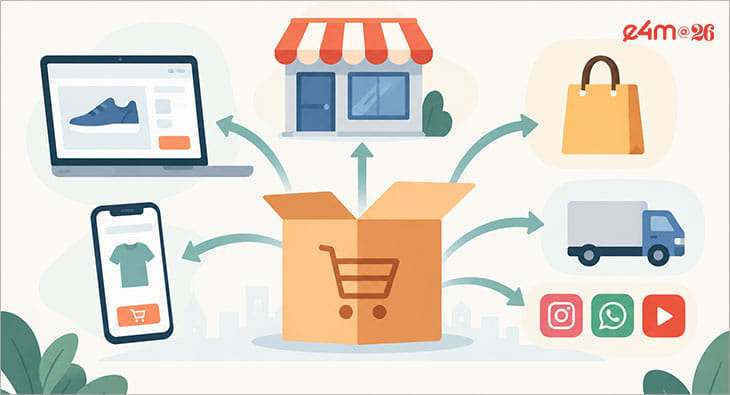

The term direct-to-consumer once described a relatively straightforward proposition: brands using digital channels to bypass traditional retail and reach buyers directly. By 2026, that definition is becoming increasingly difficult to sustain. Digital-native brands are opening physical stores, selling through marketplaces and quick-commerce platforms, while established companies are adopting many of the tools and operating practices associated with D2C.
The numbers illustrate that convergence. Unicommerce’s 2026 D2C report, based on more than 410 million shipments across over 6,000 brands, recorded 33% growth in D2C GMV during FY26, with much of the next wave of demand coming from outside the metros. At the same time, D2C companies are increasingly showing up offline: CBRE said they accounted for around 28% of Indian retail leasing in the first half of 2026, up from 23% a year earlier.
What is changing, therefore, is not simply the scale of D2C but its meaning. If a digital-native brand can sell through its own site, a marketplace, a ten-minute delivery platform and a physical store, being “direct” is no longer enough to explain what distinguishes the model.
Has mobile become the primary digital marketing interface? Read here
Industry leaders say the more durable advantage lies underneath those channels: proximity to consumers, continuous experimentation and the ability to turn behavioural signals into product, marketing and business decisions faster.
“The success of D2C brands has demonstrated that competitive advantage today comes from proximity to the consumer and agile execution,” Sumeet Bhojani, Head – Brand & Strategic Insights, Godrej Enterprises Group told e4m. Their ability to build direct feedback loops and use data in real time, he said, has helped them translate consumer signals into decisions around products, experiences and communication.
Why annual media plans are becoming strategic compasses. Read e4m deep dive
That does not necessarily mean the eventual sale has to happen on a brand website. Bhojani pointed to categories such as home security, furniture and appliances, where consumers increasingly research, compare and validate choices online before buying. In that environment, digital commerce becomes a source of intelligence across the purchase journey, capable of influencing product innovation, customer experience and brand strategy even when another channel ultimately closes the transaction.
The same logic sits at the heart of businesses that were built digital-first. “I think the biggest advantage D2C companies have is that they stay very close to the consumer,” said Shaily Mehrotra, CEO and Co-Founder, Fixderma & FCL. Online businesses can continuously observe what consumers search for, purchase and respond to, including whether they return after the first transaction, creating a much shorter cycle between testing an idea and acting on the response.
That feedback becomes particularly valuable in categories where discovery and consideration themselves increasingly happen online. Mini Sood Bannerjee, Deputy Director & Head of Marketing, Amorepacific India, said, “I think one of the biggest things D2C brands have understood is that consumers today want to feel heard and understood.”
At Etude, she said, consumer conversations and feedback provide signals about changing expectations in beauty, allowing the brand to evolve alongside them.
This also explains why the next phase of D2C growth is increasingly omnichannel rather than an abandonment of the model. Moving onto marketplaces, quick-commerce platforms or into physical retail can increase reach, but the challenge is retaining the responsiveness that helped digital-native brands establish themselves in the first place.
CBRE’s leasing figures are particularly telling: D2C companies are becoming significant occupiers of physical retail space even as their digital businesses continue to expand.
For Akash Agrawalla, Co-Founder of ZOFF Foods, being digital-first was never simply about appearing across more touchpoints. It begins with identifying a genuine consumer problem and communicating the solution clearly, while using feedback and behavioural data to continually refine the proposition.
“What D2C brands do particularly well is listen, learn and respond quickly,” Agrawalla said. Large FMCG organisations already bring advantages in budgets, distribution and reach; the opportunity, he argued, lies in combining those strengths with the speed and responsiveness developed by D2C businesses rather than treating the two models as opposites.
That distinction matters as the boundaries continue to blur. A digital-native company with hundreds of stores is no longer particularly “direct” in the literal sense, while a decades-old consumer company can operate its own app, website, CRM stack and first-party data infrastructure. Quick commerce adds yet another intermediary even as it becomes an increasingly important discovery and purchase channel.
When did CRM become marketing? Read more here
Jasbir Singh, Branding & Digital Marketing Head at E3 Group, argues that the more durable distinction is what happens after the consumer signal arrives. D2C companies routinely track search behaviour, reviews, social conversations, purchase patterns and customer feedback and use them to alter products, pricing and communication.
Large organisations can possess vastly more information, but additional layers of decision-making can increase the time between observing a shift and responding to it.
“The real D2C lesson is therefore not about spending more on digital,” Singh said. “It is about shortening the distance between consumer insight and business decision.”
That may be the more useful way to understand the new D2C playbook. The website is no longer the model, and selling directly is no longer its defining feature. As brands spread across marketplaces, quick commerce and physical stores, the competitive advantage increasingly lies in carrying the original feedback loop with them, wherever the consumer happens to buy.
Read more news about Digital Media, Internet Advertising, Marketing News, Television Media, Radio Media
For more updates, be socially connected with us onInstagram, LinkedIn, Twitter, Facebook, YouTube & Google News