Tamil Nadu’s retail market is thriving. So, what went wrong with Viveks?
Guest Column: Ganapathy Viswanathan, Independent Communication Consultant & Author, explores why a legacy retailer like Viveks could not keep pace with a market that was changing around it
 by
by
Published: Sep 15, 2026 8:45 AM | 5 min read
 Follow Us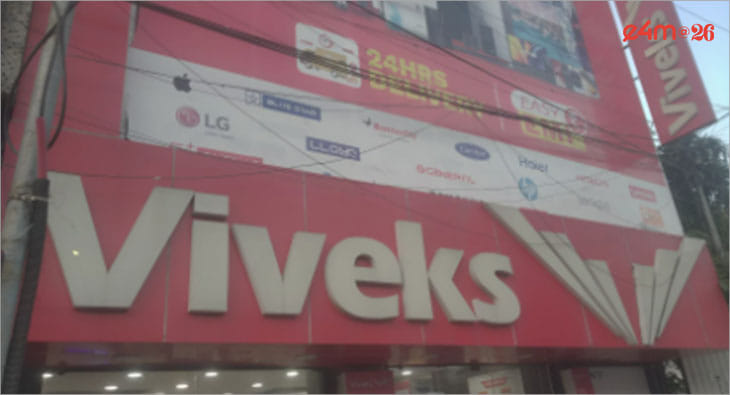

- Viveks, a legacy consumer-durables retailer in Tamil Nadu established in 1965, is reportedly shutting down its operations, surprising many due to its longstanding presence and consumer trust.
- The retail landscape in Tamil Nadu remains robust, with organized retail expanding and regional retailers thriving, raising questions about why Viveks struggled to adapt to changing market dynamics.
- The shift in consumer behavior, with increased reliance on online research and price comparison, has diminished the traditional retailer's control over the purchasing journey, necessitating operational efficiency and adaptability.
- Viveks' management has referred to the shutdown as a "pause," suggesting potential restructuring or a shift towards an omnichannel approach, highlighting the need for legacy retailers to evolve in response to modern consumer expectations.
South India has always been fertile ground for strong retail brands. For decades, Tamil Nadu in particular has produced powerful names across sarees, jewellery, textiles and consumer durables. These businesses were built on trust, strong local relationships and an ability to understand the consumer.
That is what makes the reported shutdown of Viveks' operations across Tamil Nadu such a surprise. For generations of consumers, Viveks was more than a consumer-durables retailer. It was where families went to buy their first television, refrigerator, washing machine or air-conditioner. Established in 1965, the brand built a presence that lasted for nearly six decades.
Yet its troubles come at a time when Tamil Nadu's retail market itself is hardly in decline. Consumers are spending, organised retail continues to expand and several regional retailers are building strong businesses. So, the bigger question is not whether Tamil Nadu's retail market is healthy. It is why a legacy retailer like Viveks could not keep pace with a market that was changing around it.
The Retailer No Longer Controls the Consumer
The consumer-durables business that Viveks built its reputation on has changed dramatically. There was a time when the showroom was the starting point of the purchase. Consumers went to the retailer to compare products, understand features, negotiate prices, arrange finance and get advice. The retailer controlled much of the consumer journey.
That advantage has gradually disappeared.
Today, a customer can research a television or refrigerator online, compare prices across sellers, read hundreds of reviews and decide what to buy before entering a showroom. Manufacturers have stronger direct channels, large-format retailers have greater purchasing power and e-commerce platforms have changed the way prices are discovered.
The physical store has not disappeared, but its role has changed.
That is why blaming e-commerce alone for Viveks' difficulties would be too simplistic. The real disruption is the loss of the retailer's information and pricing advantage. The consumer knows more, compares more and expects more. The retailer has to compete not just on location and relationships but on price, availability, financing, delivery, installation and service.
Scale Is Changing the Economics
Consumer durables are also a particularly difficult category because technology changes rapidly and inventory can lose value quickly. A retailer has to turn stock faster while protecting margins in a market where consumers can see competing prices almost instantly.
Scale has consequently become increasingly important. Larger retailers can negotiate better with manufacturers, spread operating costs across more stores and manage inventory and logistics more efficiently. A regional retailer may have strong brand recognition but still find it difficult to compete if the economics of its network have become unfavourable.
This is perhaps the biggest change in the retail business. Being a trusted retailer is no longer enough; the retailer also has to be operationally efficient.
And this is where several traditional retailers across India face a similar challenge. Their brands may remain strong, but the cost of running the business has changed while the consumer's expectations have moved much faster.
The New Consumer Is Shopping Differently
There is also a generational change in the way consumers shop. Younger consumers are comfortable beginning and often completing their purchase journey digitally. They may still visit a store for a high-value product, but the showroom is increasingly a place to experience the product rather than discover it.
That distinction is important for legacy retailers. Brand familiarity can bring a consumer to the door, but it may no longer be enough to close the sale.
For a nearly six-decade-old family-owned business, this also raises the larger question of reinvention and succession. There is no basis to say that differences between generations caused Viveks' problems. But the broader challenge facing many family-run retailers is clear: how do you preserve the trust and reputation built by one generation while changing a business model for the next generation of consumers?
The strongest regional retailers today are increasingly combining physical stores with digital discovery, aggressive procurement, financing, delivery and service. The store remains important, but it is now only one part of the consumer journey.
A Pause That Raises Bigger Questions
Viveks' own next step remains unclear. Reports have quoted the management describing the shutdown as a pause, rather than necessarily a permanent closure. That leaves open the possibility of a restructuring, a smaller physical footprint or a stronger omnichannel approach.
Whatever happens next, the Viveks story offers a useful lesson for regional retailers across India.
A growing market does not automatically mean every retailer will grow with it. The consumer has not stopped buying televisions, refrigerators or air-conditioners. What has changed is where the consumer discovers the product, how the price is determined and what he expects from the retailer.
The retailers that thrive in the next phase may therefore not be the ones with the longest history, but those that can combine the trust of the old retail model with the pricing, technology, convenience and speed of the new one.
And that may ultimately be the real Viveks story. Tamil Nadu's retail market may still be thriving. But the rules of retail have changed.
Disclaimer: The views expressed here are solely those of the author and do not in any way represent the views of exchange4media.com.
Read more news about Marketing News, Advertising News, PR and Corporate Communication News, Digital News, People Movement News
For more updates, be socially connected with us onInstagram, LinkedIn, Twitter, Facebook, YouTube & Google News