Aamir’s Saraswati before Lakshmi push: Creativity before commerce, a feasible choice?
In a recent conversation with e4m, Aamir Khan shared his philosophy saying, if you pray only to Lakshmi, you’ll lose. But if you follow Saraswati, Lakshmi comes along’
 by
by
Published: Jul 9, 2025 9:16 AM | 7 min read
 Follow Us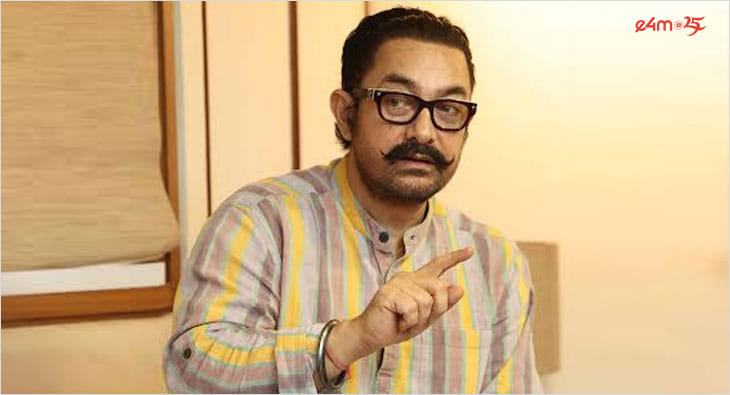

In a recent conversation with exchange4media, actor-producer Aamir Khan shared a creative philosophy that struck a chord far beyond cinema - one that’s now stirring conversation across the advertising and creative fraternity.
“In this field, if you pray only to Lakshmi, you’ll lose. But if you follow Saraswati, Lakshmi comes along,” Aamir Khan said, referring to the Indian goddesses of wealth and knowledge respectively. The statement, while rooted in Indian cultural metaphor, points to a universal truth: in creative professions, chasing money often undermines originality, but chasing excellence often brings both.
This thought has opened up an important question for the advertising ecosystem: can agencies afford to focus on craft and originality first, trusting that commercial success will follow?
Creative leaders across top agencies weigh in – and it turns out many have long been believers in this creative-first, results-later mantra.
Iraj Fraz, Creative Head at DDB Tribal, pointed out that Aamir Khan’s idea has empirical grounding in advertising science. “The theory of Lakshmi following Saraswati that Aamir Khan talked about is simply the Vedic version of the research done by DDB’s Les Binet. The research found that creatively awarded campaigns are 11 times as efficient at driving share of market growth (Les Binet and Peter Field, The Link Between Creativity and Effectiveness),” he said.
The creative world has long grappled with the push and pull between artistic integrity and client deliverables. While awards and cultural impact are valued, so are KPIs, conversions, and campaign ROI.
Priyanka Borah, Founding Partner, Talented admitted, “Of course, brands have performance goals and commercial realities but chasing only ROI is like writing a script backwards. Craft and originality aren’t luxuries; they’re levers for effectiveness.” She added that the work that moves culture, moves the needle. “Our job is to protect that spirit of storytelling, even when the brief screams urgency or the targets demand compromise. Call us naively optimistic if you will.”
Borah’s team has even internalised this belief into operational systems. “Our strategy team even built a rating model that balances ambitious ideas with effectiveness. So, we know we’re chasing both Saraswati and Lakshmi (craft and money respectively).”
Shubham Singhal, Co-founder and CEO of Dot Media, further shared that when they lead with intent, originality, and deep narrative thinking, the business outcomes naturally follow. “Our best-performing work always starts from a place of authenticity, not algorithms. That’s what builds reputational equity and that compounds far more than short-term hacks.”
Craft as compass for ROI
Janhavi Iyer, Vice President, Brand Communications, Gozoop Creative, explained the very essence of craft in advertising. “Unlike being an author or a filmmaker where the story sells, in advertising, we tell stories to sell. A small difference in syntax but a massive one in purpose.” She added that their stories are vehicles that have to work twice as hard, they have to connect but also inspire action. In a sense the craft in advertising is one that inherently requires them to follow both Saraswati and Lakshmi.
She further emphasized the need to rethink what ROI even means in today’s environment. In a world increasingly driven by data, algorithms, and quarterly targets, creativity often finds itself on the defensive, expected to justify its worth in spreadsheets and slides. But the assumption that creativity is a whimsical luxury, detached from business outcomes, couldn’t be further from the truth.
Iyer explained that creativity is not something to be sacrificed at the altar of deliverables and ROI but is the very weapon that helps us achieve them. For any brand, an agency must deliver a strong idea that drives measurable impact.
The leadership team at Response echoed this sentiment, emphasizing their passion for creativity and intellectual stimulation. They believe that emotionally and intellectually engaging work not only drives impact but also attracts more opportunities. For them, Aamir Khan’s philosophy—follow Saraswati and Lakshmi will follow—perfectly encapsulates their belief that meaningful creativity naturally leads to business success.
Rashi Ray, Director, Response India, said, “We’re not saying that creativity should be above commerce, but at par and in its own right. It’s difficult to assign a value to a piece or art or an ad, if one can’t understand the value it brings to a business or the impact it can make in the world. But can an ad add value unless it’s exceptional? It can’t. We take on business problems, or quests or interests and try to solve it with our creativity.”
This belief in meaningful craft also drives the team at Dot. As Singhal put it, “Honestly, this is something we talk about internally all the time. When you're working with founders and leadership teams, there's always pressure to ‘perform’ on content, get likes, reach, conversions. But creativity is what sets the tone.”
At Dot, the focus is on bridging strategy and voice in a way that feels deeply authentic. Rather than chasing metrics for the sake of visibility, the team prioritizes content that reflects the personality and intent of the people behind it—believing that honest, original work builds something far more enduring: long-term trust.
Balancing brand love & performance
However, believing in Saraswati doesn’t mean ignoring the practical pull of Lakshmi. As Fraz explained, the trick is to stop thinking in binaries, “The nuance to keep in mind is that it should never be performance marketing vs storytelling. For a healthy brand, it’s always performance marketing AND storytelling. Some communication should deliver purely on brand love (60%), and some, purely on arresting short-term attention (40%).”
In an era dominated by performance marketing, keeping the spirit of storytelling alive requires resilience, and precision.
Iyer further reinforces this balance. “The spirit of storytelling is something that every advertiser lives and breathes. Whether it's a 6-word copy, a 30-second reel or an ad film, each asset is designed to be evocative and effective.,” she said. But for Iyer, storytelling isn’t a matter of choice, it’s a rigorous practice. One that is embedded across teams, from senior leadership to fresh recruits, through ongoing training, upskilling, inspiration sessions, and a culture where there’s no such thing as a bad idea or a stupid question. "There is always a different way to break the box."
Ray further said that the balance of believing in both Saraswati and Lakshmi that keeps them alive and leaves a bit of magic for them to have fun with.
It's not about placing creativity above commerce, but about respecting both in their own right, and knowing when to lead with which.
This duality is a recurring theme. Singhal echoed the idea, “At Dot, we focus on stories that have an audience, not just aesthetics. The goal isn’t to make the most perfect content, it's to make something honest that cuts through. And in most cases, that’s what ends up performing best.”
It’s a nuanced dance, knowing when to push the envelope and when to dial things back. “The marketing teams must allow the budgets to be spent on both,” Fraz said. “And the creative folks must choose their battles and know where to up the storytelling game, and where to keep it loud and simple,” he concluded.
Read more news about Internet Advertising India, Marketing News, PR and Corporate Communication News, Digital Media News, Television Media News
For more updates, be socially connected with us onInstagram, LinkedIn, Twitter, Facebook YouTube & Google News