Voices of leadership: How four Prime Ministers connected with India
Guest Column: Dr. Suresh Gaur explains how the approach of the PMs reflected their distinct personalities and the specific communication tools of their time
 by
by
Published: May 29, 2026 1:31 PM | 12 min read
 Follow Us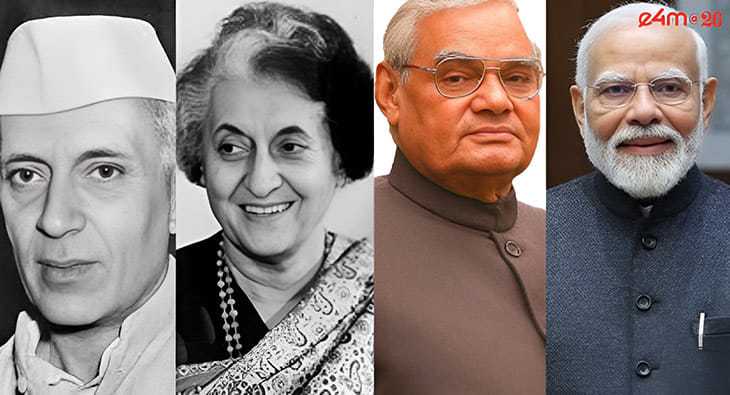

- The article explores the communication styles of India's four Prime Ministers—Jawaharlal Nehru, Indira Gandhi, Atal Bihari Vajpayee, and Narendra Modi—highlighting how each leader adapted their messaging to the technology and cultural context of their time.
- Nehru's communication was characterized by a thoughtful and literary style, using radio and public speeches to connect India's aspirations with its historical narrative, exemplified by his "Tryst with Destiny" speech.
- Indira Gandhi employed a direct and concise approach, focusing on clarity and authority, particularly during national crises, with her slogan "Garibi Hatao Desh Bachao" encapsulating her focus on poverty alleviation.
- Vajpayee's dignified and poetic communication style emphasized respect and consensus, while Modi's modern, inclusive approach leverages digital platforms for continuous engagement, showcasing the evolution of political communication in India.
Is communication PR?
Is mass communication just the act of reaching the public through print, electronic, and digital platforms?
These questions have stayed with me as I read Pandit Nehru’s The Discovery of India. It led me to look at India’s four Prime Ministers Pandit Jawahar Lal Nehru, Smt. Indira Gandhi, Shri Atal Bihari Vajpayee, and Shri Narendra Modi not just as leaders, but as communicators who defined their eras. Each one faced the same triangle: their intent, their message, and the technology that carried it. What changed was how they balanced the three.
Friends, in India, leadership is heard before it is seen. With twenty-two official languages recognized under the eighth schedule of the Indian Constitution and 1.4 billion citizens, the ability to communicate is central to public life. Policy matters, but how it is conveyed often determines how it is received by the people.
India’s four prime ministers; Pandit Jawaharlal Nehru, Shrimati Indira Gandhi, Shri Atal Bihari Vajpayee, and Shri Narendra Modi shaped public discourse in different eras. Their approaches reflected both their distinct personalities and the specific communication tools of their time. The common thread among them was a clear message, delivered with consistency, that resonated far beyond politics.
Pandit Jawaharlal Nehru: The Voice of a New Nation
Pandit Jawaharlal Nehru brought a thoughtful, literary, and visionary communication style to the nation. He spoke in measured English and Hindustani, frequently drawing on history, science, and philosophy to make his points. His personality quotient was defined by his deep scholarship, a global outlook, and an innate personal dignity. Because of these traits, he was widely seen as a statesman who could represent India internationally while articulately explaining its deep aspirations at home. His core strength lay in framing national goals not just as political targets, but as a shared moral journey for all citizens.
A key moment in his journey was his famous "Tryst with Destiny" speech on August 15, 1947. When he spoke the words, "At the stroke of the midnight hour, when the world sleeps, India will awake to life and freedom," he gave independence a beautiful narrative that Indians across all regions could personally identify with. There are other prominent examples of his unique style, such as when he described newly built dams and factories as the "temples of modern India." By doing this, he directly linked industrial development with national pride. Furthermore, his parliamentary addresses on non-alignment presented India’s foreign policy with absolute clarity and a sense of purpose.
In terms of public impact, Pandit Nehru made complex ideas like democracy and scientific progress highly accessible through All India Radio and large public meetings. He successfully connected India’s rich past with its unfolding future.
Shrimati Indira Gandhi: Clarity and Conviction
Shrimati Indira Gandhi practiced a communication style that was direct, concise, and incredibly firm. She intentionally used simple Hindi and brief sentences that left absolutely no room for ambiguity. Her personality quotient was anchored in her absolute determination, strong authority, and a powerful public presence. Throughout her time, she was viewed by the public as a decisive leader, especially during intense times of national crisis. Her core strength was her ability to deliver messages with razor-sharp clarity, particularly during critical historical moments.
Her definitive key moment came during the 1971 campaign with the slogan, "Garibi Hatao Desh Bachao," which translates to "Remove Poverty, Save the Nation." These four powerful words became the centerpiece of a massive national campaign, successfully focusing public attention on poverty alleviation. Looking at other examples of her communication, her address to the nation on December 3, 1971, during the Bangladesh conflict, was remarkably calm and resolute. It reassured citizens and projected immense national stability. Around this era, the famous phrase "Indira is India" reflected just how closely her personal identity was aligned with the nation’s overall direction at the time.
Her public impact was driven heavily by All India Radio, which carried her messages directly into homes across the entire country. Her unique communication style made complex national policies feel deeply personal and urgent to the average citizen.
Shri Atal Bihari Vajpayee: Dignity in Dialogue
Shri Atal Bihari Vajpayee brought a poetic, measured, and deeply respectful style to Indian political communication. He masterfully used Hindi literature, sharp wit, and well-timed pauses to truly engage his listeners. His personality quotient was marked by grace, moderation, and an undeniable personal warmth. Because of this, he was deeply respected across all party lines for his exemplary conduct. His core strength was his ability to build consensus across different political spectrums through language that emphasized shared human values.
His most memorable key moment occurred in 1996 during a no-confidence motion in Parliament. He famously stated, "Rajniti mein matbhed ho sakte hain, par manbhed nahi hona chahiye," which means there can be differences in politics, but there should be no differences of the heart. This statement became a widely cited, gold-standard principle for parliamentary behavior. As other examples of his communication, his serious "Rajdharma" remark in 2002 was delivered as profound advice on fair governance and political ethics. Additionally, his landmark 1977 address to the United Nations General Assembly, delivered entirely in Hindi, marked a significant and historic moment for the language on a global platform.
Vajpayee ji’s public impact was felt heavily through Doordarshan (television) broadcasts and live parliamentary debates. He gave the complex nature of coalition politics a true tone of dignity. His speeches appealed to an incredibly broad cross-section of society because they always emphasized respectful disagreement.
Shri Narendra Modi: Inclusive Communication
Shri Narendra Modi utilizes a highly conversational Hindi style, structured repetition, and direct engagement with the masses. He regularly uses familiar, everyday terms and inclusive language to address massive audiences. His personality quotient is defined by high energy, relatability, and complete consistency. He also frequently references his own humble personal background as a key part of his public identity. For instance, during a recent event in Rome, Italy, ahead of International Tea Day, he smilingly stated to the gathering that the "Chaiwala," or tea seller, had arrived a day early to celebrate.
His core strength is maintaining absolute message consistency across multiple platforms over long periods of time. His definitive key moment is his radio program "Mann Ki Baat," which has been running since October 2014. Broadcast on the last Sunday of every month, this long-form audio program discusses social themes, governance initiatives, and inspiring citizen stories, successfully creating a regular, direct channel of communication with the public. Other prominent examples of his communication include the phrase "Sabka Saath, Sabka Vikas, Sabka Vishwas, Sabka Prayas," which evolved into his core governing motto.
Before that, his "Chai pe Charcha" campaign in 2014 used informal settings to facilitate direct, grassroots interaction with citizens. Similarly, "Pariksha Pe Charcha," which has been held annually since 2018, serves as an interactive event where Prime Minister Modi engages directly with students, parents, and teachers across the country to ease exam stress.
His public impact is driven by a massive multi-media approach. By simultaneously using television, radio, social media, and dedicated mobile applications like the Narendra Modi App and his official WhatsApp Channel, he maintains a continuous, active presence in public discourse. This modern approach has successfully made complex policy discussions a part of daily conversation for many ordinary citizens. His communication model strongly emphasizes broadcast and aggressive digital outreach. It is designed specifically for unmatched scale and high frequency, which has proven highly effective in shaping national narratives.
Platform and Era: How Leaders Adapted to the Medium of Their Time
Friends, every national leader communicates through the dominant medium of their specific period. The technology changes with time, but the core objective remains exactly the same: to reach people clearly and credibly.
During the Broadcast Era, leaders like Pandit Jawaharlal Nehru, Shrimati Indira Gandhi, and Shri Atal Bihari Vajpayee operated before digital platforms existed. Their primary channels of communication were necessarily limited to radio, print media, public meetings, and national television.
Looking closely at Nehru ji’s medium, he relied heavily on All India Radio and direct speeches in Parliament. His historic "Tryst with Destiny" speech reached the nation primarily through live radio broadcasts and was carefully reproduced in newspapers for decades. His written communication, including regular, detailed letters to state chief ministers, further extended his political reach. In today’s digital terms, his content would be classified as highly reflective, long-form journalism.
Indira Gandhi ji’s medium centered on radio broadcasts and massive public rallies. Her key national announcements were broadcast nationwide. Her slogan "Garibi Hatao Desh Bachao" functioned exactly like a modern, concise, and highly repeatable campaign message that defined an entire election. Her crisp style was perfectly suited to a medium that required absolute brevity and centralized authority.
Atal Bihari Vajpayee ji’s medium evolved into Doordarshan (television) and active Parliament broadcasts. His speeches were widely viewed live and often quoted extensively in print the next day. His calculated use of Hindi poetry and his measured, graceful delivery translated beautifully to the television screen. He demonstrated to the country how rich, literary language could work wonderfully in a visual medium without losing any of its intellectual depth.
In contrast, the Digital Era has shaped Shri Narendra Modi’s approach. The current communication environment includes television and radio, but is heavily dominated by multiple digital platforms. The overall approach to communication has expanded accordingly to keep pace with technology.
Under Narendra Modi ji’s approach, he utilizes television and radio alongside YouTube, social media, and specialized mobile applications. Platforms like WhatsApp and YouTube serve as highly significant channels for immediate information dissemination. The content is highly structured and consistent, with major speeches routinely segmented into shorter, highly shareable video clips for digital platforms. Meanwhile, "Mann Ki Baat" serves its purpose as a regular, long-form audio program for deeper listening.
His tone remains highly conversational, with a constant emphasis on collective progress and national goals. The frequency of his communication is regular and continuous, carefully aligned with national events, cultural festivals, and major policy milestones. Furthermore, this distribution is fully supported by organized digital teams that seamlessly adapt his content into multiple regional languages and formats. The primary focus here is absolute clarity and constant repetition to ensure that messages effectively reach highly diverse audiences. Ultimately, Narendra Modi ji’s communication model emphasizes broad, consistent outreach across many channels, focusing entirely on the immense scale of modern broadcast and aligning with how citizens consume digital information today.
Conclusion:
Friends, from Radio to Reels, the tools of dynamic communication have completely changed, but the fundamental principles of leadership remain unshakeable. Effective communication in public life is never just about the transmission of information; it requires absolute clarity, total consistency, and a deep, genuine sense of emotional connection with the audience.
Each of these four iconic leaders proved that true statesmanship lies in mastering the medium of the day to unite a highly diverse populace. Nehru ji provided a grand, philosophical vision for a brand-new nation, using reflective language to build the foundational identity of a young democracy. Indira Gandhi ji masterfully communicated national resolve and unwavering strength during pivotal historic crises, proving that brevity can command immense authority. Vajpayee ji brought a sense of poetic grace, wit, and bipartisan dignity to political discourse, demonstrating that political rivals could be disagreed with respectfully without fracturing national unity. Meanwhile, Modi ji has decentralized modern political outreach, seamlessly integrating traditional broadcasting with multiple digital platforms to maintain continuous, everyday engagement with the grassroots.
Ultimately, their legacies demonstrate that in India, communication is not a separate entity from governance; rather, it is the very vehicle through which governance is realized. Policy creates the framework, but communication builds the public trust required to execute it. People naturally respond to leaders who can articulate a shared national purpose in a language they can easily understand and feel a part of.
My religion is LOVE, and PR is my Passion. Every Prime minister on this list answered my opening questions with their life’s work. Is communication PR? Yes; Communication is PR. Is mass communication just the act of reaching the public through print, electronic, and digital platforms? Yes; Mass communication is the tech we use to do it but tools take the shape of the hand that holds them.
Reading Nehru ji, listening to Indira ji, watching Vajpayee ji, scrolling Modi ji, I’ve learned this: the medium will keep changing. From print to TV, from digital platforms whatever comes next, the leaders we remember aren’t the ones who mastered the newest channel, but the ones who used their voice to bring people together, rather than drive them apart. From Nehru ji’s radio broadcasts to Modi ji’s Reels, the best communication never forgot its purpose: to make one citizen feel less alone, and a little more enlightened than before they heard it.
As media technology continues to evolve at a breakneck pace, the core challenge for any future leader remains exactly the same: to speak in a way that is both genuinely heard and fully understood by 1.4 billion distinct voices. The leaders who can bridge this gap effectively do not just dictate policy; they shape the collective consciousness, inspire social change, and direct the course of the national conversation itself.
(Dr. Suresh Gaur, PR Guru, Author, Blogger, StoryTeller, Poet) www.sureshgaurprguru.blogspot.com
Disclaimer: The views expressed here are solely those of the author and do not in any way represent the views of exchange4media.com.
Read more news about PR and Corporate Communication News, Internet Advertising, Marketing News, Digital Media News, People Movement News
For more updates, be socially connected with us onInstagram, LinkedIn, Twitter, Facebook YouTube & Google News