AI reshapes PR hiring as agencies look beyond headcount to hybrid skills
At e4m PR and Corp Comm 30 Under 30 Summit 2025, agency heads, corporate communicators and consultants shared their insights on AI, Gen Z and evolving client demands
 by
by
Published: Dec 16, 2025 12:39 PM | 4 min read
 Follow Us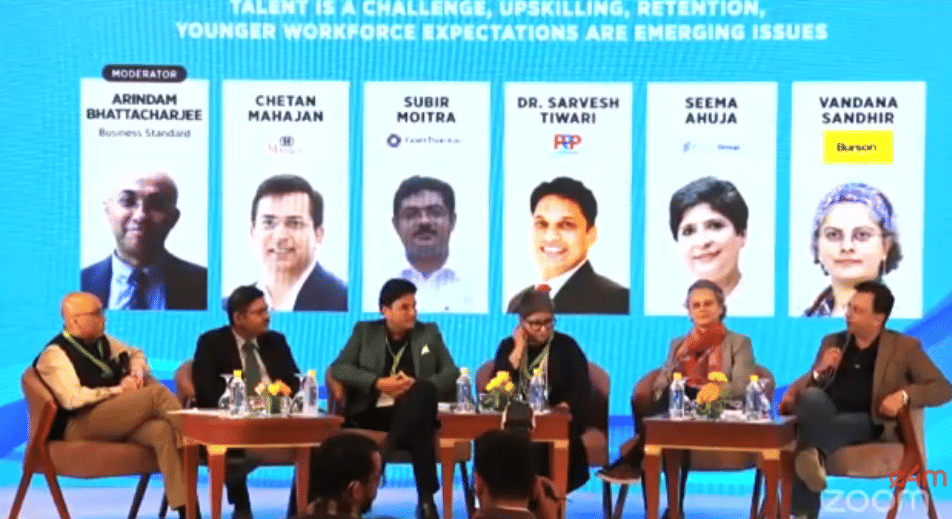

India’s public relations and communications industry is facing a talent paradox. While the number of trained professionals entering the workforce has grown steadily, agencies and corporate communication teams say the real challenge is no longer availability — it is employability, adaptability and relevance in an AI-driven workplace.
This shift was at the centre of a discussion among senior industry leaders at a recent e4m PR and Corp Comm 30 Under 30 Summit 2025, where agency heads, corporate communicators and consultants acknowledged that artificial intelligence, Gen Z expectations and evolving client demands are forcing a rethink of how talent is hired, trained and retained.
Seema Ahuja, Senior Vice President and Head of Communications and Brands at Biocon Group said, “Talent is not scarce anymore, specificity is. We have thousands of PR graduates joining the workforce every year, but very few have the composite capability businesses need today.”
According to Ahuja, the role of a PR professional has moved far beyond writing and media relations. “You need digital literacy, AI understanding, business acumen and industry knowledge. Without that, it’s very difficult to add value to a business,” she said, adding that Biocon recently hired a prompt engineer to help tailor AI-led communication outputs to brand voice and platform-specific needs.
The pressure to evolve is being felt across agencies as well. Vandana Sandhir, Chief Client Strategy Officer at Burson India, said experience alone is no longer a differentiator in the profession. “Everything that got us here will not get us ahead,” she said. “It doesn’t matter how experienced you are — you have to unlearn and look at everything afresh.”
Sandhir said Burson has approached AI adoption at three levels: operational efficiency, strategic thinking and business impact. “Clients are no longer cheering because you landed a story in a big newspaper. They want ideas that move the business needle,” she said, noting that AI can reduce routine work but human judgment is still critical in interpreting data and shaping strategy.
The generational shift within the workforce is adding another layer of complexity. Sarvesh Tiwari, Founder and Managing Director at PR Professionals, pointed to the growing gap between senior leadership and younger employees. “The digital age of many Gen Z professionals is older than ours. That creates conflict,” he said, warning that the next generation is entering the workforce far faster than organisations expect.
Retention, too, is being redefined. Ahuja noted that attrition in the PR industry stands at about 16%, lower than the national average, but sustaining that advantage requires structural changes. She outlined a LEAD framework focused on continuous learning, empathy, authenticity, adaptability and clear career direction. “Gen Z doesn’t respond to annual training programs. They want to feel they are learning every day,” she said.
Flexibility and trust emerged as recurring themes. Chetan Bhagat, Founder and CEO at The Mavericks, said agencies must redesign work models if they want to hold on to talent. “This generation values flexibility and ownership. When you trust them, many will reciprocate — some won’t, and that’s okay,” he said, citing policies such as flexible workdays, zero notice periods and on-demand salary access.
From a consulting perspective, Subir Moitra, Senior Advisor, Market Ecosystem at Grant Thornton, said communication professionals are increasingly expected to understand policy, finance, cybersecurity and technology alongside storytelling. “We need specialists who can crunch numbers and also understand how AI fits into advisory work,” he said, adding that firms must create cultures where employees feel safe admitting what they don’t know.
As agencies plan for growth, automation is expected to play a central role. Bhagat said scaling three times with only twice the headcount will require eliminating repetitive tasks. “If routine work isn’t automated, there’s very little room left for creativity — and creativity is what people stay for,” he said.
The consensus among speakers was clear: the future of talent in communications will belong to professionals who combine technology with judgment, and organisations that prioritise learning over hierarchy.
Read more news about PR and Corporate Communication News, Internet Advertising, Marketing News, Digital Media News, People Movement News
For more updates, be socially connected with us onInstagram, LinkedIn, Twitter, Facebook YouTube & Google News