OOH should match TV & digital in measurement rigour: Narayanaswami Shekhar, IOAA
Narayanaswami Shekhar, Chairman of IOAA & CEO of Times Innovative Media, speaks to e4m on RoadStar’s adoption, agency concerns
 by
by
Published: Jun 25, 2026 9:17 AM | 6 min read
 Follow Us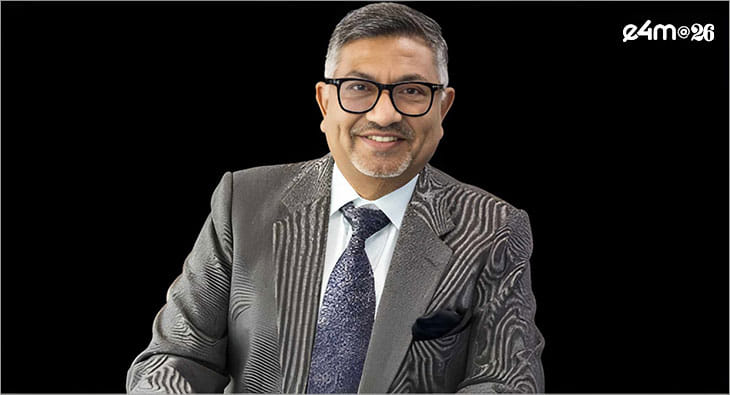

- India's out-of-home (OOH) advertising industry is transitioning towards a standardized measurement system, with the RoadStar platform developed by Relu AI gaining significant adoption among major agencies, enhancing audience behavior and exposure metrics in campaign planning.
- The Indian Outdoor Advertising Association (IOAA) emphasizes the need for the OOH sector to achieve the same level of planning efficiency and accountability seen in television and digital advertising, as advertisers increasingly demand robust evidence of campaign effectiveness.
- While RoadStar has made strides in addressing concerns about data privacy and control, discussions with major agencies like GroupM and IPG are ongoing, focusing on potential integration with existing proprietary measurement systems.
- The industry is at a pivotal moment, with a growing willingness among stakeholders to embrace data-driven measurement, but challenges remain in changing ecosystem behaviors and standardizing practices across agencies and media owners.
India’s out-of-home industry has long operated without the kind of common measurement currency that television and print have relied on for planning, pricing and accountability. That gap has become harder to ignore as advertisers demand stronger evidence of reach, frequency and campaign impact, especially in a market where OOH is moving beyond static billboards to transit media, airports, premium formats and digital outdoor networks.
At the centre of this transition is RoadStar, the IOAA-backed audience measurement and planning platform developed by Relu AI. While several leading OOH agencies have adopted the platform, questions around wider agency buy-in, privacy safeguards, interoperability with proprietary tools and industry-wide standardisation continue to shape the debate.
In this interview with e4m, Narayanaswami Shekhar, Chairman of the Indian Outdoor Advertising Association and CEO of Times Innovative Media, outlines why he believes the sector is now at an inflection point, and why India’s OOH ecosystem must move closer to the planning efficiency, transparency and measurement rigour seen in television and digital.
Excerpts:
We understand that almost all major OOH agencies have already adopted RoadStar. What has been their broader feedback so far?
RoadStar adoption has expanded significantly across the industry—from established players like Madison, Tribes, Publicis, TimesOOH, Dentsu, and OAP to WTT, IThinkMedia, Superherooh, Efficacy WorldWide, and others. This breadth across national and specialized agencies represents a genuine milestone in industry alignment.
The feedback has been consistently positive. Agencies appreciate RoadStar's ability to move beyond location-based decisions and instead evaluate sites and campaigns based on audience behavior and exposure metrics. Many are integrating RoadStar outputs into client recommendations and post-campaign reports. That's not optional adoption—that's embedding measurement into everyday workflows.
What's encouraging is that this aligns with what we've observed globally. Measurement frameworks in mature markets are not vendor-led—they're industry-owned. RoadStar is being positioned and used that way. Agencies are building confidence not because they're forced to, but because they see the platform's credibility coming from association backing and independent governance. We haven't encountered material concerns that have damaged adoption or client relationships.
Also Read: Roadstar’s OOH currency ambition hinges on GroupM, Omnicom buy-in
Has Relu Ai been able to plug the concerns raised by AAAI a year ago, such as data privacy?
AAAI raised legitimate questions around data privacy, access control, and data isolation—questions any responsible industry association should ask. The steps Relu has taken appear substantive: greater client control over data storage and access, tighter restrictions on sensitive information, activity monitoring, and safeguards ensuring data isolation between clients.
This is important because trust is foundational to any measurement currency. As we've seen in global markets, credibility comes not from vendor promises but from transparent, independently governed systems. The direction Relu has taken—moving toward client control and auditability—is the right one. Whether these steps fully address all stakeholder concerns is for individual players to evaluate, but the investment and transparency are evident.
What is the status of RoadStar discussion with GroupM (WPP Media) and IPG (now Omnicom)?
We understand that conversations with both WPP Media and IPG are ongoing. Both organizations operate sophisticated proprietary measurement systems with significant client dependencies, so they've naturally been circumspect about adoption of an external tool. The discussions are exploratory at this stage—focused on understanding whether potential integration points could work, particularly around API-level compatibility that might allow RoadStar data to complement rather than displace their existing workflows.
This is significant because it reflects a maturation in how the industry thinks about measurement. It's not about a single vendor solution; it's about building interoperability between standardised currencies and proprietary systems. That's how Route, MOVE, and the evolving U.S. system work. Global practice shows that successful measurement ecosystems accommodate multiple entry points while maintaining common currency principles. These discussions are worth watching as a model for how large agencies can participate without dismantling existing investments.
How soon do you think it can become an industry currency?
The evidence of progress is substantial. Over six years, RoadStar has expanded to cover 1,850+ markets across India, supported 7,500+ campaigns, and established widespread adoption among leading agencies. The consistency of measurement methodology across geographies and the sustained body of real-world usage demonstrate many characteristics that define an industry currency.
When we say "industry currency" it's not a designation that comes from one vendor or one platform. It emerges when the entire ecosystem moves together—when brands demand measurement from one credible third-party industry-backed system, when agencies embed it into planning workflows, when media owners standardise around common metrics, when regulators align frameworks. That's the desired journey, and we're in the middle of it.
RoadStar has built strong foundations—coverage, adoption, credibility. The next phase requires coordinated movement. Just as it happened in mature markets, the transition from "claimed performance" to "accepted currency" happens when stakeholders collectively decide the measurement framework is worth organizing around. We're in that transition now.
Current market scene and challenges of the industry?
The market has shifted perceptibly. Six years ago, the concept of audience-based planning in OOH was still novel, and data was viewed as supplementary. Today, the industry has moved from questioning whether audience data is necessary to asking how to use it more effectively. That's a fundamental shift.
What's encouraging is the openness across advertisers, agencies, and media owners to embrace data for planning, site selection, campaign evaluation, and performance measurement. The industry's willingness to embrace measurement has never been higher. The foundations are being laid. Adoption is steadily growing.
That said, significant work remains. The real challenge is not technology—RoadStar has demonstrated that. It's an ecosystem behavior change. Agencies must embed measurement into everyday planning and buying workflows, not treat it as an optional layer. Media owners must standardise asset data and move from opacity to transparency in pricing, quality, and delivery metrics. Brands must actively demand measurement-backed recommendations rather than accept traditional location-based pitches. And regulators must enable responsible digitisation so the infrastructure—especially digital—can scale.
These aren't small asks. But they're not unprecedented either. Every mature market has gone through this transition. The benefit is clear: when measurement becomes accepted currency, OOH demonstrates accountability, effectiveness, and ROI to advertisers in ways the industry hasn't before. That's when strategic investment follows.
What is your vision for the industry?
My vision is straightforward: India's OOH should operate with the same planning efficiency, transparency, and measurement rigor as television and digital. We're not far from that. The inflection point is now.
The formula is proven: Brands must demand measurement. Agencies must adopt it into workflows. Media owners must adapt their operations around common standards. Regulators must align frameworks. When all stakeholders move in tandem, measurement becomes a shared industry asset, not a vendor offering. That's when RoadStar—or any standardised currency—moves from foundation to fondness. That journey is underway.
Read more news about Out of Home, Internet Advertising, Marketing, Digital Media, TV Media
For more updates, be socially connected with us onInstagram, LinkedIn, Twitter, Facebook, YouTube & Google News