One TV rating agency not enough, digital growth demands new frameworks: TRAI chief
In a candid chat with exchange4media on the sidelines of a panel discussion at WAVES summit, TRAI Chairman AK Lahoti said multiple rating agencies are the need of the hour
 by
by
Published: May 2, 2025 8:14 AM | 3 min read
 Follow Us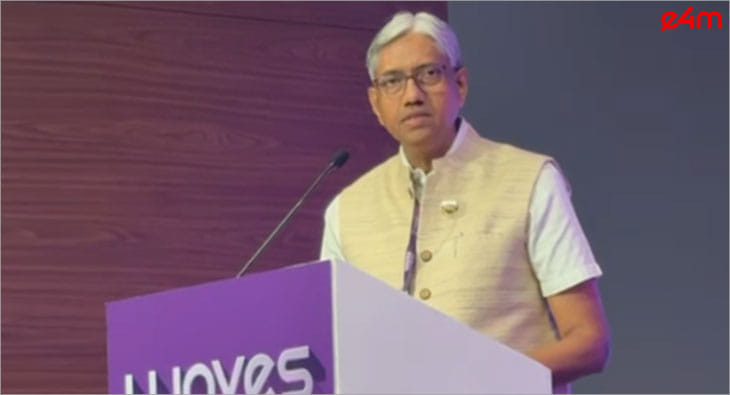

Telecom Regulatory Authority of India (TRAI) Chairman AK Lahoti has reiterated the regulator’s firm stance on the need for multiple television rating agencies in India, challenging the long-standing monopoly of the Broadcast Audience Research Council (BARC).
In a candid chat with exchange4media on the sidelines of a panel discussion on ‘Regulating Broadcast in the Digital Age: Key Frameworks and Challenges’, Lahoti said multiple rating agencies are the need of the hour.
Responding to questions on industry feedback and the future of the television ratings ecosystem, Lahoti said, “We have critically examined this and strongly recommended the need for multiple agencies. If an agency provides credible ratings to the industry, advertising bodies and brands will naturally patronize it.”
His comments come at a time when TAM Media has reportedly applied for a licence to operate as a TV rating agency, aligning with TRAI’s push to diversify the audience measurement landscape.
“There is no reason why there should be only one agency,” Lahoti added. However, when asked about a timeline for implementation, he clarified, “I am not the person who can answer this. It is the ministry’s call.”
TRAI had earlier issued recommendations suggesting that the Ministry of Information and Broadcasting (MIB) facilitate an open environment for multiple rating bodies to operate under proper oversight, aiming to foster transparency, innovation, and trust in television audience metrics.
Delivering his keynote address, Lahoti said that a very comprehensive recommendation for the National Broadcasting Policy has also been submitted to the government by TRAI.
“We have recommended a revamp of the audience measurement system to allow multiple agencies to provide audience ratings. This would ensure that more reliable data is available, which can lead to better pricing of advertising,” he said.
During his keynote address, Lahoti highlighted the rapid evolution of broadcasting, noting that digital platforms — including OTT, FAST (Free Ad-Supported Streaming Television), and premium ad-supported models — are reshaping the media landscape. A recent industry study showed digital media surpassing linear TV in 2024, reaching $9.5 billion compared to $8 billion for traditional TV.
He attributed this growth to affordable high-speed internet (as low as $0.12 per GB), as well as the personalized, on-demand, and regional content offerings that digital platforms provide. “The consumer should get a better experience — but are we treating linear and digital on the same level? That question remains,” he said.
Lahoti emphasized that while linear TV is governed by well-established content and advertising regulations under the Cable TV Network Rules, digital platforms primarily rely on self-regulation — a growing concern. He noted the Supreme Court has issued a notice to the government on a PIL seeking tighter regulation of OTT services.
He stressed the importance of a level regulatory playing field between platforms, adding that from a consumer standpoint, digital services often lack structured provisions on pricing, deals, and service standards seen in linear TV.
Referring to the Broadcasting Bill currently under public consultation, Lahoti said the Ministry of Information and Broadcasting is reviewing how OTT regulation can be addressed more comprehensively.
Additionally, under the Telecommunications Act, 2023, TRAI has recommended a simplified and overhauled regulatory framework to harmonize terms for all broadcasting services and promote ease of doing business. He also noted new provisions to regulate emerging services like ground-based broadcasting, emphasizing the framework’s tech-agnostic nature — covering both wired and wireless delivery.
Read more news about Television Media, Digital Media, Advertising India, Marketing News, PR and Corporate Communication News
For more updates, be socially connected with us onInstagram, LinkedIn, Twitter, Facebook YouTube & Google News