#e4m Follow-Up: ₹8 cr illegal IPTV racket expands across 3 states
900 member WhatsApp network busted; Police have frozen ₹20 lakh in a bank account belonging to an accused involved in handling financial transactions
 by
by
Published: Apr 6, 2026 3:58 PM | 4 min read
 Follow Us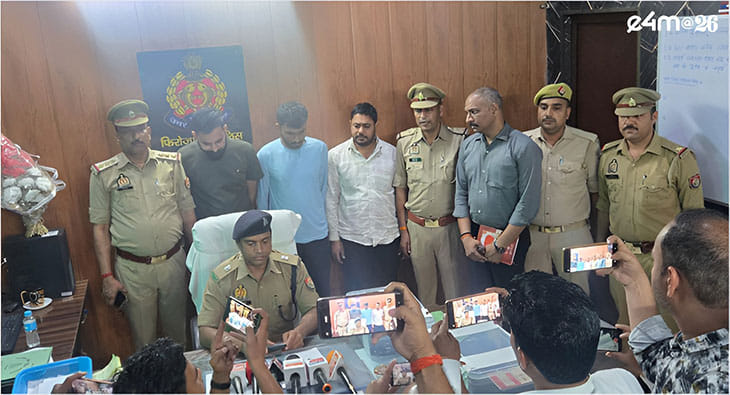

The crackdown on the ₹8 crore illegal IPTV racket has gathered momentum, with the Firozabad City Police in Uttar Pradesh arresting two more individuals allegedly linked to the operation. The latest arrests include Jagdish Kumar from Rajasthan and Ashok Dhiman from Punjab, indicating the widening footprint of what investigators describe as a sophisticated, multi-state piracy network.
The development follows the earlier arrest of Padamsingh Chandwar from Uttar Pradesh, who was among the first to be apprehended in connection with the case. With arrests now spanning three states, enforcement agencies believe the network has deeper roots and a broader operational scale than initially assessed.
According to police officials, the accused were involved in illegally distributing premium television content through IPTV (Internet Protocol Television) infrastructure at highly subsidised rates. The racket allegedly offered access to a vast library of Indian and international channels, including Pakistani broadcasts, undercutting legitimate distribution platforms and causing significant revenue leakage to broadcasters.
Investigations have revealed that the network relied heavily on digital tools to scale operations and evade detection. A WhatsApp group with nearly 900 members has been identified as a key node for customer acquisition, communication, and service dissemination. The use of encrypted messaging platforms allowed the accused to operate in closed networks, making it difficult for authorities to track real-time activities.
Financial transactions linked to the racket are also under scrutiny. Police have frozen ₹20 lakh in a bank account belonging to Jagdish Kumar, suspected to be proceeds from the illegal IPTV business. Officials said the recovery is part of a larger effort to trace the money trail and identify other accounts and entities used to route funds.
During coordinated raids across multiple locations, law enforcement agencies seized two laptops, three mobile phones, multiple SIM cards linked to UPI accounts, IPTV equipment, and eight fake bank passbooks. Investigators believe the fake banking documents were used to open or operate mule accounts, enabling the accused to layer and move funds without raising suspicion.
“The case points to a well-organised, multi-state racket with both technical and financial sophistication,” said Ravi Shanker Prasad, SP City, Firozabad. “We are investigating all angles, including the source of content, distribution mechanisms, and financial flows. More arrests are likely as the probe progresses. The accused were heavily involved in pirating JioStar content, and coordinated raids have been conducted across multiple states.”
The reference to piracy of JioStar content highlights the scale of infringement, particularly at a time when premium sports and entertainment broadcasting rights command significant value. Industry executives have repeatedly flagged the rise of illegal IPTV networks as a major threat, especially during high-traffic events such as cricket leagues, where demand for low-cost access spikes sharply.
What sets the current case apart is the apparent integration of technology, payments, and cross-border content feeds. Officials suspect that the accused may have sourced content through illegal upstream providers or signal interception mechanisms, which were then redistributed through IPTV boxes and applications configured for end users.
The seizure of multiple SIM cards and UPI-linked accounts suggests the use of layered identities and digital wallets to avoid regulatory scrutiny. Investigators are now working to map these linkages and identify other members of the network, including potential kingpins, resellers, and technical operators.
The case also underscores the evolving nature of piracy in India’s media ecosystem. Unlike traditional cable piracy, IPTV-based operations are more agile, scalable, and harder to detect, often operating through cloud infrastructure and private networks. This has made enforcement more complex, requiring coordination across states and agencies.
Authorities are now expanding the scope of the investigation to include additional suspects, financial intermediaries, and technology providers who may have enabled the racket. With digital evidence being forensically examined and more leads emerging, officials expect further arrests and disclosures in the coming days.
The latest action signals a broader enforcement push against illegal streaming and piracy platforms, as regulators and law enforcement agencies step up efforts to protect licensed broadcasters and curb revenue losses in India’s fast-growing media and entertainment sector.
Read more news about Television Media, Digital Media, Advertising India, Marketing News, PR and Corporate Communication News
For more updates, be socially connected with us onInstagram, LinkedIn, Twitter, Facebook YouTube & Google News
