Can the creative economy be our trade balancer?
Guest Column: Anup Chandrasekharan, COO – Regional, IN10 Media, writes that India can make its creative economy a global trade balancer by protecting IPs, scaling stories, & enabling policy support
 by
by
Published: Aug 11, 2025 4:46 PM | 3 min read
 Follow Us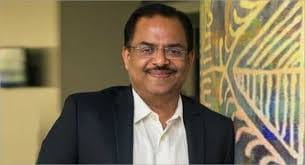

India’s next big export isn’t steel or software — it’s stories. If we protect our IP and back our creators, our culture can power our economy.
The proposed 50% tariff hike by the US is more than a trade policy shift — it’s a signal for economies like India to rethink what truly powers growth. In a world where goods are becoming costlier to move, stories and ideas travel without shipping lanes. The creative economy is our soft power — and it needs urgent activation as a trade and economic lever.
India’s media and entertainment sector, valued at ₹2.3 lakh crore, is projected to cross ₹2.8 lakh crore by 2025, spanning film, TV, digital, music, gaming, and live events. Yet, it remains under-leveraged as a trade asset. As traditional exports slow, our stories can become revenue engines, delivering both cultural influence and market expansion.
For decades, India has consumed international formats — from reality shows to animation. It’s time to reverse the flow. With the right policy support and creator incubation, we can develop IP rooted in Indian culture but crafted for the world. Shows like Delhi Crime winning an International Emmy or RRR sweeping global box offices prove that Indian IP, when empowered, can compete globally.
But this potential is threatened by piracy. According to The Rob Report by EY and IAMAI, piracy cost India’s digital video sector $2.4 billion in 2023. This leakage erodes tax collections, investor confidence, and studio viability. Strong enforcement, tech-enabled content protection, and international legal support are critical to building a sustainable creative economy.
Alongside enforcement, we must scale up regional storytelling. Regional OTT platforms, vernacular creators, and grassroots formats are growing but need a robust monetisation model. Formats like Manjummel Boys, a Malayalam thriller, show how local stories can break into national consciousness — and tomorrow, into global markets.
Our talent is abundant, but skills in writing, VFX, production, and post remain fragmented. Skilling must be central to industry policy. Coupled with infrastructure upgrades, from studios to post-production, India can deliver world-class content faster and more competitively.
Ease of doing business in the creative sector also demands reform. Filming permissions, international co-productions, and licensing should flow through a single-window clearance system. We already have the landscapes, talent, and ambition; now we need clarity, consistency, and speed.
Finally, growth must be data-driven. Without robust measurement, IP export, or revenue generation, policymaking risks being reactive. A unified Creative Economy Dashboard, updated quarterly, could guide both industry and government, ensuring accountability and visibility.
This is India’s moment to turn IP into GDP — to shift from content consumer to global content powerhouse. With bold leadership, smarter regulation, and collective alignment, we can make the creative economy not just our cultural voice, but our trade balancer, job engine, and strategic advantage in a shifting global order.
Read more news about Television Media, Digital Media, Advertising India, Marketing News, PR and Corporate Communication News
For more updates, be socially connected with us onInstagram, LinkedIn, Twitter, Facebook YouTube & Google News