We go where our advertisers want us to be: Surinder Chawla, BCCL
Times of India Group's Response - President & Head, Surinder Chawla, brings a rare blend of corporate rigour and sharp market intuition to the media boardroom
 by
by
Published: Apr 25, 2025 8:25 AM | 6 min read
 Follow Us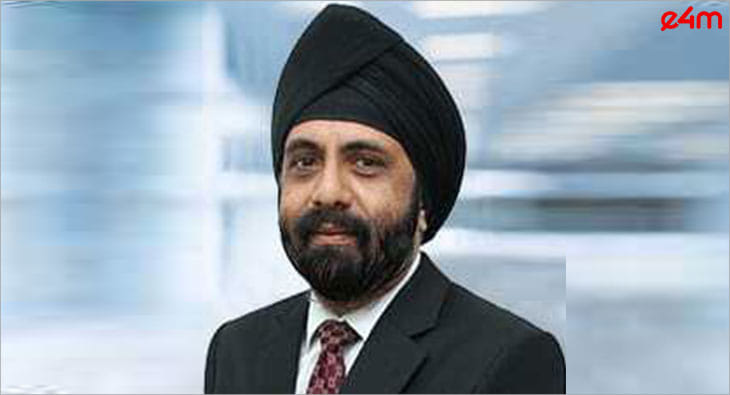

When Surinder Chawla moved from the banking sector to helm The Times of India Group's Response department last July as President & Head, it might have seemed like a dramatic pivot.
It was when India’s newspaper industry was still trying to recover from the post-COVID blow, and the Times Group itself was under restructuring after being split into two.
How challenging was his transition? Chawla explains with a smile, “At the core, business is about management—understanding people, operations, and market dynamics. Once you grasp those principles, the product itself becomes secondary. Yes, print is a different category from finance, but for me, it wasn’t a radical shift. I’ve worked across assets and liabilities—products change, principles don’t.”
He adds, “I didn’t need much time to settle in, and honestly, no one here treats me as an outsider from another industry.”
“BCCL is a market leader with ambitious plans. We’re expanding our portfolio, adding new initiatives, and relaunching some of our brands. These are exciting times—not a sunset moment for print, as some suggest. It’s a mature market, yes, but it still holds strong potential,” Chawla shares with pride.
Print’s value isn’t diminishing — It’s sharpening
In a media landscape dominated by digital headlines and algorithmic metrics, Chawla remains a staunch advocate for the measurable impact of print, not just in reach, but in resonance.
“If you want credibility, trust, and brand gravitas — there’s no better medium than print,” he asserts. “Many of our clients see a direct business impact from print campaigns. That’s why they keep coming back.”
And that belief is not just philosophical — it’s financial. Even as industry narratives suggest a pullback from print, BCCL has implemented strategic rate increases. “This isn’t a knee-jerk move,” says Chawla. “Rate revisions are based on demand, inflationary pressures, and the sustained value we deliver. Our advertisers understand the ROI.”
He also points to expanding campaign footprints — clients moving from single-city activations to pan-India rollouts — and a growing trend of brands shifting between English and vernacular publications depending on audience needs.
NIE is being revamped
Advertisers today are increasingly concerned about Gen-Z's shift towards digital. While different audience segments still engage with print, TV, and other mediums, Gen-Z—the largest population cohort—has largely migrated online.
How do you plan to address advertisers' concerns through your print offerings? "During COVID, digital adoption accelerated massively—physical media dropped to almost zero. But now, we’re seeing the tide swinging back. Young readers are returning to newspapers. Educational institutions, for instance, are encouraging newspaper reading to help students prepare for competitive exams,” he noted.
We’re actively working with schools, colleges, and universities to create products that are relevant for that age group. One such initiative is Newspaper in Education (NIE), which continues to run strongly. In fact, we’re in the process of revamping it to make it even more engaging and relevant for students, Chawla tells us.
Specific details of the revamp are still evolving, but the focus is clear—nurturing newspaper reading as a habit among the youth. Despite assumptions that the habit has faded, we’re seeing green shoots of revival, he says.
Regional expansion with strategic depth
Regional newspapers have bounced back since the pandemic with some of them like Dainik Bhaskar even witnessing a remarkable increase in circulation in the last few months.
Does the Times of India Group seek to capitalize on this growth? This question is significant because the Times of India group had earlier sold its Bangla daily-Ei Samay, and shut down some of its popular supplements and tabloids Mumbai Mirror and Pune Mirror.
“Unlike peers who chase high circulation numbers across every Indian state, BCCL’s regional growth is more calibrated and client-focused. We’re not in the numbers game,” Chawla states. “We go where our advertisers want us to be — with leadership or a clear path to it. Our focus is on delivering results in key decision-making households.”
This means being selective about geographies, and aiming for market leadership in strategic territories, rather than thinly spread presence, he insists.
On measurability, digital fatigue, and hybrid futures
As advertisers increasingly demand ROI and measurability of their campaigns, Chawla believes print’s metrics need a broader lens. “Digital may offer numbers, but they come from platforms themselves. What really matters is: out of the 100 people you reached, how many bought your product?”
He also observes signs of digital fatigue among some marketers. “Digital makes noise, but the conversion stories don’t always match. Smart marketers are now looking for a balanced mix — print, digital, TV, out-of-home — aligned to their product and audience.”
Our growth is tied to industry performance
On asking what are his top three priorities and perhaps top three challenges over the next 12 months, he remarks, “Well, the top three priorities haven’t really changed—they’re constants in any business: drive more revenue, acquire more clients, and ensure those clients are satisfied enough to keep coming back. Priorities like these are foundational; it’s the numbers that keep shifting.”
“The real challenge, however, lies in accelerating the growth of the industry itself. As a brand, we don’t face positioning issues—we already hold a leadership spot with the highest market share in our segments. So, moving up the ladder isn’t a stress point; we’re already there. But when you're operating at a 45–47% market share, your growth becomes closely tied to the industry's performance,” Chawla says.
“The more the industry grows, the more you grow—and vice versa. That’s where our biggest focus lies: catalysing industry-wide growth. That’s both our biggest challenge and our most important mission. The rest is just the day-to-day of running a business—not something that keeps us up at night,” he noted.
“These are exciting times,” he says. “Rather than worry about pressure, we’re focused on the possibilities.”
The decision to launch the IRS lies with the industry body
The Indian Readership Survey (IRS) has been stalled since COVID, with funding now a major hurdle. Reports suggest some media houses are unwilling to share their portion of the ₹20-25 crore cost. As a market leader, what are his thoughts on the issue?
Chawla weighs in: “This decision lies with the industry bodies currently in discussions. I’m not part of that forum, so it’s not for me to comment. These bodies are reviewing all aspects, and the final decision rests with them. We are just one member of the industry, not in a leadership role here.”
Read more news about Print Media, TV Media, Advertising India, Digital Media, Marketing
For more updates, be socially connected with us onInstagram, LinkedIn, Twitter, Facebook, YouTube & Google News