Journalism’s biggest threat today is technology and fake news: EGI President Sanjay Kapoor
EGI’s Sanjay Kapoor believes Indian media is passing through one of its most difficult phases in decades
 by
by
Published: Dec 1, 2025 10:19 AM | 3 min read
 Follow Us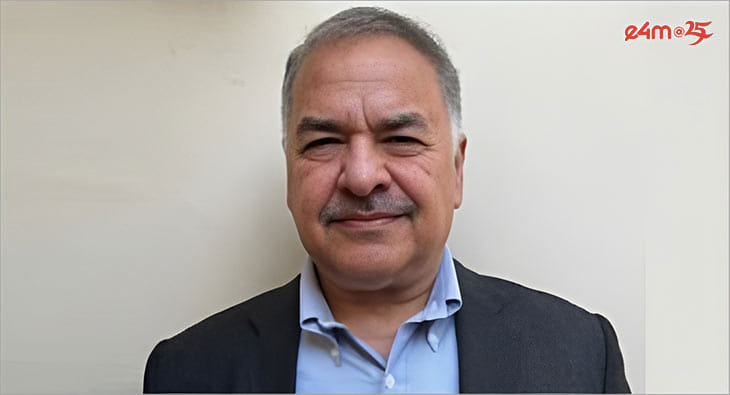

Sanjay Kapoor, the newly elected President of the Editors Guild of India (EGI) and a veteran investigative journalist, believes Indian media is passing through one of its most difficult phases in decades. Speaking to e4m, he reflected on his career, the evolution of the industry, and the urgent need to restore credibility and independence within newsrooms.
Kapoor began his journalism journey in the Indian Newspaper Society building, working for the Mumbai-based weekly Blitz. During his ten-year stint from 1987 to 1998, he rose to the position of Bureau Chief and built a reputation for bold, left-of-centre investigative reporting. His most prominent work came in the mid-1990s when he broke the Jain hawala scandal, a story that rattled the Narasimha Rao government and was widely covered by international media.
Following the closure of Blitz, Kapoor worked as India Correspondent for Asiaweek, part of the Time Inc., and later became Editor of Mid-Day. He eventually launched his own publication, HardNews, as a counter to what he describes as a growing shift toward soft news and trivia. HardNews initially ran as a monthly print magazine with daily digital content, before transitioning fully online in 2019–20 in partnership with French publication Le Monde Diplomatique. Kapoor notes that while editorially strong, the venture faced the usual challenge most journalists-turned-entrepreneurs encounter: marketing.
Kapoor is now focused on updating HardNews for a changed media ecosystem. He says the priority is to build a stronger, daily digital presence supported by original reporting, technological capabilities and credible ground coverage. Reader behaviour, he believes, has transformed significantly, making credibility the publication’s biggest currency.
On the broader industry landscape, Kapoor is candid about the economic and structural pressures squeezing media organisations. With advertising revenue shrinking and audiences spoiled for choice online, he argues that publications must invest in unique, high-quality content to retain loyalty. He sees artificial intelligence and tools like ChatGPT as both a threat and a challenge that could further diminish the perceived need for trained journalists, especially if newsrooms fail to differentiate themselves.
As EGI President, Kapoor’s immediate priority is expanding the Guild’s membership to reflect the full spectrum of Indian media including print, digital, YouTube, influencers and new-age platforms. He emphasises the need for deeper engagement outside Delhi, particularly in Hindi-speaking regions, to strengthen grassroots support for press freedom.
Kapoor warns, however, that media freedom in India is facing a crisis. While technological disruptions and regulatory uncertainty are growing concerns, he stresses that media independence in a democracy is difficult to sustain without constructive cooperation from the government and constitutional institutions. Establishing dialogue with these bodies, he says, will be central to the Guild’s work.
The veteran journalist also points to the dominance of large business groups in media ownership, which makes true independence harder to achieve. Commercial and political pressures inside newsrooms, he adds, have made it increasingly difficult for editors to retain autonomy or protect credibility.
Government cuts in publishing and printing budgets, Kapoor notes, will only deepen the industry’s challenges and force news organisations to find new ways to remain financially stable.
Kapoor, who authored the bestselling book Bad Money, Bad Politics: The Untold Hawala Story, is currently working on a new title that examines key events and developments shaping modern India.
For young journalists, his advice remains simple and old-school: work hard, keep reading, understand technology, and constantly upgrade one’s skills. In an era of misinformation and AI-driven noise, he believes the fundamentals of journalism—honesty, rigour and service to the reader—are more essential than ever.
Read more news about Print Media, TV Media, Advertising India, Digital Media, Marketing
For more updates, be socially connected with us onInstagram, LinkedIn, Twitter, Facebook, YouTube & Google News