'From serendipity to strategy': Dr. Annurag Batra reflects on completing 25 years in media
In a candid conversation on the Good Life Podcast, Dr. Annurag Batra spoke about the rise of the creator economy, the promise and perils of AI, and why credibility remains media’s greatest currency
 by
by
Published: Jul 4, 2025 12:29 AM | 10 min read
 Follow Us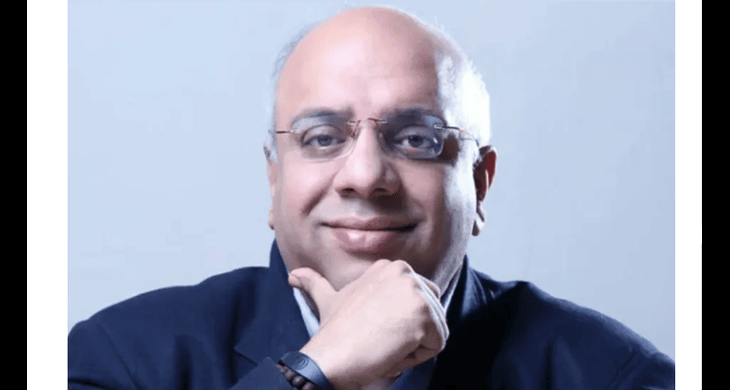

In an engaging conversation on the Good Life Podcast, Dr. Annurag Batra, Chairman and Editor-in-Chief of BW Businessworld and Founder of Exchange4media, reflected on his 25 years in Indian media.
Dr. Batra began by recounting a powerful insight from the book Fluke by Brian Klaas, which questions the self congratulatory narratives often attached to success. “We give too much credit to ourselves and too little to chance or to God,” he says. According to him, the founding of exchange4media was less a calculated business move and more a product of serendipity.
What started as a B2B marketplace soon evolved into a comprehensive media ecosystem. Over the years, brands like Pitch, Impact, Realty+, and Samachar4media have emerged under the Exchange4media umbrella, each serving a niche in the media, real estate, and marketing industries. Dr. Batra explains that while Businessworld, now in its 45th year, operates independently, both ventures aim to nurture credibility, specialisation and storytelling in Indian media.
Reflecting on how the media and advertising industry has transformed in the last two decades, Dr. Batra highlights that we are witnessing the convergence of three powerful forces: content, community, and commerce. “Madison Avenue (advertising), Hollywood (entertainment), and Silicon Valley (technology) are no longer separate worlds. They are merging,” he says.
He also notes the seismic shift in advertising expenditure. Of the trillion-dollar advertising industry, $650 billion is now digital. Remarkably, $460 billion of that is concentrated with two tech giants; Meta and Google. As traditional media loses ground, creators and influencers are stepping in to fill the space.
“YouTube has paid more than Rs 21,000 crores to Indian creators,” Dr. Batra notes. The figure, he said, is a sign of how much the creator economy has matured, not just in terms of content but also in revenue and influence.
Dr. Batra sees creators as authentic voices who bring flavor, style, and relatability to their content. “They are no longer just influencers; they are becoming full-blown creative brands.”
Touching on the disruptive influence of artificial intelligence, Dr. Batra says, “AI is here. It can convert text into video, create audio, even produce AI anchors.” However, he was firm in stating that AI will not replace journalists, unless journalists fail to use it.
“People still follow human anchors. Their opinions, their perspectives, their takes matter. But AI, if used wisely, will only make us more valuable,” he remarked. According to him, newsroom teams must adapt, experiment and collaborate with AI tools to remain relevant.
Media, Misinformation and Trust
In a world dominated by viral content, misinformation, and algorithmic feeds, Dr. Batra stats the importance of relying on verified sources. “We are in a war of narratives. We don’t know what’s true anymore,” he said. He advises against believing everything seen on WhatsApp or social media and instead relying on authentic, institutional sources like the Ministry of Defence for national updates.
The Future
Dr. Batra also places emphasis on changing consumer habits. He refers to how events like concerts or conclaves can create city-wide impact and brand value. “People want good, differentiated, and immersive content and they are willing to pay for it,” he says, referring the success of subscription platforms like The Ken, Morning Context, Mint, and ET Prime.
As someone who has built and revived multiple media brands, Dr. Batra also offers grounded advice for aspiring entrepreneurs. “Entrepreneurship is not for the faint-hearted,” he cautions.
Digital Advertisement
Referring to the digital advertisement, Dr. Batra says, “The shift has already happened”.. According to Pitch Madison Advertising Report, digital already commands nearly 30% of ad spends and is expected to hit 40% in the next three years. For some brands, that figure is already 40-50%.
But while digital continues to surge, he insists traditional formats like newspapers and radio are far from obsolete. “People have been saying newspapers are declining for years, but the fact is they still carry more credibility,” he says.
Dr. Batra makes a strong case for the value of legacy journalism. “When I read a newspaper, I know it’s well-researched and authentic. Established brands have reputations to protect. They don’t jump to conclusions the way some new digital platforms do,” he says.
He points to global examples like The New York Times and The Washington Post, which have successfully transitioned to digital subscription models without compromising on credibility.
According to Dr. Batra, reinvention isn’t a luxury; it’s more of a survival tool. Media platforms must embrace new formats and distribution models. “You have to be video-first, social media-first, and short-form content-aware. But it’s not either-or,” he says.
Even audio is transforming. Traditional radio is giving way to digital audio broadcasting, with 30-40% of radio revenue now coming from digital sources, and another 30% from experiential events. “Only 30-40% remains in traditional format. That’s how much the model has changed,” he explains.
Creator Economy and Influencer Fatigue
As brands shift money from television and print to influencers, Dr. Batra states that, “some influencers have become too expensive. The ROI just isn’t there anymore. Plus, the quality of engagement varies widely.”
He notes another worrying trend: digital ad fraud. “There are bots, there’s click fraud. Easily 20-30%, maybe even 40% of digital spends go waste. That’s a serious concern for brand managers.”
Despite that, creator-led content remains a powerful tool. But Dr. Batra advocates for balance and caution. “Creators are authentic. But we must also look at the numbers, the effectiveness, and the scale.”
Traditional Media Still Has a Role
Cinemas face tough challenges. From high real estate costs to skyrocketing food and beverage prices, sustaining profitability is difficult. Yet, Dr. Batra points out that southern cinema has shown what’s possible with scale, creativity and strategic storytelling.
“Movies and news channels are suffering from the same issue,” he says. “They’re working with old formulas. We need new ideas, fresh formats, and creative thinking.”
“I still spend two hours in the morning reading newspapers and magazines,” he says. “But I’m also spending six and a half hours a day on screens. I need to bring that down.”
War of Narratives
Dr. Batra also says, “We live in the era of narratives. Not all voices are authentic. Many are divisive, manipulative, or simply fake.” He referred to the recent conflicts such as the misinformation surrounding events between India and Pakistan. “There were claims about fighter jets being downed, none of which turned out to be true. That’s propaganda at work.”
In today’s digital landscape, where everyone has a platform, Dr. Batra believes we must be more discerning than ever.
To navigate this sea of noise, Dr. Batra believes we need curation. “Just like you don’t drink unfiltered water from the street, you shouldn’t consume unfiltered information online. You need to curate what you read, what you watch, and what you trust.” This is where traditional media brands, he says, can and must step up.
“The opportunity lies with responsible media houses,” he explains. “You don’t have to be the first. You have to be right. Accuracy matters more than speed.”
AI and Deepfakes
Dr. Batra acknowledges that technology has made the spread of misinformation easier, but he’s also optimistic that technology itself can provide the solution. “Yes, there are 10 ways to create deepfakes. But there are 20 tools to detect them. As the digital ecosystem grows, so will fact-checking and tools that counter fake news.”
He believes consumers will get wiser too. “People will learn to recognize what’s credible. Media brands have to help educate audiences, especially those in tier-two and tier-three cities who may not yet have the tools to verify information.”
Media’s Responsibility in Times of National Crisis
Reflecting on India’s recent strategic response to conflict, Dr. Batra lays emphasis on the importance of unified national messaging. “When the Prime Minister spoke, he brought clarity and assurance. He communicated that we chose a ceasefire on our own terms. That was important.”
He points out that while some voices on social media called for war, such hot takes lack context and consequences. “War is not good for any country, especially not one like India, which has more to lose. We are a growing economy, attracting global investment, building a digital infrastructure. Peace is strategic, not weakness.”
He adds, “This is not a time for skepticism or emotional outbursts. It’s a time for reflection and calm. News plays a vital role here. It shapes public opinion. And when opinions are built on misinformation, the results can be dangerous.”
Experience Economy
Dr. Batra also believes we are witnessing a post-pandemic hunger for real experiences. “Look at the number of people traveling to attend concerts, summits, and literary festivals. Ahmedabad saw a boom just because of one concert.” He believes this is the age of the ‘YOLO’ consumer.
Events, he says, have become an extension of content, community, and commerce. “At Exchange4Media, we run multiple B2B events. If you create a high-quality IP and back it with editorial credibility, people will come and they’ll pay. That’s the value of strong brands.”
Contrary to popular belief, Dr. Batra argues that Indian audiences are willing to pay for content if it’s worth it. “We’re already paying for Netflix, Amazon, Spotify. In the business genre, people subscribe to The Ken, ET Prime, The Morning Context, Mint. So yes, the Indian consumer is ready.”
Will AI Replace Journalists?
As for the much-discussed rise of artificial intelligence, Dr. Batra says: “AI will not replace us. But if we don’t use AI, we will be replaced.”
AI tools can aid in turning text into video, audio, or even creating virtual anchors. But for him, technology can only assist, not lead. “People follow people. They connect to an anchor’s take, their personality. That cannot be replicated.”
Content Creators
Dr. Batra recognises that content creators today are very much entrepreneurs in their own right. “Many creators are building businesses that make Rs 20 to Rs 100 crore annually. Some of them are housewives producing content on YouTube.”
Technology, in his view, has democratised access and opportunity. “Anyone with a voice and authenticity can build a platform and even earn a livelihood from it.”
Living a Good Life
Dr. Batra urges everyone to focus on what truly matters; relationships, health, and finding joy in the work you do. “If you do what you love, and it becomes your enterprise, you’ve already won,” he says.
He signs off with a quote from his favorite author Randy Pausch: “Experience is what you get when you don’t get what you want.”
Read more news about Print Media, TV Media, Advertising India, Digital Media, Marketing
For more updates, be socially connected with us onInstagram, LinkedIn, Twitter, Facebook, YouTube & Google News