‘Tharoorism’: The influence of Shashi Tharoor in public life
Over time, Shashi Tharoor’s distinctive style came to be called ‘Tharoorism’, reflecting his intellectual engagement, literary expression, and commitment to civilised political discourse
 by
by
Published: Mar 11, 2026 12:16 PM | 4 min read
 Follow Us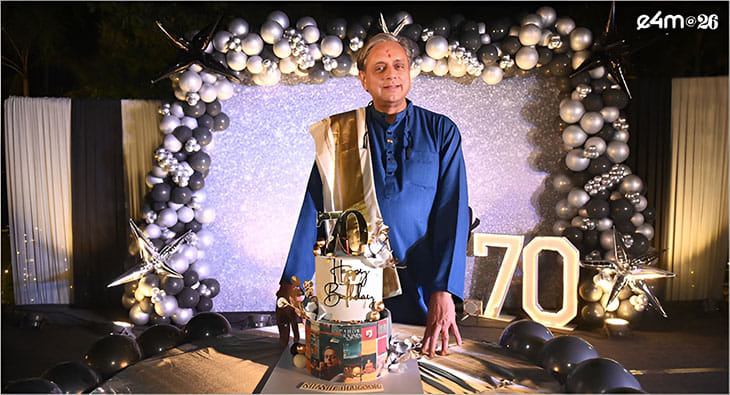

Birthday wishes on 9 March highlighted more than another year for Shashi Tharoor. For many observers of Indian politics, it was a reminder of a public figure who has built something few politicians manage today: a personal brand rooted in intellect, language and cultural depth.
Over the years, that identity has informally earned its own name: 'Tharoorism'. Not an ideology in the strict political sense, but a distinctive way of thinking, speaking and engaging with public life.
Before becoming one of India’s most recognisable parliamentarians, Tharoor spent nearly three decades at the United Nations, rising to the rank of Under-Secretary-General. His diplomatic career exposed him to global politics, multilateral negotiations and the nuances of international communication.
When he entered electoral politics in 2009 as a member of the Indian National Congress and won the Lok Sabha seat from Thiruvananthapuram, he brought that global perspective into India’s domestic political conversation.
Unlike many politicians whose identities are shaped purely by party lines, Tharoor’s reputation grew through commentary, books and lectures. His public interventions often attempt to place Indian debates within a broader historical and international framework.
The Emergence of “Tharoorism”
Over time, observers began referring to his distinctive style as Tharoorism. The term reflects three defining elements of his public persona: intellectual engagement, literary expression, and a belief in civilised political discourse.
In practice, Tharoorism manifests in a commitment to argument over slogan, nuance over outrage, and historical context over momentary political theatre. His speeches frequently weave references from literature, colonial history and global diplomacy, making them closer to essays than conventional political rhetoric.
This approach is visible in some of his most widely shared speeches, including his powerful address at the Oxford Union on the economic consequences of colonialism. The speech, which argued that Britain owed moral reparations to India, travelled far beyond the confines of the debating chamber and turned him into a viral intellectual voice.
Language as Political Identity
If Tharoorism has a signature trait, it is language.
Indian political discourse has increasingly favoured punchy one-liners and viral soundbites. Tharoor, however, built a reputation for using vocabulary that often sends readers to dictionaries. Words such as “farrago,” “rodomontade,” and even the famously trending “floccinaucinihilipilification” became pop-culture moments because he deployed them in political commentary.
Critics sometimes frame this linguistic flourish as elitist. Admirers see it differently: as an attempt to elevate political conversation in a country where rhetoric often slips into hostility. Either way, the effect is undeniable. Language itself has become part of the Tharoor brand.
View this post on Instagram
A Politician Beyond Politics
The other dimension of Tharoorism lies in its cultural reach. Beyond Parliament, Tharoor is a prolific author with books ranging from political analysis to historical reflection. His writing explores themes of colonial legacy, Indian identity and globalisation, positioning him as a bridge between scholarship and politics.
He also occupies a rare space in India’s cultural ecosystem: a politician who regularly appears at literature festivals, university forums and intellectual debates. In these spaces, he is often less a party representative and more a storyteller of history and ideas.
Social media has further amplified this persona. His posts mix political commentary with literary references, cricket opinions and occasional humour, creating a more multidimensional public image.
At seventy, Tharoor represents a kind of politics that is becoming increasingly rare, one that privileges thought, articulation and historical reflection.
Tharoorism, therefore, is not about electoral strategy or ideological doctrine. It is about a belief that public life can still be shaped by ideas, language and civil conversation.
In an age when political messaging often rewards simplicity over depth, the continued popularity of the Tharoor brand suggests something quietly reassuring: there remains an audience for leaders who speak not only loudly, but thoughtfully.
Read more news about Digital Media, Television Media, Out of Home Advertising, Print Media, Latest Advertising India
For more updates, be socially connected with us onInstagram, LinkedIn, Twitter, Facebook, YouTube & Google News