PM Modi: A life of service, as I have witnessed it
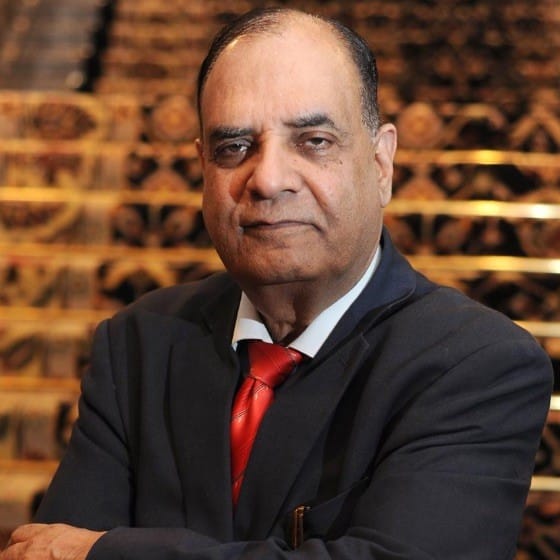
Veteran journalist Alok Mehta writes how, at 75, Prime Minister Narendra Modi remains identified with an unshakable sense of nationalism
 by
by
Published: Sep 17, 2025 9:06 AM | 7 min read
 Follow Us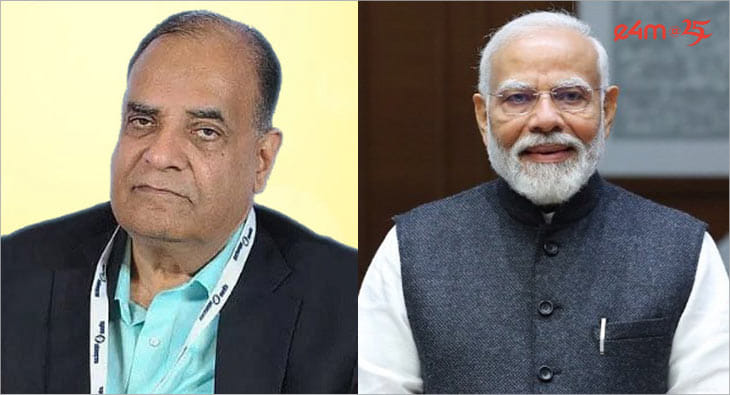

Today (17th September 2025) India celebrates the 75th birthday of its most influential leader of the 21st century—Prime Minister Narendra Modi. Born in 1950 in Vadnagar, Gujarat, Modi’s life journey from a small-town tea-seller to the Prime Minister of the world’s largest democracy is both extraordinary and inspirational. This birthday is no ordinary milestone. It marks not just 75 years of his life, but also 25 years of continuous governance—first as the Chief Minister of Gujarat (2001–2014) and then as India’s Prime Minister (2014 onwards).
In these decades, Modi has transformed politics and governance, becoming a symbol of nationalism, honest commitment, and social welfare-driven leadership.
Narendra Modi has always excelled in public speaking and leadership roles, while helping the poor around him and aspiring to improve their lives. Power, wealth, and success are secondary to him—what matters more is his ability to fight and his steadfastness to his values. Therefore, I find it more meaningful to discuss Modi’s journey of struggle and his victories at every step, rather than simply analyzing his position as Prime Minister and his political successes. Perhaps there are very few journalists in the capital today who were in Gujarat between 1972 and 1976 as reporters. That’s why I want to start from there. As a correspondent for Hindustan Samachar (news agency) between 1973 and 1976, I had the opportunity to cover a Congress convention, the Gujarat student movement against Chimanbhai Patel, and later, during the Emergency in 1975, I stayed in Ahmedabad for almost eight months reporting full-time.
During the Emergency, Narendra Modi was underground, playing a crucial role in maintaining contact with leaders of the RSS and Jan Sangh and delivering secret information about the government’s oppression.
Coincidentally, Narendra Modi’s younger brother Pankaj Modi also worked at the Hindustan Samachar office. During that time, Pankaj Bhai and bureau chief Bhupat Parikh shared insights into Modi’s deep commitment to the RSS and social service from his teenage years and his impressive writing skills. Therefore, I can say that Narendra Modi played an important role in underground activities during the Emergency, disguising himself and leading operations against the government.
As the Himalayas are dear to his heart, the Narmada river is also deeply connected to Modi. While no one can rival his attachment to the river, my own background in Ujjain-Indore-Omkareshwar has given me the opportunity to write about the political controversies surrounding the sharing of Narmada’s waters since 1973-74, as well as its ancient significance and the potential of utilizing Narmada’s water power for modern development. As a result, I’ve had several conversations with Modi about the Narmada river during his time in BJP leadership and as Gujarat’s Chief Minister. A few years ago, I worked on a book on the importance and cultural heritage of the Narmada river, and I sent Modi a request to write its foreword. He carefully read through the manuscript and sent a beautifully written foreword, despite his busy schedule. Later, he also sent an impactful message for a book I wrote on social reforms in India. Modi’s love for books and reading has never waned.
Even after becoming Prime Minister, his reading habits have not diminished. He still finds time to read late into the night, and the number of books in his personal library has increased rapidly over the last decade. During foreign trips, heads of state and government officials, aware of Modi’s love for books, often gift him rare volumes. Let’s hope that his government and the technologically advanced ministries will prioritize making books and libraries accessible to millions of Indians.
By 2014, India was yearning for change. Modi’s campaign electrified the country, blending development promises with a powerful nationalist appeal. His slogan “Sabka Saath, Sabka Vikas” (Together with all, development for all) resonated widely. When he led the BJP to a sweeping victory, giving India its first single-party majority in three decades, the nation had chosen a new direction—and a new style of leadership.
At 75, Modi remains identified with an unshakable sense of nationalism. His government’s bold decisions—like the abrogation of Article 370, Sindoor Operation fight against terrorism , surgical strikes, and Balakot airstrikes—are seen as turning points in India’s strategic posture.He has also redefined cultural nationalism: rebuilding temples like Kashi Vishwanath Dham, spearheading the Ram Mandir in Ayodhya, and strengthening India’s civilizational pride.
Perhaps the most enduring pillar of Modi’s popularity is his welfare agenda.
Unlike previous programs bogged down by corruption, Modi focused on direct benefit delivery using technology. Jan Dhan Yojana: Over 50 crore bank accounts gave financial identity to the poor. Ujjwala Yojana: Women received LPG connections, ending decades of smoke-filled kitchens. Swachh Bharat Mission: Over 10 crore toilets built, transforming rural sanitation.
Ayushman Bharat: Health insurance for over 50 crore Indians—the world’s largest scheme. PM-KISAN: Direct income transfers to farmers, cutting out middlemen.
Each initiative has touched millions of families.
Modi has projected India as a confident, rising power. His leadership during India’s G20 Presidency in 2023 was hailed worldwide. Through the International Solar Alliance and “Atmanirbhar Bharat” vision, he placed India firmly on the map as a country shaping the global agenda.The global community acknowledges that India’s position in tackling the Covid-19 pandemic has been better than most affluent developed countries.
Alongside eliminating terrorists, a constructive path of socio-economic development is also essential to combat terrorism. This is why, due to Narendra Modi’s efforts, the world stands with India, and many Islamic countries have distanced themselves from Pakistan. Therefore, moving beyond politics, controversies, and challenges, Narendra Modi’s firm resolve and dreams as a people’s leader deserve congratulations and best wishes on his birthday and for his good work this time as well.
Do the world’s most powerful leaders, such as Donald Trump, Vladimir Putin, and Xi Jinping, face acceptance or rejection based on age, not only by the people of America, Russia, and China but also by the entire world? Trump is over 79, while Putin and Xi Jinping are both over 70. At present, apart from Prime Minister Narendra Modi, who in India, whether in power or opposition, truly understands the strengths and weaknesses of these superpowers and can communicate with them while balancing India’s interests?
Few leaders at 75 enjoy such immense popularity. Modi’s ability to connect directly with people—through Mann Ki Baat, social media, and mass rallies—remains unmatched.
His personal simplicity also adds to his aura. He has no family in politics, lives with discipline, practices yoga, and works long hours. His rise from a tea-seller to Prime Minister makes his story relatable to millions. He has won a third term, and he’s already talking about serving as Prime Minister for a fourth term in 2029 to further boost the fintech revolution, declaring that India will be a developed nation by 2047. If you do the math, he was born on September 17, 1950, so he will be 79 in 2029 and 97 in 2047. But what does age matter? His mantra is: “When we decide to do something, we can go miles ahead.” So, instead of counting years, Modi focuses on setting goals for himself and the nation and crafting detailed plans for their execution. Moreover, in our tradition, we bless people with a long life of 100 years It’s an auspicious Vedic blessing – Jeevem Shardah Shatam” (जीवेम शरदः शतम्) means “May we live a hundred autumns (years)”.
Disclaimer: The views expressed here are solely those of the author and do not in any way represent the views of exchange4media.com.
Read more news about Digital Media, Television Media, Out of Home Advertising, Print Media, Latest Advertising India
For more updates, be socially connected with us onInstagram, LinkedIn, Twitter, Facebook, YouTube & Google News
