MIB considering regulatory reforms for modernisation, inclusity, fair play: Sanjay Jaju
Virtually addressing the DNPA Conclave 2025: Media Transformations in the AI Age on Thursday, Jaju also warned against misinformation, clickbait journalism, and the race to break news at any cost
 by
by
Published: Feb 27, 2025 2:48 PM | 6 min read
 Follow Us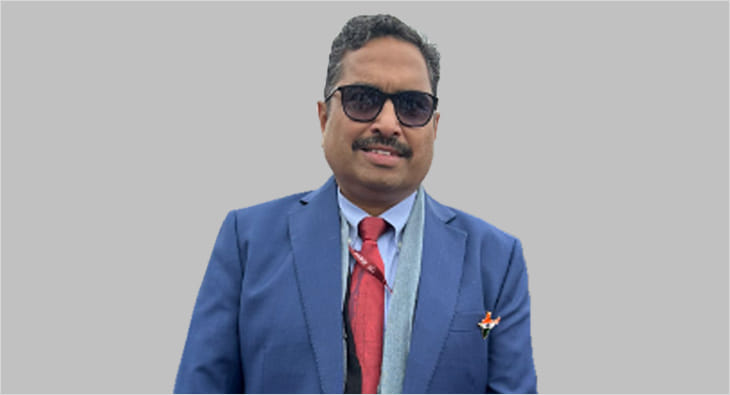

In an era where technology has revolutionised the media landscape, a few undercurrents like unchecked misinformation, clickbait journalism, and the relentless race to break news at any cost, threaten to erode its very foundation, cautioned Sanjay Jaju, Secretary at Ministry of Information and Broadcasting.
Virtually addressing the DNPA Conclave 2025: Media Transformations in the AI Age on Thursday, Jaju said that there is a range of regulatory reforms to allow inclusivity and fair play in the industry but stressed the importance of acknowledging the profound impact of technology on the news media landscape.
“We're looking at a range of regulatory reforms, which will allow modernisation, inclusivity, and fair play in the industry. It would be appropriate that you also recognise the changes and impact of technology on the news media as well.
“While technology has actually empowered the media, it has also introduced pressing challenges which needs to be addressed collectively. As was being mentioned by the previous speakers, there is this whole problem of unchecked spread of misinformation and clickbait journalism, which is undermining our democratic values. The race to break news has really resulted in compromising facts, and it's also allowed false narrators to gain traction,” he said.
Speaking about how digital transformation is impacting the media and entertainment industry, Jaju said this is a pivotal moment for the Indian M&E sector which is not only reshaping consumption patterns but also fundamentally redefining content creation, distribution, and audience engagement.
“India's M&E sector has actually witnessed impressive 8% growth in 2023. It's close to 28 billion US dollars now. And the digital media alone has grown by 15%. And it's obviously the predominant form of the media right now. Our gaming industry has also been evolving into a global powerhouse. And this segment is the fastest growing segment, as well as the VFX industry, which is going at a very good pace,” he said.
He highlighted that this is establishing India as a “creative and technological hub” in the global entertainment landscape.
“And beyond these numbers, these trends signify India's transformation into a dynamic digital economy. One that fosters innovation, empowers creators, and strengthens our cultural footprint globally,” he said.
Noting that technology has been driving unprecedented disruption across the media landscape, Jaju said AI-powered innovations are enhancing content creation, distribution and personalisation.
“From predictive content recommendations to automated video editing and real-time audio insights, AI is really unlocking new efficiencies across the industry.
“In animation, VFX and gaming AI-driven tools are defining creativity, enabling Indian studios to contribute to global milestones, such as Avatar, The Way of Water, the critically acclaimed indie movies like Raji, and Ancient Ape Epic,” he said.
Besides this, the OTT revolution has also democratised content consumption, noted Jaju, adding that regional content is now constituting close to 50% of viewership.
“Platforms like Hoi Choi and Aha are ensuring that Indian regional content is reaching the global audience. Digital advertising backed by AI and big data analytics is reshaping marketing strategies. Brands are also leveraging data-driven insights to build deeper and more meaningful connections with consumers.
“India's creative economy has emerged as a very powerful force, with splendid creativity with commerce. Today, content creation is no longer confined to major cities. Creators from tier 2 and tier 3 cities are reaching global audiences,” he said.
Jaju noted that Indian media houses produce high-engagement content, yet there is a growing concern that they receive little in return.
Without a fair compensation model, quality journalism faces significant risks, including potential compromises in integrity, he said.
“AI-driven recommendation engines often prioritize sensational content, leading to the viral spread of misinformation. In a diverse country like India, this has serious implications, as divisive content can fuel societal tensions. Intermediaries must take accountability for the impact their algorithms have on society.
“Furthermore, AI and copyright protection present another major challenge. News articles and reports created by journalists are now being used to train AI models, which then prioritise certain narratives without compensating the original creators. This raises ethical concerns and enables the repurposing of journalistic content for corporate profit,” Jaju said.
He also spoke about how the MIB is closely monitoring global regulatory developments.
“Several countries have implemented laws requiring digital platforms to share revenues with news publishers. There is an urgent need for a transparent revenue-sharing mechanism to ensure the financial sustainability of journalism.
However, this issue extends beyond economics—it's about safeguarding the integrity of journalism in the digital age. The future of Indian media is digital, dynamic, and deeply transformative. As we embrace new technologies, innovation must be matched with responsibility. The Ministry is committed to fostering an ecosystem where creativity, commerce, and credibility come together,” HE SAID.
He also highlighted that gaming influencers, digital entrepreneurs, and storytellers are driving market trends and business opportunities.
“We have launched the Create in India Challenge Season 1. I'm very happy to note that a large number of creators are now part of this process, and many of them are going to be part of the finals which will happen in the World Audiovisual Entertainment Summit (WAVES), slated to happen from 1st May to 4th May in Mumbai.
“At the same time, the audio streaming platform has also empowered the independent artists and created direct avenues for artists to monetize their work, while initiatives like Coke Studio Bharat have rejuvenated traditional music by blending it with contemporary sounds,” he said.
Jaju stated that Waves 2025 will be a global platform showcasing India's creative economy and fostering international collaborations. This initiative aligns with the vision of our Prime Minister, who aims for Waves to be a landmark event offering multiple avenues for industry growth, including the DNPA.
He also said that the Union Cabinet has approved the establishment of the Indian Institute of Creative Technologies (IICT), envisioned as a premier institute dedicated to advancing skills, research, and innovation in animation, VFX, gaming, and extended reality.
IICT will serve as a hub for talent development, incubation, and industry collaborations, equipping professionals with cutting-edge technologies and expertise in emerging digital media domains. The institute will feature state-of-the-art infrastructure and an industry-driven curriculum. Through strategic partnerships, IICT aims to nurture world-class creators and startups, driving India's leadership in the global creative economy.
Read more news about Digital Media, Television Media, Out of Home Advertising, Print Media, Latest Advertising India
For more updates, be socially connected with us onInstagram, LinkedIn, Twitter, Facebook, YouTube & Google News