From Gujarat CM to PM: Narendra Modi marks 25 years at the helm
Modi’s tenure as Gujarat chief minister and three terms as Prime Minister has been shaped by reforms, welfare, infrastructure and digitalisation
 by
by
Published: Oct 7, 2026 1:24 PM | 2 min read
 Follow Us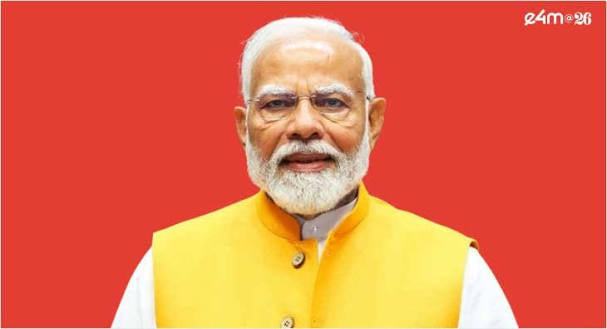

- Prime Minister Narendra Modi marked 25 years in government on October 7, 2023, reflecting on his tenure as Gujarat chief minister and three terms as Prime Minister.
- A recent Union Cabinet resolution highlighted his achievements in welfare delivery, infrastructure development, technology, and national security, emphasizing his economic record.
- Modi's administration has focused on industrial investment, infrastructure expansion, and welfare programs, including the introduction of the Goods and Services Tax and the Insolvency and Bankruptcy Code.
- His leadership has seen a significant increase in public capital expenditure and infrastructure projects, while India's G20 presidency in 2023 showcased his diplomatic efforts, particularly for the Global South.
This article originally appeared in BW Businessworld.
Prime Minister Narendra Modi marked 25 years as a head of government on Wednesday, October 7, a milestone spanning his tenure as Gujarat chief minister and three terms as Prime Minister. He began the day by offering prayers at Shri Vinayak Mandir in Delhi’s Sarojini Nagar.
The anniversary follows a Union Cabinet resolution adopted on Tuesday, recognising his record in welfare delivery, infrastructure, technology and national security. The milestone places his economic record in focus, from attracting industrial investment to expanding welfare programmes and infrastructure.
Modi took oath as Gujarat chief minister on October 7, 2001, succeeding Keshubhai Patel as Gujarat recovered from a devastating earthquake. His administration emphasised industrial investment, electricity supply and infrastructure. The Vibrant Gujarat summit, launched in 2003, became a platform for courting investors and promoting the state as a business destination.
Modi became Prime Minister on May 26, 2014, after leading the Bharatiya Janata Party (BJP) to a majority. A larger mandate followed in 2019. His third term began on June 9, 2024, with a changed political equation: the BJP fell short of a majority and relied on National Democratic Alliance partners.
His tenure has changed taxation, insolvency and digital transactions for businesses. The Goods and Services Tax, introduced in July 2017, consolidated multiple indirect taxes, while the Insolvency and Bankruptcy Code created a framework for resolving corporate distress. The expansion of the Unified Payments Interface (UPI) reshaped everyday payments for consumers and merchants.
Welfare programmes became another defining feature. Jan Dhan banking accounts, housing assistance, LPG connections, sanitation and health coverage widened the government’s reach. Linking bank accounts with Aadhaar and mobile connectivity helped expand direct benefit transfers, bringing welfare delivery into the centre of the government’s political messaging.
Infrastructure spending has remained a major economic plank, with highways, railways and logistics receiving sustained attention. Manufacturing incentives and the Make in India campaign sought to attract investment and strengthen domestic production, while electronics and semiconductor ambitions have grown. The Cabinet resolution said public capital expenditure had risen from ₹2 lakh crore to over ₹12 lakh crore during his leadership, alongside highway expansion and railway electrification, underscoring the administration’s emphasis on investment in physical infrastructure.
Internationally, India’s G20 presidency in 2023 provided a platform for Modi’s diplomacy and advocacy for the Global South. The African Union’s admission to the grouping was among its outcomes.
As the government pursues its ambition of a developed India by 2047, the next phase will be judged by the quality of jobs, competitiveness of industry and whether economic expansion delivers broader prosperity.
Read more news about Digital Media, Television Media, Out of Home Advertising, Print Media, Latest Advertising India
For more updates, be socially connected with us onInstagram, LinkedIn, Twitter, Facebook, YouTube & Google News
