Each wave of disruption brings opportunity: Aroon Purie, India Today
At FICCI Frames, Aroon Purie, Founder-Publisher and Editor-in-Chief of India Today, spoke his heart out on the challenges in India’s media landscape, regulatory hurdles, AI disruption and more
 by
by
Published: Oct 7, 2025 2:47 PM | 4 min read
 Follow Us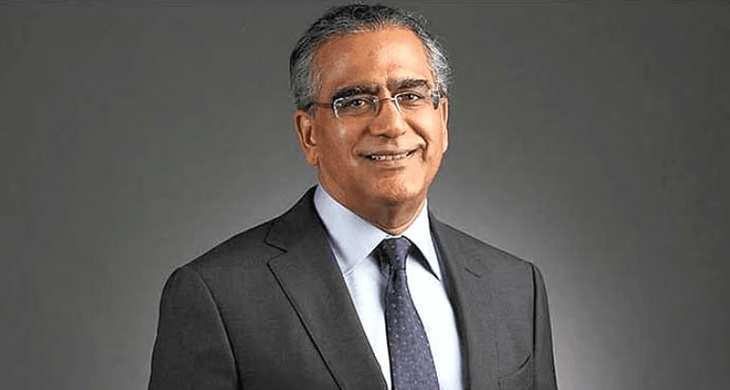

“Over the five past decades, disruption has never ended. In fact, disruption is the only constant,” said Aroon Purie, Founder-Publisher and Editor-in-Chief of India Today, at FICCI Frames in Mumbai on Tuesday. He was reflecting on the five decades of media’s evolution and disruption.
Purie began his address reflecting upon how India Today, which at its peak had a readership of 5 million, has now grown to four 24-hour news channels, and 60 digital, mobile and social media entities, reaching 750 million viewers, readers, followers, fans, and subscribers. The group has also launched India’s first AI news anchor, Sana, “who is growing in capability day by day”, he mentioned.
Purie highlighted how each wave of disruption brings opportunity. “Each wave has intensified the two things, the audience attention and the advertising grouping,” he said. Yet he warned that beneath technological change lies a structural problem in the business model of news.
India’s media landscape is unmatched in volume, he noted. “No country has over 140,000 printed publications.”
Delhi alone sees dozens of English and regional newspapers daily, alongside a rapidly expanding digital ecosystem. In broadcast media, India has “900 permitted satellite TV channels out of which more than 375 are 24-hour news channels and more in the pipeline,” he noted.
Purie spoke about the historical and current challenges in the broadcasting business. Major newspapers, he said, relies on raddi economics, where the paper is priced so low that distributors profit from collection.
“Perhaps this is the only product in the world where the consumer stops consuming, but the supplier keeps continuing.” Cable channels faced linear distribution and high carriage fees, and even after digitalization, “the practice of carriage still continues because there is no must-carry rule”.
He also called out regulatory hurdles. “It is beyond my understanding why the government treats the supply of cable TV as an essential commodity whose price they must regulate like beef or rice.”
Purie argued that regulation has stifled an industry employing over 1.7 million people. He said the government should ensure a level playing field and facilitate growth.
On the economics of news, Purie noted that, “News is by and large cheap or free for the consumer, and the publisher or the broadcaster gets little from what the consumer pays.”
Advertising remains the true paymaster, he added.
However, the entry of large industrial houses into media represents “the advent of billionaire news channels undermining credibility and profitability”.
Digital disruption has added new pressures. Tech giants became “the world’s new editor-in-chiefs” controlling distribution and monetization while producing no journalism themselves. “They eat the breakfast, lunch and dinner of media companies, leaving only crumbs for publishers and broadcasters.” Algorithms reward virality over depth, accuracy, or nuance.
Looking ahead, Purie noted AI was the next wave of disruption. He warned of “an existential threat to the very creation of credible information”.
He urged the industry to innovate. “We must persuade our audience that credible, well-researched news is a public good. And like any public good, it has a price. It cannot be free. A subscription is not just a transaction. It’s a vote for the kind of media you want to exist.”
He concluded by stressing that disruption as opportunity. “Disruption is not the enemy. It’s the new normal. The real question is, do we have the courage, imagination, innovation, resilience and integrity to seize it?”
He emphasized the enduring value of storytelling. “Ultimately, we are storytellers, and humanity survives on the stories we tell each other. In an era of post-truth, telling the truth matters even more.”
Read more news about Digital Media, Television Media, Out of Home Advertising, Print Media, Latest Advertising India
For more updates, be socially connected with us onInstagram, LinkedIn, Twitter, Facebook, YouTube & Google News