Unilever’s big bet: 300,000 creators and a new marketing reality
Guest Column: Ganapathy Viswanathan, Independent Communication Consultant & Author, broadly captures how Unilever is approaching marketing with a creator-led, recommendation-driven model
 by
by
Published: Apr 20, 2026 10:32 AM | 6 min read
 Follow Us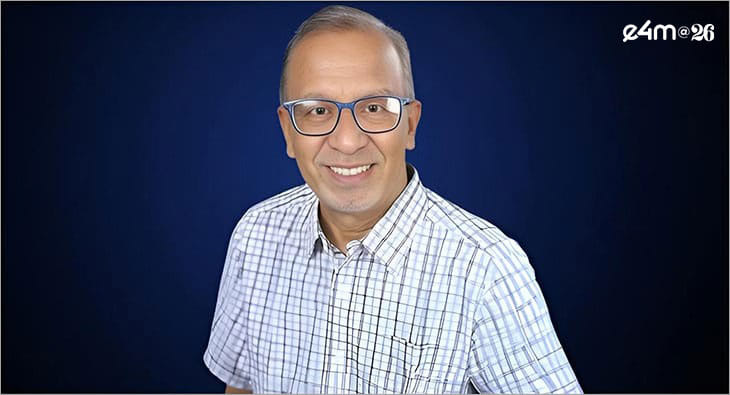

When Unilever said it would work with over 300,000 creators, it didn’t sound like a routine marketing update. It felt like a company acknowledging something it can’t ignore anymore.
For years, Unilever relied on scale—big campaigns, heavy media spends, consistent messaging. That worked when attention was easier to capture, when people were watching the same things at roughly the same time. But that version of media is gone.
Now, attention is scattered. People scroll, skip, and move on quickly. And more often than not, what they engage with comes from other people, not brands.
Content consumption hasn’t reduced—it’s exploded. But it’s moved into short videos, quick reviews, and everyday posts. Not polished ads, but content that feels immediate and familiar.
That’s where creators come in. They’re not interrupting the experience—they’re part of it. Their content sits in the same feed as everything else, which makes brand appearances feel less like ads and more like something you just came across.
For Unilever, this isn’t about chasing a trend. It’s about staying visible where attention actually exists now.
India isn’t catching up—it’s already there
If anything, India shows that this shift has already happened.
Brands like Mamaearth, Nykaa, boAt, and Zomato didn’t wait for a moment like this—they built their growth on creators early. Mamaearth leaned into parenting and skincare creators to build trust. Nykaa made influencers part of how products are discovered and bought. boAt combined celebrity faces with a wide base of micro creators to stay relevant with younger audiences. Zomato? It basically lives inside internet culture—memes, creators, quick content.
So, in many ways, Unilever isn’t early here—it’s catching up. Just at a much bigger scale.
And India explains why that scale is needed. There isn’t one audience. There are hundreds of them. Language, region, lifestyle, platform—all of it changes on how people respond.
This is where 300,000 creators start to make sense.
A food creator in Tamil Nadu, a college student reviewing product, a parenting influencer in Delhi—they’re all speaking to completely different groups. Instead of trying to push one message to everyone, brands show up in multiple smaller conversations.
And honestly, if this model works in India, it’ll work anywhere.
What global markets have already shown
This isn’t just an India story either. Different markets have already shown what creator-led marketing can do.
In the US, creators drive actual purchases. Not just awareness and conversion. In Brazil, brands operate in fragmented environments similar to India, using dense creator networks to build local trust. In Europe, it’s less about reach and more about credibility through experts, niche voices, long-term partnerships.
And in places like Australia and New Zealand, brands have already moved away from campaign bursts to always-on creator presence.
Each of these markets solves a different piece of the puzzle. What Unilever is trying to do is combine all of them into one system.
Decisions are happening faster than before
Another shift that’s easy to miss—people decide faster now.
The traditional funnel is still there, but it’s compressed. You don’t always “research” a product the way you used to. Sometimes, one video is enough.
That’s the strength of creator content. It doesn’t just tell you something exists—it shows you how it works, what it looks like, whether someone recommends it.
Now multiply that across hundreds of creators. Familiarity builds quickly. And once something feels familiar, choosing it becomes easier.
For everyday products, that matters more than we think.
From campaigns to constant presence
Marketing used to revolve around moments—launches, festive campaigns, big pushes.
Those still matter. But they’re no longer enough.
What’s changed is everything in between.
Creators allow brands to show up regularly, across different contexts and voices. Not in a loud, dominating way—but in a steady, almost background presence.
And that’s what builds memory now. Not one big campaign, but repeated exposure over time.
The upside: faster learning
There’s also a practical advantage here.
When thousands of creators are putting out content, you’re constantly getting feedback. Not formal reports—real signals. What people engage with, what they ignore, what actually works.
Over time, patterns become obvious.
You start to see which formats hold attention, which messages travel, and which audiences respond more. That kind of learning used to take months. Now it happens continuously.
For a company with multiple brands, that’s incredibly valuable.
The downside: fatigue is real
But this is also where things can start to break.
People are becoming more aware of influencer marketing. When too many creators promote similar products in similar ways, it starts to feel repetitive.
And once it feels repetitive, it feels like advertising again.
There’s also the issue of fit. If a creator promotes something that doesn’t align with their content, it feels off. Audiences pick up on that quickly.
In a market like India, where creator content is everywhere, this risk is even higher. Scale increases reach—but it also increases the chance of overdoing it.
Will others follow?
They probably will.
Unilever has always been a signal for where the industry is headed. And this kind of scale is hard to ignore.
But copying the number is the easy part. Building the system behind it is much harder.
Choosing the right creators, maintaining authenticity, avoiding repetitive content—that’s where most brands will struggle.
Without that, scale doesn’t work. It just becomes noise.
The larger takeaway
This isn’t just about visibility. It’s about how influence works now.
Attention isn’t concentrated anymore. It’s spread out. And influence doesn’t come from a single voice—it comes from many.
India shows how these scales. The US shows how it converts. Europe shows how it builds trust. Markets like Brazil show how deeply it can localize.
Unilever is trying to bring all of that together.
The idea is simple: show up everywhere, through people, in ways that feel natural.
But that only works as long as people don’t start tuning it out.
Read more news about Marketing News, Advertising News, PR and Corporate Communication News, Digital News, People Movement News
For more updates, be socially connected with us onInstagram, LinkedIn, Twitter, Facebook, YouTube & Google News
