How Samsung turned Apple’s first foldable into a global competitive-marketing moment
As Apple entered the foldable smartphone category, Samsung used the moment to put seven years of category experience, humour and global coordination into one campaign
 by
by
Published: Sep 12, 2026 8:22 AM | 7 min read
 Follow Us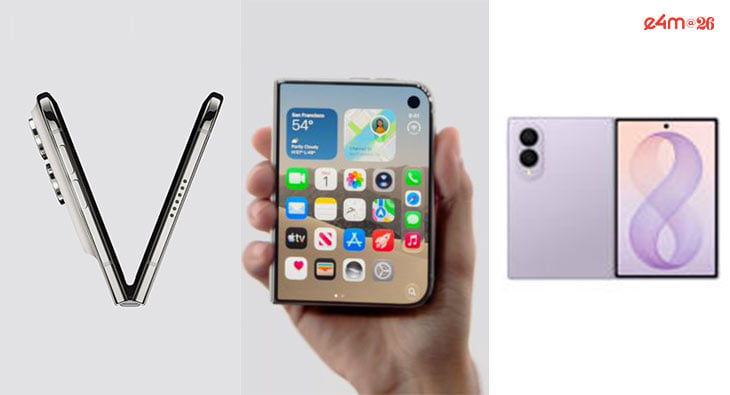

- Apple launched its first foldable smartphone, the iPhone Duo, on September 9, priced at $1,999, marking its entry into the foldable market dominated by Android manufacturers, particularly Samsung.
- In response, Samsung executed a real-time competitive marketing campaign, highlighting its long-standing presence in the foldable category since 2019, using social media commentary and outdoor advertising to emphasize its experience and innovation.
- Samsung's social media strategy included humorous commentary during Apple's keynote, with posts that pointed out similarities and questioned Apple's originality, reinforcing its position as a pioneer in foldable technology.
- The campaign extended beyond social media, featuring outdoor ads in major cities and engaging with other brands, effectively turning Apple's launch into an opportunity for Samsung to showcase its established credentials in the foldable smartphone market.
After years of speculation, Apple entered the foldable smartphone market on September 9 with the iPhone Duo, a $1,999 device that opens into a 7.6-inch display. The launch also marked the company’s first major foldable push, giving a category that has largely belonged to Android manufacturers a new level of mainstream attention.
For Samsung, however, the moment represented something else: an opportunity to remind the market that it had been building in this category since 2019!
And it did so almost immediately. Rather than responding with a conventional product comparison, Samsung turned Apple’s launch into a live competitive-marketing moment, combining real-time commentary from Samsung Mobile US with regional social executions, brand banter and a wider outdoor campaign around its Galaxy Z Fold8.
Read On: Ahead of Apple event, Chinese smartphone makers unveil new foldables
The result was less a single response and more a coordinated stream of reminders about Samsung’s history in foldables.
The sharpest execution came from Samsung Mobile US on X, where the account effectively ran a parallel commentary track alongside Apple’s keynote. The tone was established early with:
So far, so same. #ItsTimeToSwitch
— Samsung Mobile US (@SamsungMobileUS) September 9, 2026
As Apple moved through the iPhone 18 Pro and other hardware announcements, Samsung continued to pick specific moments rather than simply attacking the company as a whole. A comment on the design read:
It's feeling very familiar. Is this a Sims sequel...
— Samsung Mobile US (@SamsungMobileUS) September 9, 2026
Another post took aim at accessories:
Accessories? It’s giving condiments and no food. #ItsTimeToSwitch
— Samsung Mobile US (@SamsungMobileUS) September 9, 2026
The strategy here was important. Samsung was not waiting for the event to finish and then publishing a retrospective comparison. It was attempting to participate in the event as it happened, turning Apple's own presentation into the context for its messaging. Multiple reports tracked the sequence of posts as the keynote unfolded.
Then came the foldable. As Apple approached the reveal, Samsung posted:
Making us wait? Fine. We'll be over here, folding 3 ways.
— Samsung Mobile US (@SamsungMobileUS) September 9, 2026
The reference was to Samsung’s three-panel foldable technology, allowing the brand to move the conversation from Apple’s first foldable to the wider history of Samsung’s experimentation with the form factor.
Read On: Apple’s real marketing advantage? Everyone else does the talking
When the iPhone Duo was finally unveiled, Samsung delivered the line that would become the centrepiece of its response:
Let us know when you're done reheating our leftovers
— Samsung Mobile US (@SamsungMobileUS) September 9, 2026
It was an intentionally simple proposition: Apple had arrived in a category where Samsung had already spent years iterating.
That distinction matters because the campaign did not need to argue that Apple’s product was bad. Samsung’s more useful argument was that Apple’s arrival validated a category Samsung had already invested in.
Samsung introduced its first Galaxy Fold in 2019 and has since built successive generations of Galaxy Z Fold and Z Flip devices. Reuters reported that Samsung still held roughly 38% of the global foldable market, while analysts expected Apple to make a significant entry into the category.
Samsung did not restrict its reaction to the Duo. Apple’s StandBy experience, which can turn the folded phone into a bedside clock, also became material for the Samsung social team.
Not the bed side clock. It's giving groundhog day.
— Samsung Mobile US (@SamsungMobileUS) September 9, 2026
And after the launch, Samsung wrapped its running commentary into a simple scorecard:
Was there range? No.
— Samsung Mobile US (@SamsungMobileUS) September 9, 2026
Was it exciting? No.
Did it happen? Yes.#ItsTimeToSwitch
The campaign also benefited from the fact that Samsung and Apple already have a long history of competitive advertising. The difference this time was the category context. Previous Samsung-versus-Apple exchanges often focused on individual features. This one allowed Samsung to make a broader argument around experience and category tenure.
Read On: Geopolitical tensions set to tighten smartphone margins, reshape marketing spends
The response was not limited to Samsung Mobile US. Samsung Canada took the rivalry to Instagram with a Galaxy Z Fold8 video built around the familiar cultural language of imitation. The creative carried:
“Imitation is the sincerest form of flattery.”
The caption added:
“It’s entirely new, and at the same time, remarkably familiar #GalaxyZFold8”
The choice of wording was particularly pointed because it echoed Apple’s own launch language around the new device. Rather than simply saying “we did this first”, Samsung used Apple's positioning language as part of its counter-message.
The execution also used Kourtney Kardashian’s viral “you stole my style” audio, giving what could have been a fairly technical product comparison a recognisable pop-culture layer.
Samsung Philippines took a different route, but landed on the same strategic message.
Its foldable content carried:
“Allow us to reintroduce ourselves. 8 years in and still ahead of the fold.”
The line shifted the emphasis from direct mockery to experience. The message was essentially that Apple’s arrival was not threatening the existence of Samsung’s foldable proposition; it was an opportunity to remind audiences how long Samsung had been developing it.
Other regional executions added further texture to the campaign. Samsung New Zealand used a Tim Cook lookalike in a video that positioned Galaxy as the subject of the announcement, while Samsung Romania leaned into internet culture with:
“Aura maxing din 2019 ”
The language changed by market, but the underlying idea remained consistent: Samsung had been in foldables since the beginning of the category and was now welcoming another major player into it.
The campaign was also bigger than social media. Samsung had already been rolling out outdoor advertising in markets including Seoul, Tokyo and London, with messages such as “Welcome to Foldables” and “The World’s Lightest Fold.” The outdoor campaign gave the brand a more product-led expression of the same positioning that its social teams were turning into humour.
That combination is what makes the response more interesting from a marketing perspective.
The billboards were not dependent on Apple’s keynote. They established Samsung’s category credentials in the physical world. Social then gave those credentials a reactive, culturally relevant layer.
One was saying: we have been here.
The other was saying: and we noticed you just arrived.
The conversation also spilled beyond the two smartphone companies.
When Duolingo reacted to the “Duo” name, Samsung joined the exchange:
I'm so sorry, @DuoLingo. They copied us too #Solidarity
— Samsung Mobile US (@SamsungMobileUS) September 9, 2026
Duolingo responded in kind, extending the joke and creating another layer of brand-to-brand interaction around the Apple launch.
Other brands and internet accounts also entered the conversation, demonstrating one of the advantages of real-time competitive marketing: the original brand does not necessarily have to generate every impression itself. Once a culturally relevant joke starts travelling, audiences and other brands can add to it too!
The jokes may have been the visible layer, but underneath them was a much more conventional competitive-marketing proposition: Apple has entered foldables, and Samsung wants consumers to remember that it has been there all along.
In that sense, the “reheated leftovers” line was not really the campaign. It was the headline! The bigger campaign was Samsung using one of the industry's biggest launch moments of the year to turn its own category history into a live, global marketing asset.
Read more news about Marketing News, Advertising News, PR and Corporate Communication News, Digital News, People Movement News
For more updates, be socially connected with us onInstagram, LinkedIn, Twitter, Facebook, YouTube & Google News