Ghost malls haunt Indian retail, soul searching needed, say experts
Rise of e-comm aside, a lack of consumer research while planning the malls is one of the key reasons for footfalls dwindling, note industry watchers
 by
by
Published: Nov 20, 2024 9:16 AM | 5 min read
 Follow Us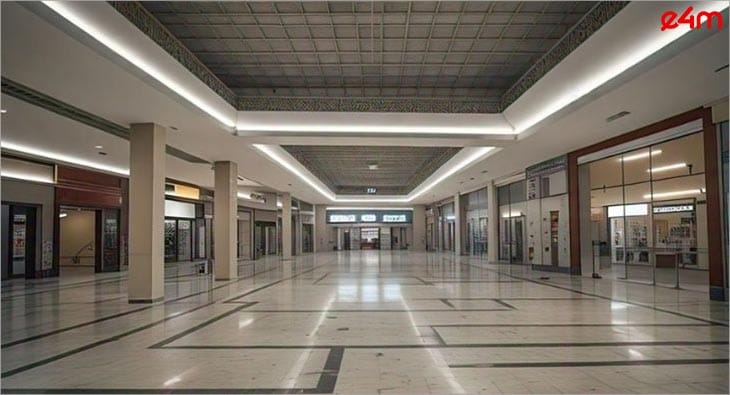

India's "ghost malls" have been a rising concern, with a significant increase in underutilized retail spaces across major cities. In 2023 alone, low-performing retail areas rose by 59%, with around 13.3 million square feet categorized as ghost malls. This trend is attributed to growing online shopping preferences, outdated infrastructure, and the appeal of high-end, "Grade A" malls that attract more consumers and retailers.
The National Capital Region (NCR) leads with 5.3 million square feet of ghost mall space, showing a 58% year-over-year increase. Other cities like Mumbai and Bengaluru have also seen substantial growth in these vacant spaces, with an 86% and 46% rise, respectively. Kolkata witnessed the steepest increase—237%—though starting from a lower base. Many older malls fail to retain foot traffic due to poor locations, outdated designs, and structural issues. As a result, some property owners are now considering renovations or repurposing these spaces.
The growth of “ghost malls” in India has emerged as a significant indicator of shifting consumer preferences, impacted by the rise of e-commerce, changing socioeconomic factors, and evolving lifestyle priorities.
Tarunjeet Rattan, Managing Partner at Nucleus PR, described the mall industry’s evolution as, “Any industry is a breathing and living organism that has phases of growth and evolution. When they fail to stay a step ahead of it then it dies. Malls can continue to exist, but they have to take into account consumer preferences and evolve accordingly.”
She added, “Instead of going after traditional brands that have existed in a mall, the industry needs to relook at brands that drive experientials for purchase and encourage them to be a part of the mall spaces.”
Chandramouli, CEO of TRA Research, expanded on this shift, “The rise of ghost malls in India is not solely due to the growth of e-commerce, though it plays a significant role by offering unparalleled convenience and variety. The problem is also at the end of the malls. Consumers today value experiences over mere shopping, and with every mall looking the same, there is no variety in experience.”
Rohit Ohri, Former Chairman & CEO of FCB Group India, highlighted other contributing factors, “India saw rapid expansion in mall construction over the last decade, fueled by an over-optimistic real estate market and a growing middle class. However, many of these malls were developed without rigorous market research, resulting in an oversupply of retail spaces that outstripped demand, especially in smaller cities.”
According to Rattan, “The D2C customer is used to more for less and an option of a wider range of options. The only reason the customer will move offline is when a specific product is of a high ticket value or a product that warrants a touch and feel experience at least once before they are confident of product quality.”
Chandramouli observed that, “Consumers also use malls to check the product, but tend to buy online, if they get better deals. There has to be a compelling reason for consumers to step out of home, and the shopping experience needs to be more immersive and innovative.”
Ohri echoed this, emphasizing the importance of unique in-person experiences, “When consumers do decide to visit a physical space, they are looking for something that goes beyond what they could find online. They seek immersive, experience-rich environments, where the visit itself feels rewarding.”
Rattan stressed the necessity of experiential additions, “Without that, these spaces will fold up or turn into parking lots. The brand mix is essential, now more than ever, to keep the footfalls alive.”
Chandramouli, emphasizing on adaptability said,” It can be amidst a blend of residential and commercial offices with retail so there is a continuous footfall. To be a destination is a tougher task unless there is a novelty, the latter is difficult to sustain.”
Ohri points to the potential of mixed-use models, “Developers seeking to revitalize these malls might look to mixed-use models and experiential re-imagining as a solution. By incorporating residential units, office spaces, and even educational institutions into the mall structure, developers could transform these spaces into more vibrant, multifunctional communities.”
Rattan, suggesting the importance of adapting to evolving consumer demographics, said “They need to invest in consumer research and study the next generation of customers to create experientials designed to appeal to them rather than putting something up and 'they will come'. It does not work like that anymore.” To this Ohri added, “The trend of ghost malls reflects an underlying shift in Indian consumer behavior, where convenience, diverse experiences, and the ability to integrate online and offline seamlessly are becoming essential.”
Through these expert insights, it becomes clear that the future of malls in India lies in reimagining physical spaces to align with consumer expectations for value-driven, experience-rich environments. This trend underscores the need for both brands and developers to adopt innovative approaches that resonate with evolving consumer preferences.
Read more news about Marketing News, Advertising News, PR and Corporate Communication News, Digital News, People Movement News
For more updates, be socially connected with us onInstagram, LinkedIn, Twitter, Facebook, YouTube & Google News