From Waka Waka to Dai Dai: The FIFA World Cup songs that conquered the world
From Shakira's record-breaking anthem to songs the world forgot before the final whistle, here’s the list of FIFA WC anthems, and how much each one resonated with audiences around the world
 by
by
Published: Jun 13, 2026 8:59 AM | 7 min read
 Follow Us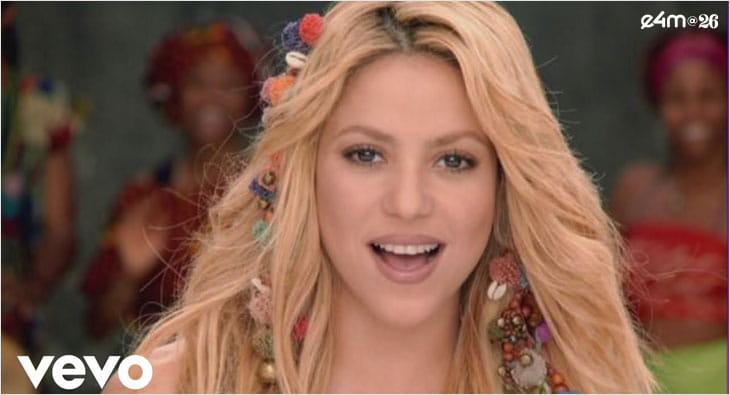

- The FIFA World Cup anthem has evolved into a significant commercial entity, requiring songs to resonate across cultures and languages while achieving high sales and streaming numbers.
- Shakira's "Waka Waka (This Time for Africa)" (2010) is highlighted as the most successful World Cup song, holding records for streaming and sales, despite facing criticism over representation and plagiarism claims.
- Other notable anthems include Ricky Martin's "La Copa de la Vida" (1998), which popularized the modern World Cup song format, and Pitbull's "We Are One (Ole Ola)" (2014), which was perceived as less impactful than its predecessors.
- The evolution of World Cup songs reflects changing musical trends and cultural contexts, transitioning from orchestral marches to contemporary genres like Afrobeats, with the upcoming 2026 anthem featuring Shakira and co-written with Ed Sheeran.
Every four years, billions of people pretend they understand the offside rule and queue up to order jerseys they will never wear again. But here is the thing nobody argues about: the music always lands. The FIFA World Cup anthem has quietly become one of the most powerful commercial briefs in the entertainment world. A song that must travel across cultures, survive three linguistic barriers, soundtrack highlight reels for decades, and ideally sell 15 million copies. Sometimes it works spectacularly. Sometimes it is a catastrophic flop. Always, it is fascinating.
Here is the complete list of FIFA World Cup anthems, and how much each one resonated with audiences around the world.
Shakira - Waka Waka (This Time for Africa) ft. Freshlyground" (2010)
The undisputed heavyweight champion of all World Cup songs, and it is not particularly close. "Waka Waka (This Time for Africa)" holds the Guinness World Record as the most-streamed FIFA World Cup song on Spotify and has garnered more than four billion views on YouTube alone. As of 2019, it had sold over 15 million digital downloads worldwide, making it one of the best-selling digital singles of all time. The song arrived at the exact moment YouTube became a global distribution platform and rode that wave all the way to cultural immortality. Not without its complications, though: when FIFA chose Colombian pop star Shakira to record the song for the continent's first World Cup, the decision drew protests demanding African representation at the opening ceremony. In response, FIFA and Shakira's team brought South African Afro-fusion band Freshlyground onto the track. The song also faced plagiarism claims alleging its chorus was lifted from Zangaléwa, a 1980s hit by the Cameroonian group Golden Sounds. Sony Music and Shakira's management eventually negotiated an out-of-court settlement, with the Zangaléwa writers credited as co-writers. None of that dented the song's dominance even slightly. Sixteen years on, it remains the song people instinctively hum when someone mentions the World Cup.
Ricky Martin - "La Copa de la Vida (The Cup of Life)" (1998)
This is the song that invented the genre. Ricky Martin's "La Copa de la Vida" for France 98 is the modern World Cup song's real Year Zero. Latin pop and global English-language pop fused into one track that was simultaneously the World Cup anthem and the song that catapulted Martin from regional Spanish-language star to global megastar. An entire Latin-pop explosion of the late 1990s and early 2000s can be traced to this single recording. The stadium stomp of "Ole, ole, ole" became the universal football chant. Still, the blueprint every subsequent FIFA music brief has tried to reverse-engineer.
Edoardo Bennato and Gianna Nannini - "Un'estate italiana (Notti Magiche)" (1990)
The shift toward what we now call a World Cup anthem really begins with "Un'estate italiana." It charted across Europe, became a long-running cultural touchstone, and established the template: bilingual chorus, stadium-sized hook, performable at the closing ceremony. Italia 90 was, in fact, the first FIFA World Cup to formally adopt an official song. Thirty-six years on, the opening strings of Notti Magiche still give people involuntary chills. It is the answer to the question: What does football sound like as a feeling?
Pitbull, Jennifer Lopez, and Claudia Leitte - "We Are One (Ole Ola)" (2014)
Pitbull, Jennifer Lopez, and Brazilian star Claudia Leitte teamed up for a samba-driven trilingual track spanning English, Spanish, and Portuguese. It was big, it was loud, it had Jennifer Lopez in it. It has amassed a billion views on YouTube in the years since its release. Still, placed next to Waka Waka, it registered as slightly hollow. The beginning of the era where the World Cup song felt more like a brand activation than a musical event.
Shakira and Burna Boy - "Dai Dai" (2026)
Too early to rank definitively, but the pedigree demands a top-five placement. Shakira returns as the main song performer, combining Afrobeats, dance-pop, and reggaeton with a message of global unity, co-writing with Ed Sheeran and including international language elements in its chorus. The title borrows from Italian, where the phrase means "come on, come on," used to urge someone to give their best. Its release makes Shakira the first artist involved in four different World Cup music eras. History is watching.
Daryl Hall and Sounds of Blackness - "Gloryland" (1994)
The Americans got their hands on the World Cup and leaned full gospel. The soulful track, powered by a saxophone, was performed by rock, R&B, and soul musician Daryl Hall alongside the vocal and instrumental ensemble Sounds of Blackness. It was warm, sincere, and deeply American in the best possible way. Criminally underrated in the World Cup anthem conversation.
Jung Kook ft. Fahad Al Kubaisi - "Dreamers" (2022)
The sleeper hit of the Qatar 2022 album. Jung Kook's BTS fanbase alone probably generated more social media content than the previous three tournaments combined, and the song itself had genuine emotional range. Aged far better than the official lead single.
Il Divo and Toni Braxton - "The Time of Our Lives" (2006)
Il Divo and Toni Braxton are, on paper, the most unlikely creative partnership in World Cup history. On record, it mostly worked. The operatic pop crossover format felt very mid-2000s, and the song has aged accordingly. It was the era of "adding Toni Braxton to something and seeing what happens."
Nicky Jam, Will Smith, and Era Istrefi - "Live It Up" (2018)
Will Smith doing a World Cup song should have been an automatic ten out of ten. In practice, "Live It Up" peaked as a perfectly enjoyable summer track that very few people could name six months after the tournament. It underperformed commercially against Waka Waka, signalling that the single-anthem format was beginning to lose steam. Russia 2018 did, however, produce a far more culturally durable piece of football music through brand association: K'naan's "Wavin' Flag" for Coca-Cola's campaign that year genuinely lives rent-free in a generation's memory, which says everything about the gap between FIFA's official brief and what actually connects.
Trinidad Cardona, Davido, and AISHA - "Hayya Hayya (Better Together)" (2022)
Qatar 2022 introduced FIFA's new multi-song album format, and "Hayya Hayya" was its lead single. It struggled to escape the shadow of everything that came before it and has largely been superseded in memory by Jung Kook's "Dreamers" from the same album. A cautionary tale about leading with the safe option.
The pre-pop archive
The earliest World Cup songs were less anthems in the modern radio sense and more orchestral marches and novelty records, tournament identifiers more than crossover hits. "El Rock del Mundial" by Los Ramblers for Chile 1962 was the first widely recognized official song. England's 1966 "World Cup Willie" by Lonnie Donegan was the first with a clear chart-pop sensibility. Ennio Morricone composed the 1978 Argentine theme. These are records made for stadium tannoys and history books, not Spotify playlists. They belong here not as failures, but as foundations.
From the orchestral marches of 1962 to the Afrobeats fusion of 2026, the World Cup anthem has served as a 64-year-running barometer of which musical genre is global enough to soundtrack the world's biggest sporting event. What started as local novelty records is now a fully formed entertainment industry vertical, with albums, halftime shows, brand co-writes, and IP negotiations happening before the first group stage game has kicked off. The music brief and the football brief are, at this point, equally consequential. And if Waka Waka has proven anything, it is that the right song at the right cultural moment can outlast the tournament, the teams, and sometimes the era itself.
Read more news about Marketing News, Advertising News, PR and Corporate Communication News, Digital News, People Movement News
For more updates, be socially connected with us onInstagram, LinkedIn, Twitter, Facebook, YouTube & Google News