Health insurance must become a wellness partner, not just a claims payer: Mayank Bathwal
At e4m TechManch 2026, Mayank Bathwal, CEO of Aditya Birla Health Insurance, outlines why hyper personalization, preventive care & digitally enabled wellness will shape the future of health insurance
 by
by
Published: Jul 28, 2026 5:26 PM | 4 min read
 Follow Us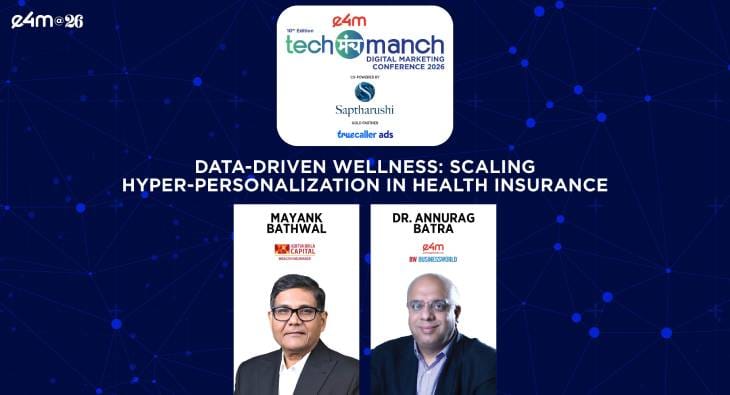

- Mayank Bathwal, CEO of Aditya Birla Health Insurance, emphasized the need for health insurance in India to evolve from merely covering hospital bills to actively promoting preventive care and healthy living during a discussion at e4m TechManch 2026.
- He highlighted that the industry's challenge lies in its relevance to consumers, as many still view health insurance as a "sickness funding" product rather than a tool for maintaining health, which complicates building lasting relationships with policyholders.
- Bathwal introduced the concept of hyper personalization, advocating for insurers to leverage consent-based health data to tailor engagement and support based on individual health profiles, exemplified by the company's HealthReturns model that rewards healthy habits.
- He called for greater transparency in policy coverage and collaboration with healthcare providers to simplify claims processes, while also noting that initiatives like the Ayushman Bharat Digital Health Mission could facilitate a shift towards preventive and personalized healthcare in the industry.
Health insurance needs to move beyond paying hospital bills and become an active partner in helping people stay healthy if the industry wants to improve penetration in India, according to Mayank Bathwal, CEO of Aditya Birla Health Insurance.
Speaking at e4m TechManch 2026 during a fireside chat with Dr Annurag Batra, Chairman and Editor in Chief of BW Businessworld and exchange4media Group, Bathwal said the industry's biggest challenge is not simply affordability but relevance. While awareness around health insurance has improved, especially after the pandemic, a large section of consumers still does not see enough value in buying a policy early in life.
He highlighted that health insurance has traditionally been positioned as what he called "sickness funding", a product consumers buy hoping they never have to use it. That, he said, makes it difficult to build a lasting relationship with policyholders.
"The first opportunity is for the category to think about what business we are really in," Bathwal said. Instead of building products around illness, insurers should help consumers stay healthy through preventive care, personalised interventions and continuous engagement. "If the consumer is healthy, my business is healthy."
Central to that strategy is hyper personalization. According to Bathwal, the next phase of health insurance will be driven by understanding every customer's individual health profile rather than relying on broad demographic segmentation. By using consent based health data, insurers can identify where consumers lie on the health risk spectrum and engage them based on what matters most to them.
"Health is a personal subject. What health is to one individual is not the same for another. Based on the data for that consumer, we engage with what is important for them," he said.
Bathwal cited the company's HealthReturns model as an example of this shift. The programme rewards customers for maintaining healthy habits instead of waiting until they file a claim. Customers who consistently achieve health goals such as walking 10,000 steps a day or burning 300 calories during a workout while maintaining a strong Healthy Heart Score can earn back up to 100 per cent of their annual premium.
According to Bathwal, around 10,000 policyholders received their entire premium back last year, while nearly twice as many customers benefited from wellness incentives as those who received benefits through sickness claims. He said such programmes strengthen trust because they create value for customers even when they remain healthy.
The insurer has also built disease specific digital ecosystems, including one for diabetes, where customers receive personalised support and recommendations based on their health data. Bathwal said this reflects a broader shift from selling insurance products to delivering ongoing health engagement.
The same thinking has shaped Activ Yuva, a health insurance product designed specifically for younger consumers. Bathwal said young Indians are unlikely to buy a product built solely around the possibility of falling sick because health is not their immediate priority. They seek experiences and expect products that fit their lifestyle. Activ Yuva, he said, redefines health for this audience by personalising wellness journeys around their needs rather than conventional insurance propositions.
While innovation in wellness is critical, Bathwal acknowledged that the industry's biggest test of trust still comes when customers make claims. He said insurers must work with hospitals and healthcare providers to simplify claims through greater digitisation and collaboration across the ecosystem. At the same time, insurers also have a responsibility to help customers understand exactly what they are buying.
Instead of asking first about the benefits included in a policy, consumers should begin by understanding what it does not cover, he said, adding that greater transparency at the point of purchase can reduce disputes and improve trust during claims.
Looking ahead, Bathwal believes initiatives such as the Ayushman Bharat Digital Health Mission will accelerate the industry's transition towards preventive and personalised healthcare by enabling secure access to longitudinal health records with customer consent. Combined with richer digital health data, this could allow insurers to offer far more relevant interventions throughout a customer's lifetime rather than engaging only during medical emergencies.
For Bathwal, the future of health insurance will not be defined solely by faster claims or lower premiums. It will belong to insurers that succeed in becoming trusted wellness partners, using technology and data to help customers lead healthier lives long before they ever need to visit a hospital.
Read more news about Marketing News, Advertising News, PR and Corporate Communication News, Digital News, People Movement News
For more updates, be socially connected with us onInstagram, LinkedIn, Twitter, Facebook, YouTube & Google News