Cricket Ads: Where does rivalry end and ridicule begin?
The challenge for brands is not to remove rivalry from sports marketing,it is to ensure that rivalry remains spirited rather than spiteful, writes Vishwanathan
 by
by
Published: Mar 8, 2026 1:46 PM | 4 min read
 Follow Us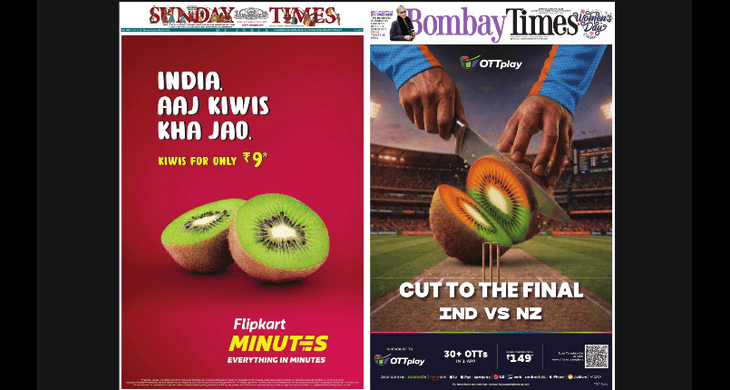

In the days leading up to big cricket matches, advertising often mirrors the excitement of fans. Rivalry-based campaigns have long been a staple of sports marketing. They cleverly use humour, wordplay, and national pride to create buzz around a match.
But today’s advertisements around matches between the India national cricket team and the New Zealand national cricket team suggest something else may be happening. The tone of many campaigns appears to be shifting—from celebrating one’s own team to symbolically belittling the opponent.
Two advertisements that appeared today illustrates this trend.
One, by Flipkart promoting its quick-commerce service Flipkart Minutes, carries the line: “India, aaj kiwis kha jao. Kiwis for only ₹9.” The ad plays on the double meaning of “kiwis”—the fruit and the nickname commonly associated with people or teams from New Zealand. At one level, it is classic advertising humour: quick, cheeky, and memorable.
Another ad, from the OTT aggregator OTTplay, takes the metaphor further. It shows a giant kiwi fruit placed on a cricket pitch being sliced with a knife, accompanied by the line: “Cut to the final — IND vs NZ.” The visual suggests domination more than friendly sporting rivalry.
By the standards of modern sports advertising, these ads may actually seem mild. In recent years, rivalry-based campaigns—even by official broadcasters—have pushed the tone much further, sometimes crossing lines and being withdrawn after backlash. In that context, fruit metaphors almost feel restrained.
Yet their existence still raises an important question about the ethics of sports advertising.
A Shift in Tone
Traditionally, sports advertising focused on pride and celebration. Campaigns highlighted a team’s strength, resilience, and the emotionally connecting with fans who follow the game.
But increasingly, campaigns are framed around conquest—symbolically “crushing,” “eating,” or “destroying” the opponent. The focus moves from celebrating our team to ridiculing the other.
This shift may seem small, but it changes the emotional tone of the message. Instead of reinforcing admiration for athletic skill, it frames the contest as humiliation.
Cricket, after all, has long prided itself on the idea of sportsmanship and respect between opponents. Advertising that leans heavily on ridicule risks undermining that spirit in game that is supposed to be played by gentlemen .
A Simple Ethical Test
One way to evaluate such campaigns is through two simple questions.
First: does the creative celebrate your team, or does it mainly belittle the other?
Good rivalry advertising highlights pride and passion. But when the balance tilts strongly toward mockery or symbolic harm, the message becomes less about the sport and more about humiliation.
A Question of Perspective
Sometimes the simplest question is the most revealing: how would a die heart cricket fan from the opponents react to these two pieces of communication? If it reads as light-hearted banter, the spirit of rivalry remains intact. But if the humour depends on mocking the other side’s identity, the line between playful competition and disrespect may already have been crossed. This perspective check is simple, yet it often exposes the deeper tone behind a campaign.
Why Brands Do It
There are also practical reasons why advertisers increasingly adopt this tone.
Modern marketing operates in an attention economy. Brands compete not only with other ads but also with memes, fan banter, and viral content on social media. Aggressive or provocative messaging travels faster online and generates instant reactions.
Rivalry advertising therefore becomes a shortcut to visibility. A sharp punch at the opponent is more likely to be shared, debated, and discussed.
But what works for engagement may not always work for the long-term culture of the sport.
When Banter Becomes the Baseline
Perhaps the most striking aspect of these ads is not their creativity but the lack of surprise they provoke.
Fans today have grown used to rivalry messaging that borders on mockery. Compared with some of the harsher campaigns seen in recent years, these advertisements barely register as controversial.
That itself says something about how the baseline has shifted.
Cricket rivalries will always inspire passion, humour, and playful provocation. Those elements are part of what makes the sport exciting. But when advertising relies too heavily on symbolic humiliation of the opponent, it risks changing the tone of the game’s culture.
The challenge for brands is not to remove rivalry from sports marketing—it is to ensure that rivalry remains spirited rather than spiteful.
Because at its best, cricket is not about consuming or cutting down the opponent. It is about competing fiercely while respecting the game and those who play it.
Read more news about Marketing News, Advertising News, PR and Corporate Communication News, Digital News, People Movement News
For more updates, be socially connected with us onInstagram, LinkedIn, Twitter, Facebook, YouTube & Google News