Can microdramas bridge brand storytelling and performance goals?
While for some brands microdrama is a natural extension of digital-first strategies, others are still weighing if the format fits the brand's needs
 by
by
Published: Apr 15, 2026 8:34 AM | 7 min read
 Follow Us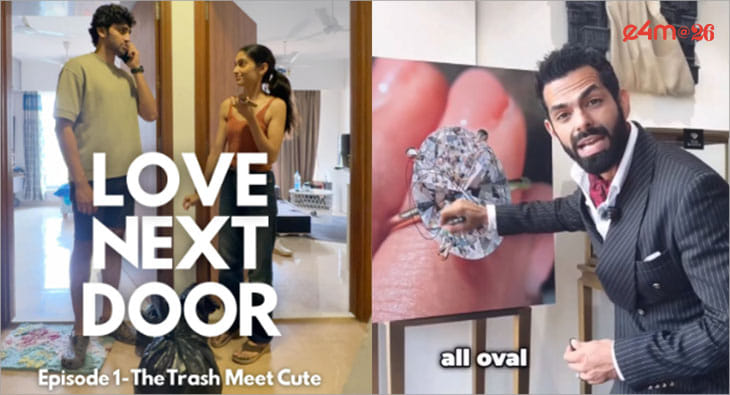

Microdrama is steadily moving from experimentation to adoption, as brands begin to explore its potential as a storytelling-led marketing format. While approaches differ, a growing set of marketers are already leaning in, using episodic narratives to drive engagement and cultural relevance.
Early adopters point to the format’s ability to connect with audiences in a more organic and sustained way. Vikas Chawla,Co-Founder of Social Beat, Influencer.in, said, “Microdrama is a great format we’re testing today, and we’ve already seen strong results with it. For instance, when Lacto Calamine wanted to position its sunscreen for Gen Z, we created ‘Insecuri-Tea’, a creator-led microdrama series on Instagram. Instead of a typical influencer campaign, we worked with creators to build 3–4 episode storylines around real Gen Z themes, where the product was integrated naturally into the narrative.
View this post on Instagram
In just five days, the campaign delivered 10 million organic views, over 60,000 shares and 50,000 saves, with a 57% engagement rate. The key was giving creators full creative freedom and focusing on relatable storytelling rather than scripted brand messaging. That said, while microdrama is working well today, formats will continue to evolve, so brands need to keep experimenting and innovating with creators.”
View this post on Instagram
True Diamond leaned into a luxury-led micro drama format, creating cinematic storytelling through glam monologues and dramatic collaborations centred around relationships, gifting and aspirational lifestyles.
Read more: Microdrama apps break into top streaming giants
Haldiram’s, on the other hand, adopted a more relatable route with a foodie sitcom format. The brand rolled out episodic skits built around the theme of tradition versus modern food habits, using family-style characters and slice-of-life narratives. Creators like Munawar Faruqui and others were cast to bring these mini dramas to life, with food placed at the heart of the storytelling.
View this post on Instagram
Formula of Formats
Platforms are also seeing tangible gains in how audiences engage with the format.
Neha Markanda, Chief Business Officer at ShareChat and Moj said, “What we’re seeing with microdramas is a clear shift in how brands approach both creative and media planning in feed-led environments.” As discovery becomes increasingly feed-driven, advertisers are moving away from interruptive formats towards native, immersive integrations that align with storytelling. On ShareChat and Moj, formats like episodic micro-dramas are particularly effective, delivering 15–20% higher view-through rates as they offer longer attention spans compared to standard short-form ads, she said.
Read more: Microdramas redefine feed-first advertising
Saket Jha Saurabh, Director and Head of AR and Content Partnerships at Snap Inc, said, “Microdramas are not just an emerging format, they reflect how attention itself has evolved. Gen Z consumes content in short, high-intent bursts where momentum matters more than length, and attention is driven by how quickly a story engages, sustains interest, and delivers impact. For brands, this is reshaping both creative and media strategy. It is no longer about inserting a message into the feed, but about structuring narratives that audiences choose to continue. Ultimately, microdramas are pushing brands to think less in terms of campaigns and more in terms of stories. In a feed-first world, attention is not bought, it is built, one tap at a time.”
This shift is backed by strong consumption signals. Industry data further underlines the scale of the shift. A recent Meta report shows that nearly 90% of viewers watch micro-dramas alone, compared with 43% for long-form OTT content, enabling more targeted and context-aware storytelling. At the same time, 43% of users watch with full attention while 57% consume content in a more relaxed, multitasking mode. Discovery is also largely algorithm-driven, with 89% of users finding microdramas through social feeds and 65% discovering the format within the past year.
These consumption patterns point to a highly personalised ecosystem where brands can align messaging with specific moments and mindsets. Peak viewing between 8 pm and midnight, high at-home consumption, and significant usage during commutes indicate that storytelling must adapt to both passive scrolling and high-intent viewing.
Shweta Bajpai, Director, Media and Entertainment India at Meta, said, “Microdrama as a format is still very new, barely about a year to a year and a half old, which is why the growth across platforms has been exponential. Most players are seeing user base growth of around 70 to 80 percent year-on-year, and in many cases even higher, because the category itself is just being built. From early audio-led experiments to now a rapidly scaling video ecosystem, multiple platforms have entered the space and are seeing strong traction. We are also seeing this evolve into an ‘India for the world’ story, where content created here is travelling across markets, with platforms expanding into regions like the US, UK and other global markets. Overall, the pace at which both audience adoption and platform growth are happening indicates that micro-drama could become a significant new segment within the media and entertainment industry.”
For some brands, microdrama is emerging as a natural extension of their digital-first strategies. Amit Lakhotia, Founder and CEO, Park+, said, “We will be participating. The strategy will be around the whole car journey. Somebody is looking to buy a new car, or a wife is looking for help on the car side, and then she's able to tell her husband that she can manage everything on her own now, she doesn't require the husband's help and all that kind of. I think cars are an aspirational asset for everybody, and if you look at the top videos, they are either travel videos or car videos, which get organic reach. People are always thinking about what their next car will be, what is happening new, and that creates a lot of engagement. That’s the kind of storytelling we would look to build with micro drama.”
The format is also opening up possibilities in categories where storytelling has traditionally been functional. Ritika Sachdeva, Co-founder and Head of Business at Centre for Sight, whose brand ran a cataract awareness campaign featuring Milind Soman, said, “I personally think it’s a very interesting move because content in healthcare actually gets boring, it’s very theoretical. If you look at documentaries versus Bollywood, documentaries give you facts, but Bollywood changes culture. If you dramatize something and create engagement around it, especially for today’s generation, it becomes more impactful. When you create drama, it brings both emotion and logic together, the heart and the brain both kick in. Healthcare is both a heart and brain subject, so microdrama allows you to engage both. It makes healthcare education more memorable and more engaging, otherwise it just feels like a classroom.”
Weighing options
Sai Narayan, Chief Marketing Officer, PolicyBazaar, said, “We haven't explored micro drama yet. There have been talks, but we haven’t explored it because PolicyBazaar is a very performance marketing driven organization. Awareness is extremely important in microdrama, but the action does not happen immediately, is what we feel. When we do influencer marketing, it helps us do two things. One is, it increases the top of the funnel and also gets us traffic on the performance side, so it serves both purposes. For microdrama to work, it needs to have a strong fitment with the brand. We don’t want to do it just for the sake of doing it.”
Similarly, some brands are choosing to stay anchored in authenticity-led content. Nidhi Rastogi, Marketing Head, UNIQLO India, said, “Microdrama is not our space. Like I said, we are only looking for authentic voices. So we try to see how we can get genuine conversation, genuine use of our product, and how that can be the center of our message. So it's not dramatic storytelling, it is authentic storytelling.”
While monetisation models are still evolving, the direction of travel is clear. As short-form video increasingly drives discovery and impulse behaviour, microdrama is positioning itself as a format that can blend storytelling with measurable outcomes.
For brands, the choice is no longer about whether to tell stories, but how to tell them in a way that audiences choose to follow. Microdrama, for many, is emerging as one of the most promising answers.
Read more news about Marketing News, Advertising News, PR and Corporate Communication News, Digital News, People Movement News
For more updates, be socially connected with us onInstagram, LinkedIn, Twitter, Facebook, YouTube & Google News