Automotive advertising shifts gears as spends jump to ₹7,821 crore in 2025
According to the dentsu–e4m report, a 48% surge in digital investments, a rise from ₹5,223 crore in 2024, and the continued relevance of print and TV define the category’s measured scale-up
 by
by
Published: Feb 3, 2026 7:04 PM | 4 min read
 Follow Us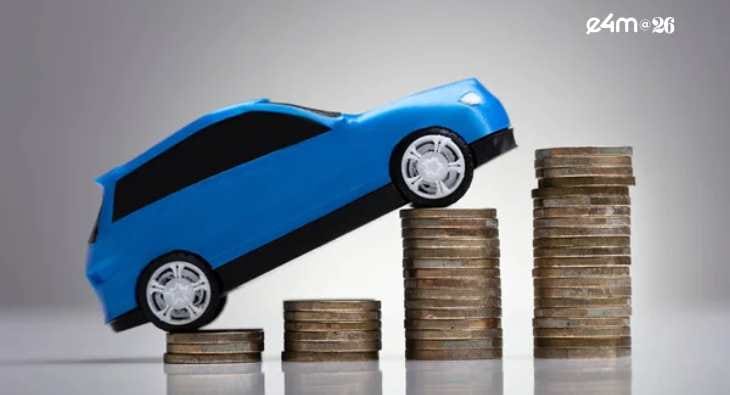

Between 2024 and 2025, India’s automotive advertising story shifted from steady evolution to measurable acceleration. According to the dentsu–e4m Digital Advertising Report 2026, what was a ₹5,223-crore category with a 6% share of the advertising market in 2024 expanded sharply to ₹7,821 crore in 2025, increasing its share to 7% and emerging as the third-largest advertising vertical after FMCG and e-commerce. The change was not merely about higher spends, but about how the category began scaling its existing media logic rather than overturning it.
In 2024, automotive advertising stood out for its unusually balanced media mix. Digital accounted for roughly 35% of spends, while print absorbed close to 33% and television around 27%, with radio and other media making up the remainder. At a time when several large categories were aggressively pivoting to digital-first strategies, automotive remained one of the few where print continued to command nearly one-third of total spends. This reflected the sector’s dependence on regional dealer networks, local price communication and the need for physical credibility in a high-consideration purchase cycle.
Digital advertising, though not dominant, was already structurally important. Automotive digital spends stood at ₹1,815 crore in 2024, contributing about 5% of India’s total digital advertising market. Within digital, the category’s priorities were clear and intent-led. Paid search formed the largest share, driven by consumer behaviour around model comparisons, pricing queries and dealer discovery. Online video followed closely, supporting product launches, feature-led storytelling and growing EV education needs. Social media played a supporting but relevant role, while display and other formats remained limited. Importantly, digital growth in automotive during 2024 was incremental, unlike the disruptive shifts seen in e-commerce or BFSI.
That foundation enabled a sharper upswing in 2025. Automotive advertising spends jumped to ₹7,821 crore, marking one of the strongest year-on-year expansions among major advertiser categories. The sector was clearly identified as a growth driver, alongside BFSI and real estate, supported by a recovery in urban demand, premiumisation across vehicle segments, improved access to financing and renewed momentum across both electric and internal combustion engine portfolios.
Digital was the fastest-moving lever within this growth. Automotive digital ad spends nearly doubled to ₹3,425 crore in 2025, while maintaining a 5% share of the total digital advertising market. More notably, digital advertising in the automotive sector grew 48% year-on-year, placing it among the fastest-growing digital categories, behind only e-commerce, tourism and education. This marked a decisive shift from cautious digital adoption to confident scaling.
Yet, even as digital surged, the category resisted a wholesale reallocation of budgets. Automotive continued to maintain a balanced media mix in 2025, with television and print retaining their strategic relevance. For a category where trust, demonstration and reassurance directly influence purchase decisions, mass media continued to play a stabilising role. Automotive’s media behaviour remained distinctly different from telecom or e-commerce, reinforcing the idea that its digital transition is evolutionary rather than disruptive.
What did change materially in 2025 was the nature of digital engagement. Automotive brands leaned more aggressively into targeted communication and richer product-discovery experiences. Short-form video formats, creator-led ecosystems and performance-driven marketing became more central to campaign design, especially as EV adoption increased the need for education-led storytelling. Digital was no longer treated as a supplementary channel but as a critical layer across the funnel, particularly in consideration and intent capture.
Policy and ecosystem developments further strengthened this shift. Government-led EV adoption frameworks, expanding Digital Public Infrastructure through UPI and ONDC, and smoother discovery-to-purchase journeys improved measurability and reduced friction. Digital enablement across financing and mobility services allowed automotive advertising to connect intent with action more effectively than before.
The transition from 2024 to 2025 shows an industry that did not reinvent its advertising playbook but scaled it with confidence. Automotive advertising moved from being a balanced, steady spender to a faster-growing, digitally sharper category—without abandoning print and television, which remain structurally embedded in its ecosystem. The data makes the shift clear: higher budgets, faster digital growth and deeper funnel engagement, all anchored in the realities of a high-value, high-consideration market.
Read more news about Marketing News, Advertising News, PR and Corporate Communication News, Digital News, People Movement News
For more updates, be socially connected with us onInstagram, LinkedIn, Twitter, Facebook, YouTube & Google News