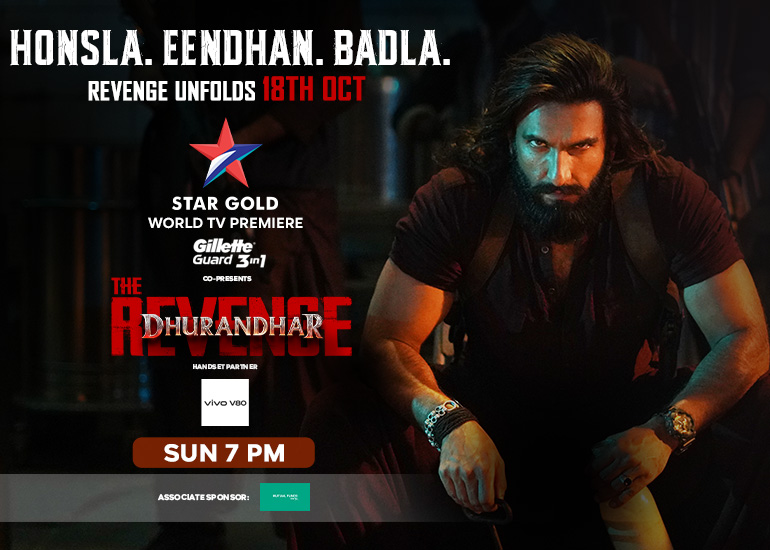
As audiences return to theatres, brands turn cinemas into marketing hubs
Cinema’s Q1 2026 revival is reshaping brand strategies, with advertisers moving beyond commercials to experiential, in-theatre and culturally driven marketing formats
 by
by
Published: Jun 1, 2026 9:01 AM | 8 min read
 Follow Us

- India's box office generated ₹3,440 crore in Q1 2026, a 17% increase from the previous year, with March alone contributing ₹1,690 crore due to successful film releases across various languages.
- The strong box office performance has renewed advertiser confidence, leading brands to expand their marketing strategies beyond traditional on-screen ads to include activations in cinema lobbies and immersive experiences.
- Advertisers are increasingly viewing cinema as a key part of their annual media plans, focusing on specific high-attention moments during the movie-going experience rather than treating it as a mass media extension.
- The trend is supported by a robust release calendar for 2026, with cinema advertising expected to reach approximately ₹1,000 crore, highlighting the medium's potential for engaging audiences in a focused environment.
A strong start to 2026 at the box office is not only benefiting film exhibitors but also prompting brands to rethink how they engage consumers inside and around cinema halls.
India's box office collected ₹3,440 crore in the first quarter of 2026, marking a 17% increase on the same period last year, according to industry estimates. March alone contributed ₹1,690 crore, driven by a steady stream of successful releases across Hindi and regional markets. This strong performance has helped Q1 rival the traditionally stronger, festival-driven fourth quarter for the film exhibition industry.
The momentum has also translated into renewed advertiser confidence. As footfalls return and audiences spend more time in theatres, brands are expanding beyond traditional on-screen commercials and experimenting with activations that extend into lobbies, food courts, sampling zones, creator collaborations and immersive experiences.
Devang Sampat, Managing Director, Cinepolis India said, "We're seeing more advertiser interest than we have in a while, when occupancy holds at these levels, brand conversations move quickly."
According to Sampat, FMCG and beverages, fintech and digital payments, automotive, and OTT platforms are currently driving most of the advertising demand in cinemas. Categories such as BFSI, smartphones, jewellery, fashion and e-commerce are also increasing their presence, particularly around films that attract younger audiences.
Read On: Is box office shift turning cinema into a 365-day advertising platform?
More notably, brands that once viewed cinema advertising as an occasional campaign vehicle are now considering it as part of their annual media plans.
"For the last two years, cinema was largely used in bursts, one big weekend per quarter and not much else. With occupancy sustaining across longer runs and across language markets, cinema is going back into annual planning, the way it was before the pandemic," Sampat said.
The shift is also changing how marketers buy cinema inventory. Instead of treating theatres as an extension of mass media, advertisers are increasingly seeking specific high-attention moments within the movie-going journey.
"Brands ask specifically for the slot before the film, the one after a big trailer, or the middle of the interval. They're buying cinema for attention now, not just for reach," Sampat added.
The renewed interest is giving rise to a broader set of marketing tactics inside theatres.
Direct-to-consumer brands, for instance, are increasingly using cinema spaces for product discovery and experiential marketing. Licious recently demonstrated this approach through its 'Mother of All Momos' campaign, which transformed a product launch into a multi-channel cultural activation.
The company used cinema activations at multiplexes in Delhi and Bengaluru alongside creator partnerships, comedy-led content, residential society outreach, quick commerce integrations and outdoor advertising. The campaign reached 18.54 million consumers and delivered significant growth across key markets, including a 210% increase in daily active users in Delhi-NCR.
View this post on Instagram
"The idea was simple. Don't sell momos, celebrate them," said Varun Khanna, Senior Vice President, Marketing, Licious. "Indians don't need to be convinced to love momos, they already do. Licious wanted to meet that love where it lives, whether that's a cricket match, a comedy show, or a movie theatre."
The campaign reflects a growing trend among marketers who are using cinemas not merely as advertising inventory but as cultural touchpoints where consumers are highly engaged and receptive.
Eleven brands back JioHotstar's digital premiere of Dhurandhar: The Revenge
Eleven brands have partnered with JioHotstar for the digital premiere of Dhurandhar The Revenge, which is scheduled to stream on June 4. The premiere has attracted a total of 50 brand associations across categories including consumer goods, electronics, financial services, healthcare, retail and quick commerce.
The marquee sponsors include Pidilite Industries (Fevicol), Samsung (S26) and Vishnu Packaging (Vimal) as Co-Powered By sponsors. Pepsi (Sting), LG (LG Water Purifier) and Opella (Dulcoflex) have joined as Special Partners, while HDFC Sky, AMFI, Reliance Digital, Swiggy Instamart and Invisalign have come on board as Associate Partners.
Speaking on the scale of this premiere, Bhaskar Ramesh, Head - Entertainment Sales, Digital, JioStar, said: “Dhurandhar The Revenge has transcended box office success to become a massive cultural phenomenon. With 500 million monthly active users on JioHotstar, we aren’t just streaming a movie premiere, we are engineering a shared national moment at an unprecedented scale. For our 11 sponsors and all the 50 brand partners this premiere offers a rare convergence of massive reach and deep, high-intent engagement. We are incredibly excited to bring the 'Raw & Undekha' version along with a specially curated pre-show, we have created a premium, eventized environment that allows brands to embed themselves directly into the years biggest entertainment narrative.”
Highlighting the synergy behind the partnership, Swati Jha, GM, Marketing Services, Pidilite Industries Ltd, commented: “Fevicol has long been an integral part of India’s pop culture, while cinema continues to be a powerful thread that connects millions across the country. Dhurandhar The Revenge has emerged as a record-breaking blockbuster, setting new benchmarks and capturing the nation’s imagination. Partnering with JioHotstar for this mega blockbuster’s release created a tremendous opportunity for Fevicol to strengthen its bond with consumers across India. As India celebrated a cinematic phenomenon, Fevicol reinforced the bond that truly lasts.”
Sharing perspective on the collaboration, Puneeth Bekal, EVP & CMO, HDFC Securities, added: "In a spy action-thriller like Dhurandhar The Revenge, every strategic move matters, just like in the markets. HDFC SKY's association with the film on JioHotstar helps us engage digital audiences with a seamless investment experience. By combining our all-in-one platform, a flat Rs. 20 brokerage, and free researched picks, we empower investors to cut the drama and trade with confidence.”
Elaborating on the brand’s association, Joban Singh, Sr. Director - Consumer Marketing and Professional Communications APAC, Invisalign, stated: “Just like the precision of a mission in Dhurandhar The Revenge, your smile deserves the same level of accuracy. Redefine your transformation and face the world with the relentless confidence of a true Dhurandhar- with Invisalign.”
Emphasizing the strategic importance of the platform, Nupur Gurbaxani, Director - Brand & Innovation, Opella Healthcare, shared: “Partnering with JioHotstar for the exclusive premiere of Dhurandhar The Revenge is a strategic opportunity for Dulcoflex to engage audiences at scale during a marquee entertainment moment. This collaboration reinforces our commitment to leverage unique content environments to enhance brand visibility and connect with consumers in meaningful ways to drive measurable business impact.”
Built as a large-scale digital event, the premiere is designed to bring millions of viewers together simultaneously, making Dhurandhar The Revenge one of the country's biggest shared streaming moments. The film, written, directed and produced by Aditya Dhar and produced by Jyoti Deshpande and Lokesh Dhar, will premiere on JioHotstar on June 4, followed by platform-wide access from June 5.
Beauty brands are also adopting a similar strategy by building emotional narratives around entertainment consumption. Swiss Beauty's latest film under its 'We Got You, Girl!' campaign focused on themes of self-expression and individuality, targeting young consumers through storytelling rather than direct product promotion.
The brand also ran its interactive "Spot the Swiss Beauty" campaign in theatres. The campaign invited moviegoers to spot their in-theatre ads during film screenings and enter contests for a chance to win makeup hampers worth ₹5000.
View this post on Instagram
The growing appeal of cinemas for marketers stems from a simple reality: audience attention has become increasingly fragmented across digital platforms. In contrast, theatres offer an environment where consumers remain focused for extended periods of time.
This is particularly attractive for categories such as fintech and digital payments. According to Sampat, cinema audiences largely fall within the 18-40 age group, a demographic that many fintech brands actively pursue.
"Cinema audiences sit in the 18 to 40 age band fintech needs, and there aren't many places left in the day where you have that audience's attention for two and a half hours," he said.
The trend is not limited to Hindi cinema. Regional markets are emerging as an equally important driver of advertising growth.
Read On: Cinema advertising stabilises at Rs 877cr in 2025; upcoming releases elevate hope
Sampat pointed out that the Sankranthi release window alone generated more than ₹500 crore from Telugu releases, while four of the top ten films at the Indian box office during Q1 came from the Telugu film industry.
As a result, national advertisers are increasingly requesting Tamil and Telugu inventory in markets where their products have stronger regional relevance. At the same time, local retailers, jewellers, educational technology companies and regional consumer brands are returning to cinema advertising, a role previously dominated by television.
Looking ahead, the industry's optimism is being supported by a robust release calendar that includes titles such as Toxic, Bhediya 2, Drishyam 3, Jailer 2, Ramayana, King, Alpha, Avengers: Doomsday and Spider-Man: Brand New Day.
The spread of major releases across the year is expected to provide advertisers with multiple opportunities to engage audiences rather than relying on a handful of blockbuster weekends.
According to EY-FICCI estimates, cinema advertising is expected to reach approximately ₹1,000 crore in 2026, up from ₹930 crore in 2025.
For brands, the resurgence of theatres represents more than an additional media channel. It marks the return of one of the few remaining environments where audiences are fully immersed, creating opportunities for marketers to combine storytelling, experiences and commerce in a single consumer journey.
"The shift I'd watch is qualitative," said Sampat. "Cinema is moving from a tactical buy back into annual planning, and the categories committing now are the ones that will shape how the medium gets measured and bought over the next two to three years."
Read more news about Marketing News, Advertising News, PR and Corporate Communication News, Digital News, People Movement News
For more updates, be socially connected with us onInstagram, LinkedIn, Twitter, Facebook, YouTube & Google News