Advertising is an unfinished story: Shahad Anand
Speaking at Pitch CMO Summit 2026, Shahad Anand, Business Head, Skylight Mediakart, spoke about the role of personalization, contextual targeting & emotional creativity
 by
by
Published: Jun 15, 2026 2:42 PM | 3 min read
 Follow Us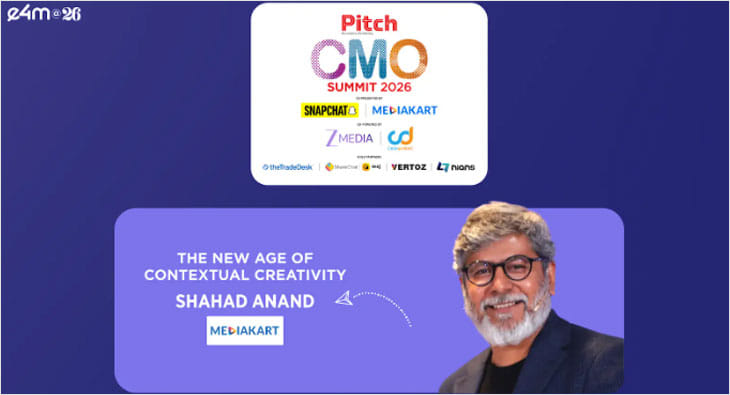

- The Pitch CMO Summit 2026 focused on the evolving consumer landscape, emphasizing the significance of attention, contextual relevance, creativity, and authentic connections in marketing strategies.
- Shahad Anand from Skylight Mediakart presented on the importance of capturing consumer attention, highlighting that attention leads to awareness and action, and identified personalization, meaningfulness, unexpectedness, and emotion as key drivers of attention.
- Anand illustrated the effectiveness of contextual advertising through examples, noting that relevant marketing messages significantly influence consumer behavior more than monetary value, and warned against the negative impact of anxiety-inducing content on consumer awareness.
- He concluded that brands combining contextual relevance with emotionally engaging storytelling are more likely to convert consumer awareness into action, emphasizing the importance of understanding human psychology in building lasting customer relationships.
The Pitch CMO Summit 2026 witnessed insightful discussions on the evolving consumer landscape, with industry leaders highlighting the growing importance of attention, contextual relevance, creativity, and authentic human connections in modern marketing.
The session opened with an engaging presentation by Shahad Anand, Business Head, Skylight Mediakart, who explored the science behind capturing consumer attention in an increasingly cluttered digital ecosystem.
Anand emphasized that every customer journey follows a simple but powerful sequence—attention leads to awareness, and awareness leads to action. According to him, brands often struggle not because their products lack value, but because they fail to earn consumer attention in the first place.
Using a simple exercise involving objects placed on attendees' tables, Anand demonstrated how individuals selectively notice certain things while overlooking others. He explained that four key factors drive attention: personalization, meaningfulness, unexpectedness, and emotion.
Drawing from a personal anecdote about receiving a pen engraved with his own name, Anand illustrated how personalization and emotional relevance make an object stand out from countless similar alternatives.
Translating these principles into the digital world, Anand argued that contextual advertising plays a critical role in making marketing messages feel relevant to consumers.
"If I am reading about travel and I see a travel-related promotion, it feels like it is for me. If I see something completely unrelated, it loses relevance," he explained.
He cited a study conducted in the United States where restaurant customers who received a small but contextually relevant gift—a yogurt before ordering—spent significantly more than customers who received a more expensive but less relevant gift. The example underscored how contextual relevance can influence consumer behaviour more effectively than monetary value.
Anand also highlighted the dangers of negative content environments, noting that consumer awareness declines sharply when audiences encounter anxiety-inducing content.
Discussing Mediakart's contextual targeting capabilities, he revealed that the company goes beyond keyword analysis by examining images, facial expressions, sentiment, objects, and actions within content to ensure brands appear in the most relevant environments.
"Personalization is one of the core themes of today's event. Context helps create meaningful experiences for users when they spend time online," he said.
Moving beyond context, Anand shifted focus to the role of creativity and emotional storytelling in influencing consumer decisions. Referring to behavioural studies, he explained how subconscious cues shape purchasing behaviour more than consumers realize.
A furniture e-commerce experiment showed that users exposed to cloud imagery gravitated toward comfort-focused products, while those exposed to coin imagery prioritized value-for-money purchases.
According to Anand, storytelling remains one of advertising's most powerful tools because incomplete narratives naturally encourage audiences to seek closure.
"Advertising is inherently an unfinished story. It ends with a promise of an experience yet to come," he noted.
He also showcased Mediakart's creative capabilities, including immersive display formats, contextual video ads, connected television campaigns, 3D advertising experiences, and interactive ad formats designed to maximize engagement.
Concluding his presentation, Anand stressed that brands that combine contextual relevance with emotionally resonant creativity are more likely to move consumers from awareness to action.
He cited another consumer behaviour study involving children receiving balloons at a McDonald's outlet, which resulted in parents spending significantly more on purchases. The example highlighted how emotional triggers and feelings of reciprocity can positively influence consumer behaviour.
According to Anand, marketers who understand human psychology and create meaningful brand interactions stand a greater chance of building lasting customer relationships.
Read more news about Marketing News, Advertising News, PR and Corporate Communication News, Digital News, People Movement News
For more updates, be socially connected with us onInstagram, LinkedIn, Twitter, Facebook, YouTube & Google News