We’re banking on non-FCT for growth while maintaining the FCT: Nisha Narayanan, Red FM
Nisha Narayanan, Director & COO, RED FM & Magic FM, highlights that radio’s strength lies in smaller towns where digital and television penetration is uneven
 by
by
Published: Sep 16, 2025 11:31 AM | 4 min read
 Follow Us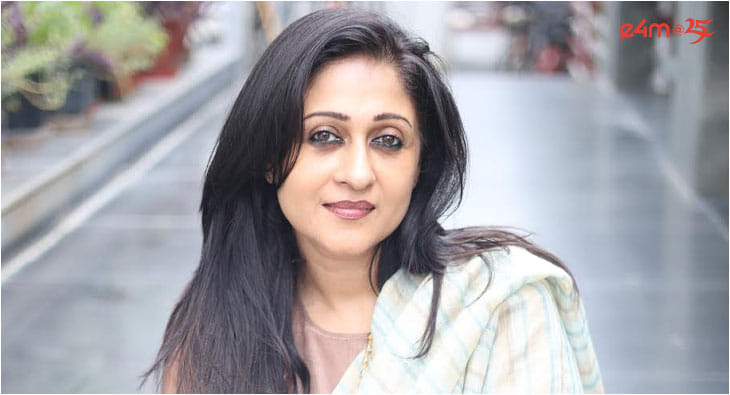

As India enters its most action-packed quarter, the festive season is not just a time for celebration but also a crucial period for marketers and broadcasters. For Red FM, it goes beyond a seasonal revenue spike.
“All media companies, whether print, TV or radio, are bracing for the festive season and so are we,” says Nisha Narayanan, Director & COO of Red FM and Magic FM. “There are brands that are looking at radio-first campaigns as well. It’s fashionable to say radio is dead and gone, but I don’t think so. We had a slow start in Q1 but now our inventory is overflowing. We’re hoping to cover up with some of these initiatives.”
According to the TAM Adex data for the full festive period between October 3 to Nov 1, 2024, advertising volume on TV and Print dropped 9% and 4% respectively, but radio’s festive ad volume grew by 13%.
“Radio continues to remain resilient with unmatched reach in media-dark regions and reliability during natural disruptions. Regardless of whether there is a cyclone or rains or cloudbursts, radio still works unlike other mediums,” she added.
While spot inventory is expected to bring in festive gains, Red FM is also leaning on non-FCT avenues such as events, digital activations and branded properties. “Clearly, a lot of events and initiatives are on the way. We’re working closely with the Indian Army, the insurance sector, the automobile sector. The Riders Music Festival is coming up as well,” Narayanan says. “We’re hoping to maintain the FCT business, but incremental growth lies in non-FCT.”
Even as festive programming dominates the near term, the industry is also closely watching the government’s next round of FM auctions. Narayanan sees this as a pivotal moment to unlock new growth potential for private radio. “Fresh auctions are critical because they expand the pie. They help us reach newer geographies and add vibrancy to the ecosystem,” she says.
Narayanan highlights that radio’s strength lies in smaller towns where digital and television penetration is uneven. “Tier 2 and 3 cities continue to be our growth engines. The festive season is when these markets really open up for advertisers. That’s also why auctions are important, they can help expand private FM into newer regions,” she says.
Building hyperlocal experiential extensions
Red FM is not positioning itself as an event agency. Rather, it is treating on-ground activations as a natural extension of what the network already does on air. “We are not looking at supremely large-scale events. We don’t want to compete in that space. Our core business continues to be radio and the airwaves. Our IPs and events are an extension of what we already do on air,” she explains.
This has translated into a series of hyper-local initiatives across the country. From Red Raas during Navratri in Indore, Pune and Ahmedabad, to the Duga Duga Festival during Durga Puja in Delhi and Kolkata, to IGAZ, a celebration of Uttarakhand’s culture in Dehradun, the calendar is packed with region-specific formats.
“We want to create cultural IPs and be part of the cultural evangelism space. Mass mediums like us are not really picking up cultural spaces and celebrating them,” says Narayanan. “You’re either a news channel or a general entertainment channel, but what about regular local content? That’s not happening.”
Red FM positions itself as national in reach but local in spirit. “We want an audience that is emotionally attached to the IP. These are cult followings. The audience grows every year and it’s less about marketing and more about word of mouth.”
South Side Story’s cultural imprint
The clearest example of this strategy is South Side Story, a festival that celebrates South Indian culture in Delhi. What began as a niche experiment has grown into one of the network’s biggest draws.
“From where we just wanted a thousand people audience in the first edition, today we’re expecting about 12,000 people over two days,” Narayanan says. “That’s a community which is growing, and it is all word of mouth.”
“You’ll see Chattopadhyays, Banerjees, Sharmas all coming to experience the food, wear traditional attire, and celebrate it with their families,” Narayanan adds.
For her, growth is no longer about platforms but about content fluidity. “We cannot restrict ourselves only to being a radio station. Great content will be put out across on-ground, on-air, digital and wherever else audiences are. Platforms change by the minute. It’s a 360-degree approach and that’s the only way I see it.”
Read more news about Industry Briefing, Internet Advertising, Marketing, PR & Corporate Communication, Television Media
For more updates, be socially connected with us onInstagram, LinkedIn, Twitter, Facebook YouTube & Google News