Raju Vanapala on building Way2News: Why regional trust beats blitzscale
Raju Vanapala shares how Way2News was built by inheriting the credibility framework of newspapers while redesigning delivery for the smartphone screen

Published: Feb 24, 2026 4:27 PM | 6 min read | Advertorial
 Follow Us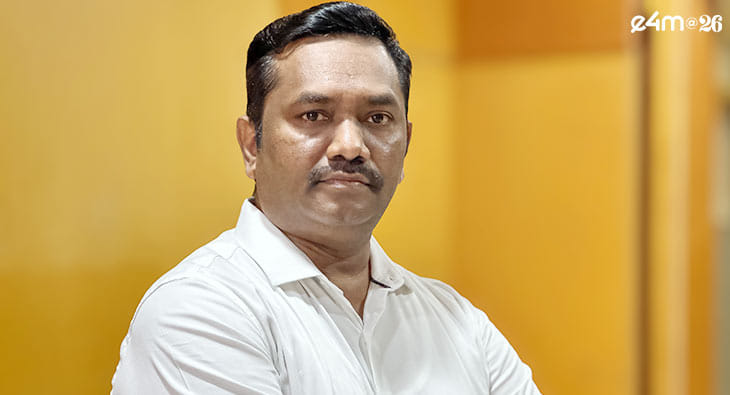

A decade ago, as smartphones became cheaper and data more affordable, India’s digital news ecosystem began shifting rapidly. English platforms consolidated early advantage, while video players rode the YouTube wave. Amid this race for scale, regional mobile-first news remained underbuilt.
Raju Vanapala, Founder & CEO of Way2News, saw a gap. Millions of new internet users were coming online from smaller towns and villages, thinking, reading and relating in their native languages. “In regional markets, people don’t just want information. They want relevance and trust,” Vanapala told e4m.
In a country where most new users prefer content in their mother tongue, the opportunity was not just to go regional, but to redesign news for a mobile-first Bharat. That is the bet Way2News has been building on for nearly a decade.
Launched in 2016, Way2News was conceived as a mobile-first news app delivering short, personalised, hyperlocal updates in multiple Indian languages. The mission was clear: bridge the information gap for regional language speakers by capturing news from every village, mandal, and district — not just state capitals.
Today, Way2News operates at a meaningful scale in its core markets, with nearly 98% of its user base concentrated in Telugu and Tamil. The platform today serves around 13–14 million users in Telugu, its most mature market, while Tamil has grown to roughly 4 million users in under three years. Unlike many digital media players that expand across multiple languages simultaneously, Way2News has followed a depth-first strategy — building density, trust and cultural relevance in one language before moving to the next. It took nearly seven years for the platform to reach scale in Telugu comparable to legacy newspaper peaks, underscoring its belief that trust in regional markets compounds slowly but sustainably.
The Vision
Vanapala’s entrepreneurial journey began well before he launched Way2News in 2016. Through Way2Online Interactive and Way2SMS, he had already built a consumer internet platform that reached millions between 2006 and 2011. But regulatory changes abruptly disrupted the SMS ecosystem, rendering the business obsolete. “Whatever we had built passionately for years became irrelevant in one stroke,” he recalls. The setback shaped three enduring principles: build for daily utility, build for habit, and above all, build for trust.
The idea for Way2News stemmed from a clear insight — most new internet users in India preferred regional-language content. As smartphones proliferated and data became cheaper, Vanapala recognised that the next wave of digital growth would come not from metro English audiences, but from Bharat.
When he began studying the vernacular content landscape around 2015, two dominant formats emerged — video and text. Video was already consolidating around YouTube, making it capital-intensive and highly competitive. Text, especially in regional languages, remained largely an extension of print, with legacy newspapers repurposing long-form articles for digital without rethinking format, tone or mobile behaviour. Vanapala believed that was the real gap.
He observed that newspapers had survived for decades because of trust, consistency and community integration. However, their digital avatars often lacked mobile-first design and contextual storytelling suited to younger audiences. Way2News was built by inheriting the credibility framework of newspapers while redesigning delivery for the smartphone screen.
He explained that the early product philosophy rested on four pillars: short, mobile-first stories readable in under half a minute; a conversational narrative style blending regional dialects with English; deeper coverage beyond districts into mandals and villages; and a strong commitment to curated, verified content.
The Growth Story
Under Vanapala’s leadership, Way2News has scaled steadily, but on its own terms. Although the app is available in eight languages, nearly 98% of its users come from just two markets — Telugu and Tamil — reflecting a deliberate depth-first strategy. The platform today serves around 13–14 million users in Telugu, a market it has built over nearly seven years to reach scale comparable with legacy newspaper peaks. Tamil, entered about two to two-and-a-half years ago, has already grown to roughly 4 million users and is its fastest-growing market.
Growth has been driven by structural discipline rather than aggressive horizontal expansion. Instead of spreading thin across multiple languages, the company has prioritised deep penetration in one market before moving to the next.
“Rather than going after ten languages at once and building two or three million users in each, we chose to go deep in one language, reach meaningful scale, and then expand,” Vanapala said. He believes this model strengthens monetisation and embeds community trust. In mature markets like Telugu, nearly 70% of growth is organic, driven by habit and word of mouth. In Tamil, still in the scale-building phase, close to 70% of acquisition remains performance-led as the brand works towards deeper penetration.
On the product side, the platform has integrated AI-driven content optimisation to personalise feeds and accelerate dissemination, while also enabling grassroots sourcing through structured citizen journalism inputs.
The Marketing Evolution
For the first six years in Telugu, Way2News grew largely as a strong product rather than a consciously built brand. User adoption was driven by utility, relevance and word-of-mouth, with the platform becoming a habitual daily destination for millions. “We were a great product, but not yet a brand in the consumer’s mind,” Vanapala admitted. Growth during this period was largely organic, powered by hyperlocal stickiness and shareability within community networks.
The shift began over the past three-and-a-half years, when the company deliberately invested in brand-building. This included launching regional brand campaigns, strengthening its social and digital presence, and creating high-visibility intellectual properties such as regional conclaves.
As per the founder, the current media mix reflects market maturity. In Telugu, around 70% of growth today is organic, with 30% driven by paid acquisition. In contrast, Tamil, being a newer and faster-scaling market, currently sees roughly 70% of user acquisition coming from performance marketing. Brand investments in Tamil are expected to scale significantly once the platform crosses the 10-million-user mark.
The Road Ahead
According to the founder, going forward, the immediate priority remains deepening its footprint in Telugu and accelerating scale in Tamil, especially with election cycles expected to drive heightened news consumption. For Vanapala, these moments are not just traffic spikes but opportunities to strengthen habit, credibility and engagement in core markets.
While the app is available in eight languages, expansion into markets such as Kannada and Malayalam is being approached cautiously. For Vanapala, the priority remains depth over breadth, build density, earn trust and achieve scale in one market before moving to the next.
He is also eyeing the Indian diaspora, especially Telugu-speaking audiences overseas, as a natural extension of the platform’s core base. Alongside this, the company plans to deepen investments in AI-led personalisation and editorial safeguards to improve speed while preserving trust.
If the first decade was about proving that hyperlocal, mobile-first regional news could scale, the next phase is about strengthening influence and monetisation while preserving credibility. For Way2News, the path forward is not about blitz expansion, but about building a durable regional media institution — one market, one community at a time.
Read more news about Industry Briefing, Internet Advertising, Marketing, PR & Corporate Communication, Television Media
For more updates, be socially connected with us onInstagram, LinkedIn, Twitter, Facebook YouTube & Google News