Samay Raina announces return of ‘India’s Got Latent’: Can the brand bounce back?
The revival of ‘India’s Got Latent’ follows a 2025 controversy, when an episode’s viral remarks led to criticism, legal scrutiny, and multiple FIRs
 by
by
Published: Apr 8, 2026 8:08 AM | 4 min read
 Follow Us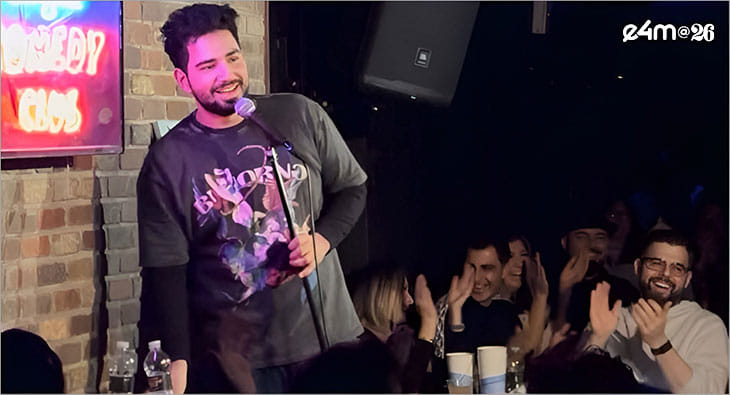

YouTuber and comedian Samay Raina has officially confirmed the return of his much-discussed show India’s Got Latent, marking a significant moment in his career after a turbulent year. The announcement coincides with the release of his comedy special Still Alive, which premiered for free on his YouTube channel yesterday.
The revival of India’s Got Latent follows a controversial phase in 2025 that led to the show being taken down from YouTube. The backlash stemmed from remarks made during an episode that quickly went viral, triggering widespread criticism, legal scrutiny, and multiple FIRs against those involved. The incident not only halted the show but also raised broader questions about content boundaries in India’s rapidly evolving digital entertainment landscape.
In the months that followed, Raina largely stayed away from major releases, occasionally addressing the controversy and acknowledging his missteps. His decision to remove all episodes of India’s Got Latent and issue a public apology was seen as an attempt to defuse the situation, though the damage to the brand had already been significant.
Now, with the announcement of a new season, the key question is whether India’s Got Latent can restore its identity and win back audience trust.
View this post on Instagram
Read On: Samay Raina’s Delhi run delivers Rs 40-cr boost as live events market enters peak growth
From a branding perspective, the comeback carries both opportunity and risk. The controversy has kept the show in the public eye, ensuring that recall has not faded. At the same time, the strong fan response to its return demonstrates that an audience is still waiting. In digital media, where attention is hard to capture and easy to lose, that kind of visibility is invaluable.
Brands had previously tapped into India’s Got Latent with notable success. For instance, D2C fashion label Vastrado integrated its products into an episode in a way that felt natural to the content, using humour, contestant interactions, and creator banter to showcase the brand. The results were striking: Vastrado reportedly saw a 150 percent overnight revenue boost and nearly a 20-fold increase in website traffic following the collaboration. The episode also trended at number one on YouTube, amassing close to 28 million views.
Similarly, Spinny’s association went beyond simple product placement, becoming part of the show’s conversation. This helped the brand connect with younger viewers and carve a space in meme culture. These integrations succeeded because they felt organic, seamlessly blending into the content and encouraging sharing and repeat viewing.
Other brands, including Bold Care, Veeba, and Pop UPI, also experimented with this format by giving creators greater freedom with messaging. In many instances, the brand became part of the joke or the broader narrative rather than existing outside it. This approach resonated because it felt more relatable and less like traditional advertising.
At the same time, the show’s return is likely to face heightened scrutiny. Audiences, regulators, and critics will be watching for any changes in tone or approach. Even a minor misstep could reignite criticism and divert attention away from the content.
Read On: Samay Raina returns with ‘Still Alive’ after ‘India’s Got Latent’ controversy
The timing of Still Alive is also significant. As Raina’s first major release since the controversy, it gives him an opportunity to address the past and reconnect with his audience. It also helps set the tone for what follows. A positive response could pave the way for a smoother return of India’s Got Latent.
For the larger creator ecosystem, this situation reflects a familiar tension. There is always a balance between creative freedom and audience sensitivity, especially when content spreads quickly and reactions follow just as fast.
Ultimately, the return of India’s Got Latent is less about reverting to what it was and more about what it could become. If the show adapts while preserving its core appeal, it has a chance to regain its footing. Whether brands choose to return will likely depend on how that transition unfolds in real time.
For now, the comeback has attention. How it uses that attention will determine what comes next.
Read more news about Digital Media, Internet Advertising, Marketing News, Television Media, Radio Media
For more updates, be socially connected with us onInstagram, LinkedIn, Twitter, Facebook, YouTube & Google News
