RBI eases forex rules for global concerts as MIB ramps up live-events push
The reform forms part of a broader government strategy to build an enabling ecosystem for the live-events industry
 by
by
Published: Aug 7, 2026 1:43 PM | 4 min read
 Follow Us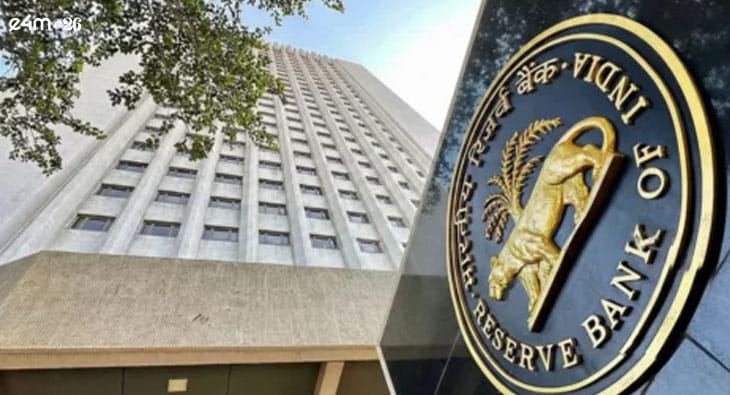

- The Reserve Bank of India (RBI) has relaxed foreign exchange regulations, removing the requirement for a bank guarantee on advance remittances of USD 500,000 or more for event organizers bringing international artists to India, effective October 1, 2023.
- This policy shift, recommended by the Ministry of Information and Broadcasting's Live Events Development Cell (LEDC), aims to position India as a global hub for live events by 2030 and reduce financial hurdles for event organizers.
- The LEDC has also initiated the India Cine Hub (ICH) portal to streamline permissions for live events, with 29 States and Union Territories participating, although broader regulatory harmonization remains a challenge.
- Additional measures include developing infrastructure for live events at heritage sites, establishing a Skilling Committee for workforce development, and addressing various structural bottlenecks affecting the industry, indicating a comprehensive government strategy to enhance the live-events sector.
In a significant but largely unnoticed policy shift aimed at making India a global destination for concerts and large-scale entertainment events, the Reserve Bank of India (RBI) has relaxed foreign exchange regulations to remove a major financial hurdle faced by event organisers bringing international artists to the country.
The move, undertaken on the recommendation of the Ministry of Information and Broadcasting's Live Events Development Cell (LEDC), eliminates the requirement for organisers to furnish a bank guarantee while making advance remittances of USD 500,000 or more for importing services under the Foreign Exchange Management (FEMA) Regulations, 2026. The revised regulations, notified on January 15 this year, will come into force on October 1.
The regulatory change, disclosed in a written reply by Minister of State for Information and Broadcasting L. Murugan in the Rajya Sabha on Friday, marks the first major inter-ministerial policy outcome of the LEDC, which was constituted in July 2025 to position India as a global hub for live events by 2030.
While recent years have seen India emerge as an attractive market for international concerts, promoters have frequently pointed to regulatory complexities, financing constraints and multiple approval requirements as factors that increase costs and delay event execution.
Advance payments to overseas artists, production companies and technical service providers often run into millions of dollars, making banking compliances a significant operational challenge.
By dispensing with the bank guarantee requirement for high-value advance remittances, the RBI is expected to ease working capital pressures on event organisers, reduce transaction costs and simplify contracting with international performers. The measure is also likely to improve India's competitiveness against regional live-entertainment hubs that have increasingly attracted global touring productions.
The reform forms part of a broader government strategy to build an enabling ecosystem for the live-events industry, which the Centre views as an important contributor to economic growth, employment generation, tourism and cultural promotion.
The parliamentary reply reveals that the LEDC has moved beyond policy discussions to coordinate reforms across multiple ministries and government agencies.
Among its biggest initiatives is the operationalisation of a dedicated online permission system through the India Cine Hub (ICH) portal. The platform creates a single digital workflow covering applications, inter-departmental coordination, approvals, payments and inspections, while incorporating time-bound processing, real-time tracking, escalation mechanisms for delays, integrated digital payments and audit trails.
The government said 29 States and Union Territories have already designated nodal officers for processing live-event permissions through the portal, suggesting broad administrative participation in the Centre's digital approval framework.
However, wider regulatory harmonisation across states remains a work in progress.
The "Model Executive Order for Streamlining Licensing and Permissions for Live Events in India, 2026," prepared by the LEDC and circulated to all states and Union Territories in March this year, has so far been implemented by only three states or Union Territories.
The limited adoption underlines the challenge of achieving uniform regulatory practices across jurisdictions despite growing acceptance of the digital permissions platform.
Infrastructure development is another key pillar of the government's strategy.
According to the ministry, the Archaeological Survey of India has prepared a Standard Operating Procedure for organising live events at protected monuments and identified 224 heritage sites that could potentially host such events.
Simultaneously, the LEDC has prepared and circulated a concept note on a Greenfield Venue Development Policy to state governments, sports authorities and industry stakeholders, reflecting the Centre's intention to address India's shortage of purpose-built entertainment venues.
The government is also attempting to strengthen the talent pipeline for the sector.
A dedicated Skilling Committee has been constituted, with the Indian Institute of Mass Communication (IIMC), in collaboration with the Media and Entertainment Skills Council (MESC) and the Event and Entertainment Management Association (EEMA), beginning preparatory work on certificate courses, short-term programmes and specialised modules in live-events management.
The LEDC has simultaneously identified several structural bottlenecks affecting the industry and referred them to the relevant ministries for consideration.
These include visa and Foreigners Regional Registration Office (FRRO) facilitation for visiting artists and technical crews, access to sports and heritage venues, streamlining music licensing, extending permissions for events beyond 10 p.m., taxation issues and improving access to finance.
The developments indicate that the LEDC is evolving into a cross-government coordination platform rather than functioning merely as an advisory body.
An execution framework laying out the Centre's long-term strategy for the growth of the sector has already been prepared and circulated among stakeholders. The Cell, chaired by the Secretary of the Ministry of Information and Broadcasting, comprises representatives from central ministries, state governments, industry associations and other stakeholders, and has held four meetings since its establishment in July 2025.
For India's live-events industry, however, the RBI's decision could prove to be the most consequential reform so far. Unlike procedural changes or policy frameworks, the relaxation directly addresses a financing friction that has long complicated the import of international entertainment services, signalling the government's willingness to align financial regulations with its ambition of making India a preferred destination for global concerts and live entertainment by the end of the decade.
Read more news about Digital Media, Internet Advertising, Marketing News, Television Media, Radio Media
For more updates, be socially connected with us onInstagram, LinkedIn, Twitter, Facebook, YouTube & Google News