Creators are now at the epicenter of culture: YouTube CEO Neal Mohan
In an interview released by YouTube, Mohan shared that Shorts continues to be an incredibly fast-growing format on the platform, and it's an area that will see further investment in 2026
 by
by
Published: Jan 22, 2026 3:20 PM | 6 min read
 Follow Us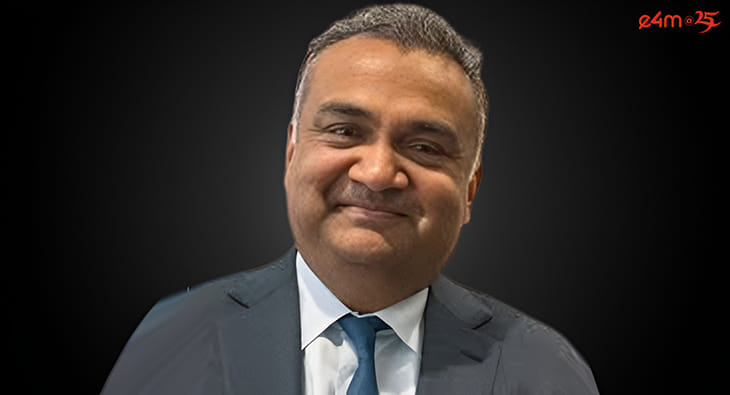

YouTube CEO Neal Mohan has said creators are no longer confined to bedrooms and ring lights—they’re shaping culture and scaling audiences across markets while building businesses with international reach.
Mohan was speaking about YouTube’s priorities for 2026 in an interview released by the platform.
When asked how he sees creators and artists reinventing everything in entertainment, Mohan said the creator ecosystem has moved far beyond bedrooms and ring lights. Today’s top creators, he said, are "building out their own studios,....and studio-sized lots in Hollywood",producing content across formats, platforms, and markets, while building businesses with international reach. From Super Bowl moments and Oscars reactions to album drops and live events, creators now sit at what Mohan called the “epicenter of culture.”
“We are the world's original and largest creator economy,” he stated, underscoring YouTube’s leadership with over $100 billion paid out to creators, artists, media partners, and other stakeholders over the past few years. He emphasized that this success isn’t static.
Shopping and direct monetization tools are a priority, Mohan said, with new features that allow creators to link products directly within Shorts and enhance brand collaborations. He also promised dynamic tools that let creators “dynamically swap out the creative, the sponsor creative that they have been working with in their videos for another one.” This reflects YouTube’s ongoing push to diversify creator income beyond ads.
AI as a Creative and Accessibility Engine
Artificial intelligence was featured heavily in Mohan’s remarks. “AI plays a really big role in terms of YouTube being able to deliver for our creators as well as viewers,” he said, describing investments in tools that enhance creativity and productivity. YouTube’s AI suite powers features like YouTube Create, which supports shorts creation, and innovative projects like generating games in YouTube Playables from text prompts.
He highlighted the impact of AI on fan interaction through YouTube’s Ask button, which in December was used by 20 million viewers to ask creators questions about videos. AI also drives accessibility tools such as auto-dubbing, enabling viewers to watch content in languages not their own, a feature used by 6 million viewers for over 10 minutes of watch time per video.
Yet AI’s promise comes with caution. Mohan acknowledged risks around deepfakes and creator likeness. He cited YouTube’s “likeness detection” tools, which build on Content ID technology to help content owners control the use of their face and voice on the platform.
Regarding misinformation and fabricated content, Mohan said YouTube will pursue a three-pronged approach centered on transparency, rigorous enforcement of community guidelines, and recommendation systems that reduce low-quality or deceptive content.
Unparalleled Formats and Record Engagement
Mohan highlighted how YouTube’s range of formats gives creators a broad canvas for expression. On the short-form front, he noted, “Shorts have 200 billion views a day. That continues to be an incredibly fast-growing format on YouTube, and it's an area that you'll see further investment from us in 2026.”
This meteoric engagement with short-form clips has made YouTube Shorts one of the most dynamic parts of the platform, not only as content but as a cultural force shaping trends and driving discovery. Yet Mohan stressed that long-form viewing and the living room experience remain central to YouTube’s strategy.
“The living room continues to be an area of strength and investment for us. We're coming up on three years. We're the number one streamer here in the U.S. So, in order to continue to maintain that position, we're going to invest in the product,” he said. Key innovations include letting users “choose exactly the multi-view channels that you want” and introducing “multiple tiers within YouTube TV” for greater consumer choice. These moves aim to reinforce YouTube’s dominance in a rapidly changing TV market.
Music, Discovery, and Fan Experiences
Music remains another core pillar of the platform’s growth. Mohan emphasized continued investments in both the YouTube Music app and the main YouTube experience, noting features that help fans “discover new artists [and] learn more about the song that you're listening to.” By blending entertainment and social interaction, YouTube continues to bridge the gap between artist promotion and fan engagement.
Another major theme Mohan addressed is making YouTube “the best place for kids and teens.” He reiterated the platform’s longstanding goal of balancing discovery with safety. “We know that YouTube from the really early days has been a place where families and young people come to learn new things,” Mohan said, emphasizing that parents should have leading control over their children’s viewing experience. “Parents should be in control. They should be the ones that make decisions on behalf of their children, teenagers.”
This commitment includes making safety controls “simple and easy to use,” reflecting broader concerns about online engagement and the need to build trust with families.
Long-Term Outlook and Future Creators
Asked to look beyond 2026, Mohan offered a visionary perspective rooted in possibility. “It might be a creator that's getting started right now, today. And who knows the type of content that they are going to create... And they may be the world's biggest, most important creator a few years down the road,” he said, capturing YouTube’s ethos of endless opportunity.
All of this creative and strategic ambition plays out against a backdrop of massive financial success for YouTube. According to the latest reported figures, YouTube generated approximately $54.2 billion in total revenue in 2024, including over $36 billion from advertising and around $14 billion from subscriptions such as YouTube Premium and Music, a year-over-year increase that reflects the platform’s sustained commercial strength.
Advertising strength was particularly evident in the fourth quarter of 2024, when YouTube’s ad revenue reached a record $10.5 billion, representing double-digit year-over-year growth and underscoring the platform’s continued appeal to brands and marketers.
These financial results position YouTube not merely as a content destination but as one of the world’s leading media businesses, a force rivaling traditional entertainment conglomerates and solidifying its importance to parent company Alphabet’s overall growth strategy.
As Mohan succinctly put it, the most important creator of tomorrow “is probably a creator that none of us have heard of”, a testament to YouTube’s belief that its greatest innovation lies not in algorithms or formats alone, but in the limitless potential of its community.
Read more news about Digital Media, Internet Advertising, Marketing News, Television Media, Radio Media
For more updates, be socially connected with us onInstagram, LinkedIn, Twitter, Facebook, YouTube & Google News
