Is stripped-down storytelling the new grammar of Indian advertising?
Industry pundits debate if replacing the ‘convention with nothing’ is an un-ad or half-ad
 by
by
Published: Apr 3, 2026 10:02 AM | 8 min read
 Follow Us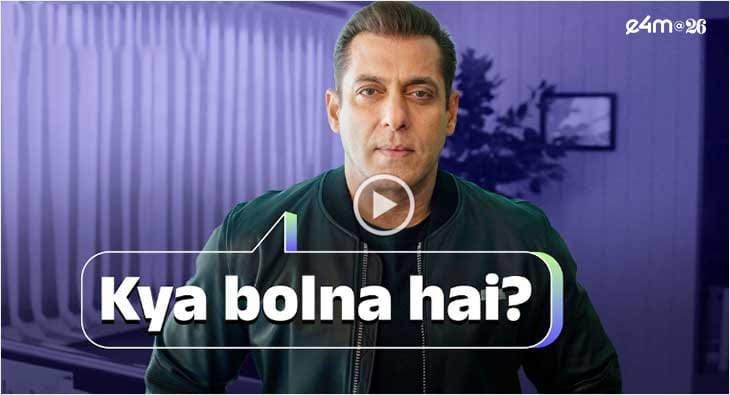

There is a certain kind of ad circulating on Indian television screens right now that refuses to look like an ad. It does not open with a montage. There is no swelling background score. The celebrity in frame is not delivering a rehearsed monologue about life-changing benefits. Instead, there is a set, a moment, a line, and then it is over. This is the aesthetic of the hour, and it has a name. The industry calls it minimalism. Whether it deserves that name is increasingly up for debate.
The trend has genuine roots. After years of over-produced, claim-heavy advertising, consumers (particularly younger, digital-native audiences) grew visibly fatigued with spectacle. The response from brands and agencies was instinctive: strip it back. Be real. Let the product speak. What followed was a quiet but significant shift in the grammar of Indian advertising, one that now shapes everything from fintech campaigns to FMCG launches to the increasingly crowded battlefield of IPL season.
The 'un-ad' and its discontents
Few campaigns captured this moment as precisely as CRED's now-legendary celebrity films: work that dismantled the endorsement format, replaced familiar sincerity with absurdist wit, and made the strangeness itself the craft. The category took note. What followed, however, was a wave of imitation that missed the point entirely.
Abhijat Bharadwaj, CCO of Dentsu Creative Isobar, puts the problem plainly: "The 'un-ad' isn't new. Agencies have been trying to make ads that don't look like an ad for years. CRED genuinely cracked it. The absurdity was the craft. They stripped the celebrity endorsement format bare and replaced it with something sharper and stranger. The problem is, CRED's success permitted everyone to try the same thing, and most took the wrong lesson. They saw 'celebrity being casual on set' and thought that was the formula. It wasn't. The formula was the thinking."
The consequence of misreading that formula is visible across campaigns today. The format remains (celebrity, set, candid register), but the animating intelligence behind it is absent. "When you remove the hard sell, what's left has to be more interesting than what you took away," Bharadwaj continues. "If you replace convention with nothing, you haven't made an un-ad. You've made a half-ad."
IPL 2026: 'No drama, only cashback'
Perhaps no recent campaign has made a more deliberate case for stripped-down storytelling than super.money's IPL 2026 films featuring Salman Khan. Conceptualised by Tilt Brand Solutions and directed by Ayappa KM, the campaign, built around the platform line 'No Drama. Only Cashback', positions itself as a direct rebuke to the high-decibel excess of cricket-season advertising. The opening film places Khan on set, has him deliver a single line, and ends with a breezy dismissal of any further theatrics: "Lo bol diya." A second film extends the device further, showing Khan accidentally saying 'Superman' instead of the brand name and shrugging it off, a meta-wink at ad-making conventions.
The campaign works because the simplicity is earned, and it flows directly from the product truth. super.money's proposition is, in fact, uncomplicated: real cashback, no conditions, no gamification. The creative mirrors that honestly. The form and the content are in alignment. That alignment, creative practitioners argue, is precisely what separates intentional minimalism from the kind that merely borrows its aesthetic.
When restraint is rigour — and when it isn't
There is, of course, no universal rule about how much a piece of communication needs to carry. Sneha Iype, Executive Producer at Nirvana Films, one of India's most respected production houses, is clear that context determines everything. "If the idea is strong and effective, then it needs no frills, and yes, the frugality works," she says. "But sometimes you need world-building and emotion or context to land a message, and so it's important to embellish and add details and make a piece of communication also look and feel aesthetically appealing. To make a film bare bones as a cost-cutting measure alone is not necessarily a solution. Sometimes you could end up being penny-wise and pound-foolish."
This is the distinction the industry has been slow to make explicit: the difference between a creative decision and a production compromise. Aman Gupta, Head of Marketing at Farmley, the D2C healthy snacking brand, offers a diagnosis that is difficult to argue with. "A deliberately minimal ad still has a point of view," he says. "It knows what it's leaving out and why. The silence in it is deliberate, like a pause mid-sentence that makes the next word hit harder. You feel the restraint. You sense that someone made a decision — not a compromise. A half-baked ad, on the other hand, has absence without purpose. The silence isn't dramatic; it's just... empty."
Gupta's internal test at Farmley is elegantly simple: can the team articulate what the creative is not saying, and why? "If the answer is a confident 'we chose to strip this back because the product speaks for itself' or 'we wanted the viewer to complete the thought,' that's a creative decision. If the answer is a shrug, that's a budget decision dressed up as philosophy. Minimalism as a craft is rigorous. It demands that every element that does appear earns its place. That's actually harder than maximalism, not easier."
The platform question
Part of what is driving this aesthetic shift is not purely creative ideology. It is media behaviour. The way audiences consume content has changed so fundamentally and so quickly that creative conventions formed for the thirty-second television spot are no longer adequate for the environments in which most advertising now lives.
Sayak Mukherjee, Co-founder of Creatorcult Media, a creator-economy and content marketing platform, frames this as a structural shift rather than a creative one. "We've moved from slow, high-attention media like TV and print to fast, low-attention digital formats where reaction time is minimal," he explains. "In such environments, messaging has to be sharp, direct, and clutter-free — especially for performance-driven campaigns. That said, minimalism works only when it is aligned to the objective. Brand-building campaigns still require depth, storytelling, and layered messaging, while performance campaigns demand clarity and immediacy. The difference between strong minimalism and weak creative lies in whether the simplicity is strategic or just convenient."
Aayush Bansal, Co-founder of Black Cab, a brand-first creative studio, locates the test of minimalism in something equally precise. "When minimalism is intentional, it feels sharp, not empty. The idea lands quickly, almost instinctively, and there's a sense that nothing extra was needed," he says. "Where it starts to fall apart is when 'minimal' becomes a shortcut. If you're left confused instead of intrigued, it's a sign the idea hasn't been pushed enough." Black Cab's internal filter for this is instructive: does the work function without context? "If an idea needs a caption or explanation to make sense, it's not minimal — it's incomplete. The best minimal work is the result of editing down something strong, not starting with very little."
Hiding behind the trend
The industry risk, as Bharadwaj sees it, is not minimalism itself, but the cover it provides. "'Minimal' has quietly become a hiding spot," he observes. "The brief says keep it simple, the execution is thin, and nobody questions it because the trend has a name. Simplicity is actually the hardest thing to do well. A great minimal ad is like a great short story — every word carries weight. A lazy one is a half-written email where nobody finished the job. The trend hasn't lowered the bar. People hiding behind it have."
Gupta is equally direct about the industry's uncomfortable truth. "There's a version of 'no-frills' that is really just under-resourced, under-thought, and under-briefed creative wearing the costume of authenticity. 'We kept it raw on purpose' can become a shield for work that simply wasn't developed enough. Real creative honesty requires more strategic rigour, not less." The question he would have the industry ask of itself is pointed: Is this brand confident enough to say less, or is it just saying less because it ran out of things to say?
Those, as Gupta rightly notes, are very different stories and audiences, whether or not they can articulate it, almost always know the difference. Mukherjee frames the solution as an additive rather than a binary one: "The future is not A or B — it's A + B. Strong brands will balance performance-led, no-frills communication with long-term storytelling that builds equity. The real shift is not in creativity declining, but in strategy evolving with media and consumer attention."
In a content environment where the volume of advertising has never been higher, and attention has never been shorter, the stakes of getting this wrong are real. Bansal's parting note is perhaps the most precise summary of where the industry stands: "In a feed full of content, blending in is the real risk. Minimalism works when it sharpens the idea. If it dilutes it, then it's not a creative choice — it's a missed opportunity."
Read more news about Internet Advertising India, Marketing News, PR and Corporate Communication News, Digital Media News, Television Media News
For more updates, be socially connected with us onInstagram, LinkedIn, Twitter, Facebook YouTube & Google News