Swiggy and Zomato face online backlash over platform fee hikes
After years of subsidised pricing and heavy discounts aimed at building user habits, platforms seem to now be focusing on improving margins and moving toward profitability
.png) by
by
Published: Mar 25, 2026 2:18 PM | 3 min read
 Follow Us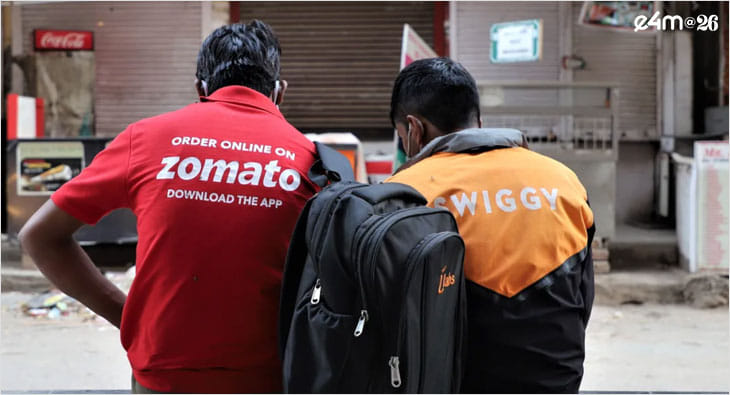

Food delivery platform Swiggy has raised its platform fee to Rs 17.58 per order, following a similar hike by rival Zomato raised its platform fee to Rs 14.90 just days earlier, a move that has once again brought attention to a charge that was once barely noticeable.
The platform fee, typically a small, fixed charge added at checkout, is positioned as a service fee for using the app and its infrastructure. It is separate from delivery charges, restaurant pricing, taxes or packaging costs. What began as a nominal addition has now become a visible part of the total bill.
When first introduced, platform fees were minimal, often Rs 2 or Rs 3 per order and largely went unnoticed by consumers. Over time, however, the fee has steadily increased across both platforms, moving through Rs 5, Rs 6, Rs 10 and Rs 12, before reaching the current range of Rs 15 to Rs18 per order.
While each hike is small in isolation, the cumulative effect becomes more noticeable when added to delivery fees, taxes and packaging charges, pushing up the final order value.
After years of subsidised pricing and heavy discounts aimed at building user habits, platforms seem to now be focusing on improving margins and moving toward profitability.
Social media reactions
The latest hike has triggered strong reactions online, with users pointing to how the total cost of ordering has changed over time. One user wrote, “Swiggy platform fee, Zomato platform fee, surge pricing… Ek ₹200 ka burger order karo toh bill ₹350 aata hai. At this point, just learn cooking.”
? Swiggy Hiked Platform Fees To ₹17.58 Now
— Ravisutanjani (@Ravisutanjani) March 24, 2026
• Current Platform Fee : ₹14.99
• New Platform Fee : ₹17.58
Zomato Recently Hiked Platform Fee To ₹14.90
Food Delivery Going To Be More Expensive
Another commented on the broader shift, saying, “Subsidy phase is over. Profitability phase has begun.”
Others questioned long-term value, with one user noting, “At this rate, charges will be higher than the actual order,” while another added, “People will stop ordering because total costs are getting too high.”
There were also sharper takes on convenience itself, with a comment reading, “They aren’t selling food, they’re selling convenience, and it’s getting expensive.”
A user noted, “Expensive food "delivery" isn't the issue, but expensive “food” is the issue. Charging both seller & customer is the issue. Due to their seller fee, Rs. 80/- food menu is already listed at Rs. 160/- at their platform. On top of that, they want customers to pay also.”
Some users found the additional fees to be acceptable for the convenience it offers, “If the price and quantity is similar to offered in restaurants, worth paying platform fees of Rs. 18, saves time, fuel, parking charges(At times).”
Rethinking the cost of convenience
The whole of internet seems to be divided on the platform fee hike. As these changes continue, users are beginning to reassess how often they rely on food delivery apps. Where some view the hike to be acceptable and worth it others are considering to go back to the “old days” of calling the restaurant and picking up the food themselves or simply start taking cooking lessons.
More than just a small fee
The rise in platform fees, from a barely noticeable cost to nearly Rs 18, highlights how small pricing changes over time can reshape consumer perception.
What was once seen as an affordable convenience layer is now becoming a more visible part of the overall cost, prompting users to take a closer look at what they are paying for beyond just the food.
Read more news about (internet advertising India, internet advertising, advertising India, digital advertising India, media advertising India)
For more updates, be socially connected with us onInstagram, LinkedIn, Twitter, Facebook YouTube & Whatsapp