Sumit Awasthi’s viral clips spark debate on media ethics and political narratives
As 30-second outrage bait clips from hour-long podcast go viral, context blows out stirring controversy
 by
by
Published: Jul 21, 2025 12:11 PM | 2 min read
 Follow Us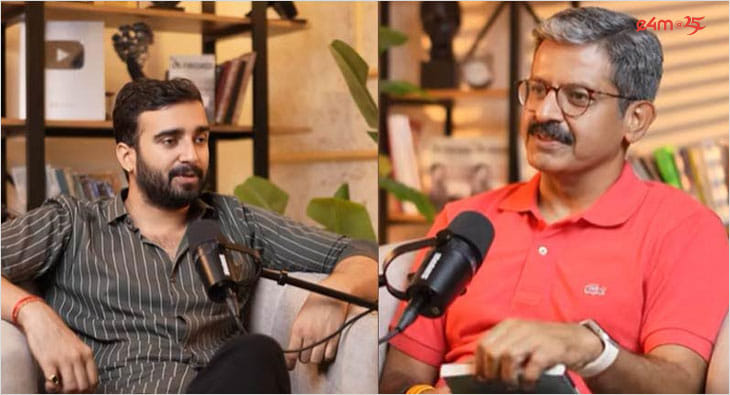

After a few snippets from a podcast interview with well-known YouTuber Bhanu Pathak went viral on social media, senior journalist Sumit Awasthi found himself at the center of a controversy. An hour-long interview was part of the marketing campaign for Awasthi's new book, "Unfinished – The End of the Kejriwal Era?", touched on a variety of topics, including political journalism and his firsthand encounters with India's leading politicians.
The viral videos, which mostly highlight Awasthi's criticism of the mainstream media, have stirred controversy. However, viewers who have watched the entire interview contend that excerpts are being twisted in order to support a particular narrative, leaving out the more complex and comprehensive background of the conversation. Awasthi discusses in the interview the constraints that journalists confront, the demands of both national and local governments, and the reliance of media outlets on government advertising.
He further discusses his encounters with political figures such as PM Narendra Modi, Amit Shah, Omar Abdullah, and Akhilesh Yadav, as well as how their communication techniques influence public opinion. By characterizing Shah as "data-rich" and Modi as a "listener with a pulse on the people," Awasthi provides a firsthand account of the power structures in Indian politics.
The controversy brought up some Important considerations: Can journalists report on uncomfortable facts without being misrepresented? And in an ecosystem that is dominated by advertisements, how can we strike a balance between editorial independence? Awasthi suggests subscription-based journalism that is backed by the public as a remedy.
Viewers are being advised to watch the entire interview before drawing any conclusions, as political tensions increase in anticipation of the next state elections. Because, as the instance of Awasthi demonstrates, half-truths frequently conceal more than they disclose.
Read more news about (internet advertising India, internet advertising, advertising India, digital advertising India, media advertising India)
For more updates, be socially connected with us onInstagram, LinkedIn, Twitter, Facebook YouTube & Whatsapp