From Attention to Affection: The Role of Narrative
Atul Raja, Brand Strategist and Global Marketing Consultant, positions narrative as the invisible force powering brand strength
 by
by
Published: May 5, 2026 4:03 PM | 3 min read
 Follow Us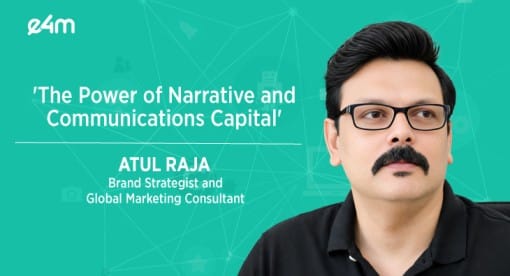

- Brands are increasingly valued for their narrative and communications capital, which shape perception and build trust beyond traditional financial metrics.
- Effective storytelling, as exemplified by campaigns like Tata Tea's 'Jaago Re' and Amul's witty creatives, elevates brands from mere products to cultural catalysts.
- Legacy brands like LIC are adapting their narratives to focus on emotional storytelling, enhancing their relevance and connection with consumers.
- In the age of AI, while content generation can be automated, authentic human storytelling remains crucial for brands to differentiate themselves and maintain meaningful engagement with their audience.
Data can inform. Only narrative can transform.
In today’s marketplace, capital is no longer confined to balance sheets. Brands are increasingly being valued not just by what they sell, but by what they stand for and how consistently they communicate it. This is where narrative and communications capital come into play; intangible yet immensely powerful assets that can shape perception, build trust, and create enduring competitive advantage.
Narrative capital i.e., the story a brand tells over time - its purpose, its voice, its worldview complements the Communications capital which symbolises the accumulated strength of how effectively and consistently that story is told across touchpoints. Together, they form a force multiplier that often outperforms sheer media spends or product superiority.
Consider Tata Tea’s ‘Jaago Re’ campaign. It did not just sell tea; it sold awakening - social, political, and personal. Over time, this narrative elevated the brand from a commodity to a catalyst for change. Similarly, Amul has built decades of communications capital through topical, witty creatives that make the brand culturally relevant week after week. The product remains the same, but the narrative keeps it fresh, engaging, and deeply embedded in public consciousness.
Another compelling example is Zomato, which has mastered a sharp, conversational tone that resonates with urban India. Its push notifications and social media posts feel less like brand communication and more like a friend’s message. This consistency has built a distinctive narrative voice - one that consumers instantly recognise and engage with.
Even legacy brands are leveraging narrative to reinvent themselves. LIC, once seen as conservative and transactional, has started adopting more human, emotional storytelling -focusing on life moments rather than policies. This shift is strategic, aimed at building long-term emotional equity.
In the Age of AI, Human Storytelling Becomes Premium
As we enter the era of AI-driven content creation, an important question arises: Can narrative be automated?
AI can undoubtedly generate content at scale. It can analyse trends, optimise headlines, and even mimic tone. However, true narrative requires lived experience, cultural context, and emotional nuance - elements that are inherently human. AI can assist in execution, but it cannot originate meaning. It can replicate patterns, but it cannot create purpose.
The risk, therefore, is not that AI will replace human storytelling, but that brands may start sounding increasingly similar—efficient, but soulless. In such a scenario, the brands that will stand out are those that double down on authenticity, originality, and human insight.
Products can be copied, prices can be undercut, and distribution can be matched. But a powerful narrative - deeply felt and consistently communicated - becomes a moat that is almost impossible to breach. And perhaps that is the real power of communications capital: it transforms brands from mere participants in the market to enduring voices in culture.
Read more news about PR and Corporate Communication News, Internet Advertising, Marketing News, Digital Media News, People Movement News
For more updates, be socially connected with us onInstagram, LinkedIn, Twitter, Facebook YouTube & Google News
