Chhavi Leekha: Redefining corporate communications for a changing world
In our conversation with Chhavi Leekha, Independent Global Communications & Reputation Strategist, we reflect on her journey, her philosophy, and the evolution of corporate communications
 by
by
Published: Nov 5, 2025 1:25 PM | 8 min read
 Follow Us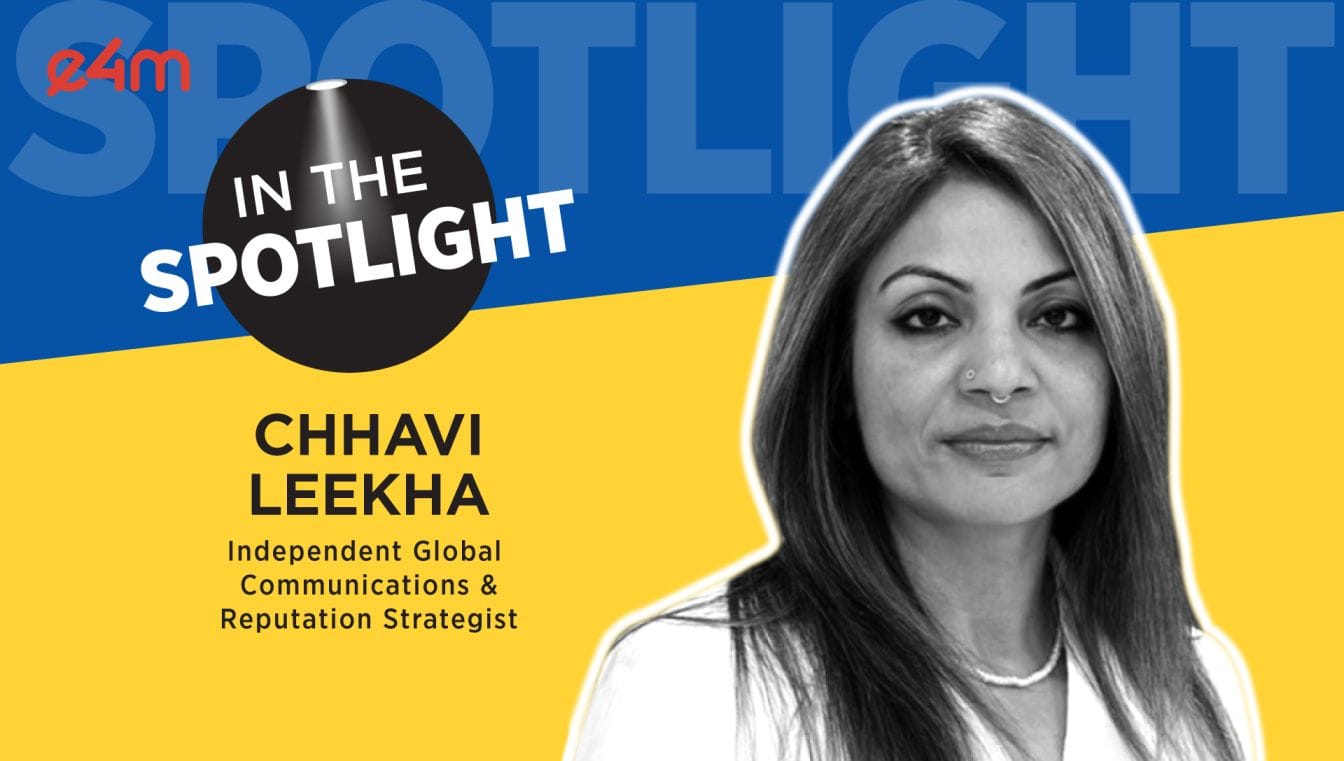

In a career spanning over two decades, Chhavi Leekha has shaped the voice and reputation of some of the world’s most influential brands, from IndiGo Airlines and Uber India to Nokia, GE, Rolls-Royce, and AGC Networks. With a distinctive blend of strategic foresight, human-centered storytelling, and advocacy-driven leadership, she has built narratives that connect purpose to performance. Today, as an Independent Global Communications & Reputation Strategist, Chhavi advises organisations on transforming communications into a core business enabler — not just a function of messaging but a pillar of culture, trust, and long-term value creation.
In this conversation, she reflects on her journey, her philosophy, and how corporate communications is being redefined in an era shaped by technology, transformation, and human empathy.
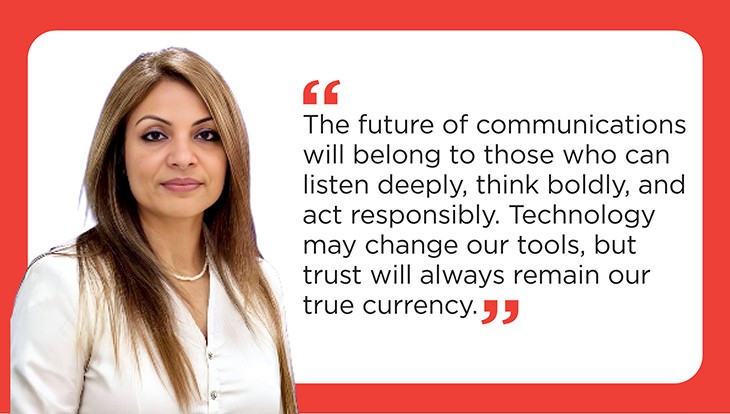
Excerpts:
What drives your passion for communications beyond corporate success, and how did you venture into the PR & communications industry?
What has always drawn me to communications is its ability to bridge intent and impact. Beyond corporate milestones, it’s the human stories, the voices within and outside an organisation, that make the work meaningful. I’ve always believed that communication is not merely about crafting messages — it’s about creating understanding, empathy, and trust between people and institutions.
My journey into communications began with curiosity. I started my career when India’s corporate ecosystem was just beginning to open to global influences, and storytelling was emerging as a serious leadership tool. Initially, I was drawn to the intersection of public affairs and business strategy — understanding how perception could drive performance. Over time, this evolved into a deep passion for shaping narratives that empower both brands and people.
Whether it was repositioning legacy brands or managing reputation during times of uncertainty, I found purpose in connecting strategic business goals with authentic human communication. That intersection — where data meets empathy — continues to fuel my passion every single day.
How has working with global giants like IndiGo, Nokia, Uber, GE India, and Rolls- Royce helped you evolve as a communications leader? What are the key differences you’ve observed in communications strategies across B2B vs. B2C organizations?
Each of these experiences was like earning a degree in a new discipline of communications. At GE and Rolls-Royce, I learned the power of precision — every statement had to align with technical credibility and stakeholder expectations across multiple regulators and geographies. In contrast, Uber and IndiGo were fast-paced, high-visibility environments where speed, emotion, and empathy shaped public sentiment.
Working across these ecosystems taught me that context is the real currency of communication. In B2B organisations like Nokia or AGC Networks, communication must translate complexity into clarity. It’s about trust, performance, and partnership — how you position innovation and reliability in the minds of clients, governments, and investors.
In B2C environments like IndiGo, however, communication lives in real time. You’re speaking to millions of people daily, and reputation is shaped moment by moment — through experience, emotion, and empathy. The leadership challenge is to connect scale with sincerity.
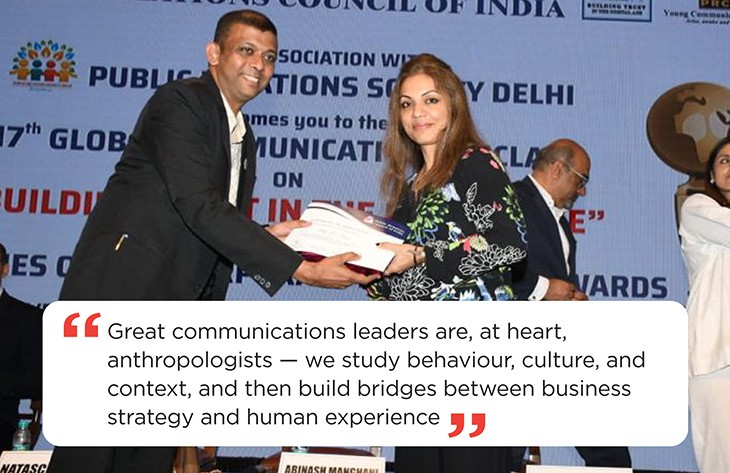
Across all these roles, I’ve realised that great communications leaders are, at heart, anthropologists — we study behaviour, culture, and context, and then build bridges between business strategy and human experience.
Influencer outreach at both national and international levels is one of your fortes. How do you see the role of influencers evolving in corporate communications?
The word “influencer” has evolved far beyond social media today. In the corporate realm, influence is about credibility, not visibility. When I led influencer engagement for large brands, we looked at it through a multi-stakeholder lens — identifying who genuinely shapes opinion: industry analysts, sustainability advocates, employees, community leaders, or policymakers.
In the next decade, I believe the real power of influence will rest with authentic voices that stand for purpose and integrity. AI and automation may redefine reach, but authenticity will define resonance. For brands, the challenge — and opportunity — is to cultivate ecosystems of micro-influencers who reflect genuine alignment with the company’s purpose.
At IndiGo, for instance, we worked with travel creators and sustainability experts to shape a narrative around responsible aviation. At Uber, we amplified driver and rider stories that humanised technology. Influence, when rooted in authenticity, becomes a force multiplier for trust.
How do you define thought leadership for corporate brands today, and what strategies do you recommend for building credible executive branding?
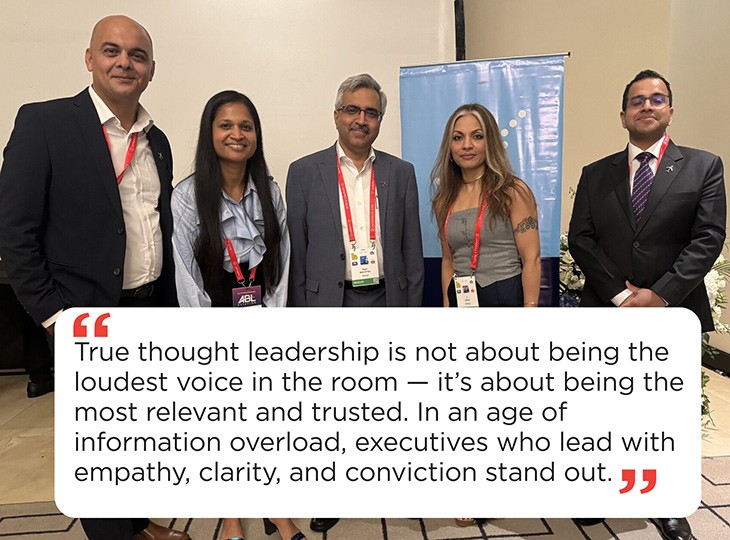
True thought leadership is not about being the loudest voice in the room — it’s about being the most relevant and trusted. In an age of information overload, executives who lead with empathy, clarity, and conviction stand out.
For me, thought leadership starts with listening — to employees, customers, regulators, and communities. From there, you build narratives that align business purpose with societal impact. Executive branding, in that sense, is not self-promotion — it’s responsibility in action.
I often encourage leaders to embrace three pillars: authenticity, agility, and accountability. Authenticity in owning their values; agility in adapting their message to changing contexts; and accountability in ensuring words translate into measurable outcomes.
A great example is when we positioned IndiGo’s leadership to communicate around sustainability, safety, and inclusion — not as corporate rhetoric, but through real initiatives like green operations and “Lean, Clean Flying Machine” campaigns during the pandemic. That’s what transforms visibility into credibility.
You’ve navigated complex reputational challenges across multiple industries. Could you share a crisis communications experience that taught you a critical lesson?
Crisis teaches humility. During the pandemic, as part of IndiGo’s leadership team, we faced an unprecedented situation — uncertainty, fear, and misinformation were widespread. The instinctive reaction in crises is to control the narrative, but I learned that the most powerful thing you can do is stay transparent and compassionate.
We launched the “Lean, Clean Flying Machine” campaign not just to reassure passengers but to restore collective confidence in air travel. Every message, visual, and protocol was designed with empathy and data-driven clarity. What stood out was how consistency and calm communication became strategic differentiators.
That experience reinforced a belief I’ve carried since: reputation management is less about defence and more about stewardship. It’s about earning trust through behaviour — not statements. Every crisis is an opportunity to reaffirm your values, and the brands that remember this are the ones that emerge stronger.
Over the past two decades, corporate communications has undergone a massive transformation. From your perspective, what are the most significant shifts in the industry?
The last 20 years have completely redefined our craft. The most profound shift has been from control to co-creation. Earlier, communications teams “owned” the narrative. Today, stakeholders — employees, customers, investors, even algorithms — co-create and co- govern that narrative in real time.
Technology has been both the disruptor and the democratizer. AI, analytics, and real-time engagement tools have empowered communicators to move from reactive storytelling to predictive reputation management. However, this digital acceleration has also made ethics and empathy more critical than ever.
The second big transformation is the integration of ESG and purpose into communications. Today, reputation is a composite of impact, not image. How a company treats its people, planet, and partners defines its brand equity far more than advertising spend.
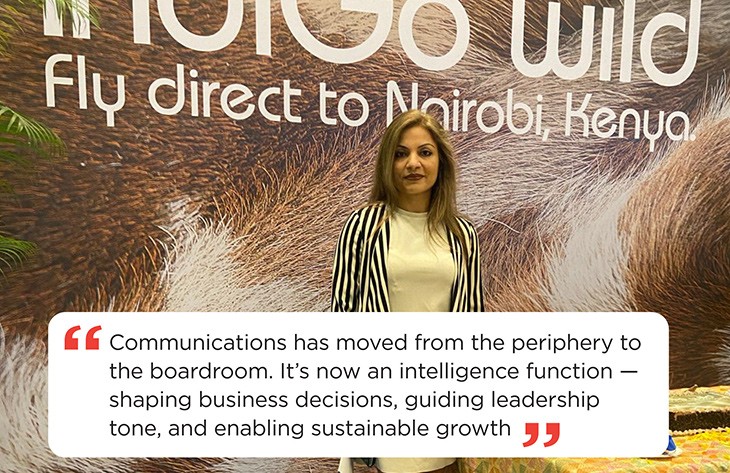
Finally, communications has moved from the periphery to the boardroom. It’s now an intelligence function — shaping business decisions, guiding leadership tone, and enabling sustainable growth.
Mentorship is a crucial part of your work. What do you focus on while guiding and coaching high-performing teams in communications?
Mentorship, for me, is about unlocking self-awareness. In communications, technical skill matters — but emotional intelligence defines greatness. I’ve always encouraged my teams to move beyond execution and ask the “why” behind every message.
I focus on three core dimensions: Clarity — helping professionals articulate not just what they do, but what they stand for. Courage — encouraging them to question, innovate, and sometimes challenge conventions. Compassion — reminding them that communication is about humans, not headlines.
I’ve been fortunate to mentor diverse teams across geographies — from young executives in India and Southeast Asia to leadership communicators in Europe and Africa. Watching them grow into independent thinkers and empathetic leaders has been among the most fulfilling parts of my journey.
As leaders, our legacy isn’t measured by the campaigns we run but by the people we inspire to carry the narrative forward.
What do you believe will define the next frontier for corporate communications professionals?
The next frontier lies at the intersection of AI, authenticity, and adaptability. Artificial intelligence will fundamentally transform how we create, distribute, and measure communication. But the real differentiator will be how we retain the human heartbeat within that process.
Communications leaders of the future will be expected to be data-literate, culturally intelligent, and emotionally grounded. They will need to balance technology’s efficiency with storytelling’s empathy.
We’ll also see a deeper integration between internal and external communications — because culture is the new brand. Employees are now the most credible advocates, and their experience defines the organisation’s reputation.
Finally, the future will reward communicators who think like strategists and act like storytellers — those who can connect purpose to profit, and narratives to measurable outcomes.
Read more news about PR and Corporate Communication News, Internet Advertising, Marketing News, Digital Media News, People Movement News
For more updates, be socially connected with us onInstagram, LinkedIn, Twitter, Facebook YouTube & Google News