Are you still creating employee value proposition the old way?
A film by Grant Thornton Bharat shows how employee value proposition playbook is transforming, its implications, changing storytelling equation, what future holds, and more
 by
by
Published: Apr 16, 2026 11:36 AM | 4 min read
 Follow Us

Indian firms are competing in an increasingly tight talent market, particularly for digital, transformation, and mid-career roles. In this sector, the People Value Proposition (PVP) has long been a carefully constructed promise, articulated through recruitment decks, career pages, and leadership messaging that lays out what employees can expect in return for performance.
But that format is starting to feel out of step with how people choose where to work.
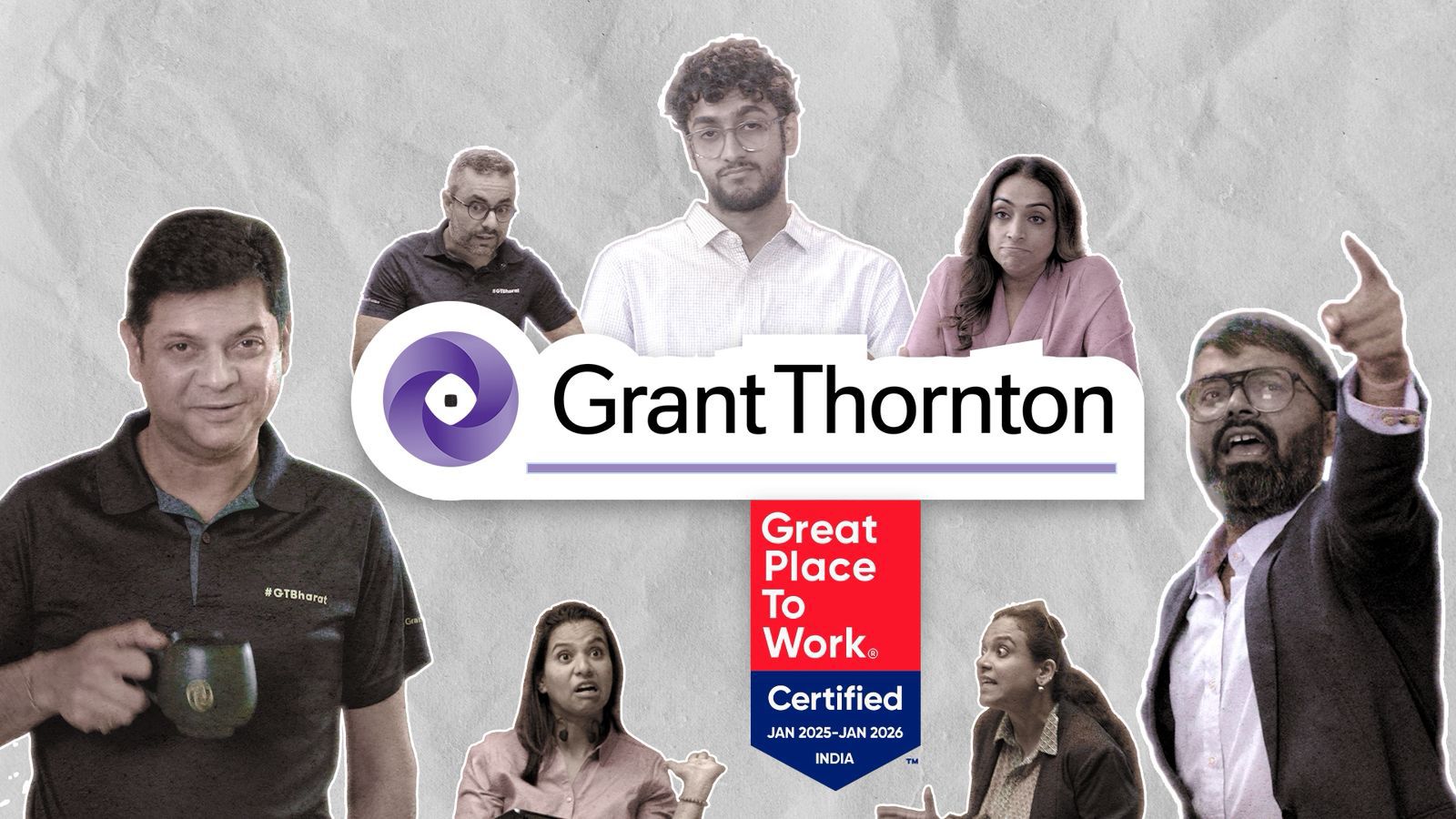
A recent PVP film by Grant Thornton Bharat signals how that playbook is changing. Instead of articulating its value proposition through statements, the firm took a creative turn and chose to show it in motion. There are no actors. No formal testimonials. No one explicitly explains “why you should join.” Furthermore, it does not explain what the organization offers, instead it leaves viewers to interpret it through what they see. At its core, it is a story of its people, told through their own experiences, offering a glimpse into the mix of individuals and interactions that shape what the firm calls its #Constellation.
The film stands uniquely because nothing is being sold explicitly but something is being communicated. And in doing so, GT Bharat exceptionally communicated more than a structured PVP ever could.
This raises a broader question for businesses:
Are firms moving from defining their PVP in a traditional format to creatively demonstrating it?
A changing communications equation
Corporate storytelling has traditionally been tightly scripted, carefully controlling what is said, how it is said, and who delivers it. This film signals a shift away from that approach, leaning instead into a more observational, raw, relatable, and natural way of visualising the everyday lives of GT Bharat’s people. There is no visible attempt to “sell” culture. It doesn’t construct a narrative as much as it reveals one. That choice is creative, but it’s also telling.
You cannot create this kind of content unless the internal environment allows for it. People have to be comfortable enough to be seen without scripts and share their raw and unfiltered experiences.
The real shift that is shown through the film is: Internal communication going external and how the inside story becomes the outside story. Companies no longer have the luxury of maintaining two versions of themselves, one for employees and one for the market. The same narrative now has to work everywhere.
The film also reflects a subtle shift in who carries the organization’s message, making their people their biggest representatives.
People as credibility anchors
There’s another layer here that speaks directly to how hiring is evolving.
In most employer branding efforts, people are used to delivering a message. They become polished representatives, often speaking in structured formats.
Here, they aren’t delivering anything. They are the message.
This is employee advocacy in its most effective form and it only works when people genuinely feel connected enough to the organization to show up as themselves.
Implications for the PVP
The evolution of formats like this raises questions about the future of the PVP itself.
Traditionally, the PVP has been a defined, documented construct, a set of promises that can be clearly articulated. But formats like this film attempt to reduce that gap between claim and perception. Other than defining culture, they make it visible and instead of listing what the organisation offers, they let viewers piece it together.
This has two implications.
- First, it makes the proposition more tangible for potential hires.
- Second, it makes it more accountable.
As businesses navigate a more competitive talent landscape, how they communicate their people's proposition may matter as much as the proposition itself.
The road ahead
The significance of this PVP film lies less in the format itself and more in what it indicates.
Whether this format becomes mainstream across businesses remains to be seen. But it aligns with a larger change in how talent evaluates organizations, which is not structured decks but observational and creative storytelling.
The bottom line
What Grant Thornton Bharat’s film shows is simple, but important that in today’s talent market, you can’t just say what your company is like. You have to let people see it and trust them to decide.
Because increasingly, the most convincing version of a company’s story isn’t the one it writes. It’s the one its people live in, every day.
Read more news about PR and Corporate Communication News, Internet Advertising, Marketing News, Digital Media News, People Movement News
For more updates, be socially connected with us onInstagram, LinkedIn, Twitter, Facebook YouTube & Google News