Whatever shape the screen takes, content will remain king: Markand Adhikari
Adhikari reflects on the seismic shifts in India’s media and entertainment industry in this interview with Dr. Annurag Batra, Chairman & Editor-in-Chief, BW Businessworld and exchange4media
 by
by
Published: Jun 23, 2025 1:27 AM | 7 min read
 Follow Us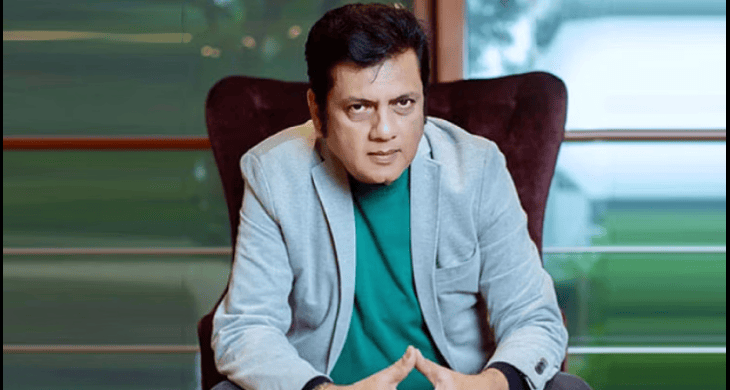

In a wide-ranging and no-holds-barred conversation with exchange4Media, Markand Adhikari, CMD of Sri Adhikari Brothers Group, reflects on the seismic shifts in India’s media and entertainment industry. A pioneer who led the first Indian media company to get publicly listed, Adhikari has seen the evolution of content, broadcasting, economics and consumer behavior from close quarters. From OTT’s disruption to South Indian cinema's dominance, from broken business models to the potential revival of Doordarshan, he tells it like it is.
Q: You’ve been at the forefront of India’s media revolution for over four decades. In your view, what are the biggest changes in this time?
Honestly, the most radical changes have taken place in just the past ten years. Digital has turned everything upside down. Gone are the days when families planned their lives around television programming. Now, television is just another screen. OTT has shattered linearity. You watch what you want, when you want, where you want.
Q: But with this ease and volume comes a flood of content. Isn’t there a serious content overload?
Absolutely. When anything becomes mass-produced, quality takes a hit. While some content is exceptional, a lot of it is forgettable. Today, viewers are overwhelmed by choice and frankly I wonder where people find the time to consume all this. Platforms are throwing huge money into production, but how much of it sticks?
Q: You have been a producer across genres, fiction, non-fiction and films. What kind of content works today?
That’s a tricky one. Honestly, no one really knows. Audiences ultimately decide what works. There’s always a luck factor. Just look at Bollywood, only three films really worked last year. Take Pushpa, for example. The biggest pan-India hero today is Allu Arjun, not a Bollywood star. His film earned ₹2000 crore globally and ₹850 crore in Hindi markets. That’s ticket money. People paid to watch him. That’s real.
Q: And on the other hand, you have Bollywood stars charging ₹100 crore per film?
Yes and flying around in private charters, all paid by the producer. In the past, you would see stars on commercial flights. Today, that’s rare. And the irony is, many of these films don’t even recover their P&A (Print and Advertising) costs. We should seriously adopt the Hollywood model where actors and directors earn based on box office performance, a percentage model. The film works, you earn. It doesn’t, you don’t. Simple. Today, movies are announced as ₹200 crore films and by release, they say it’s a ₹100 crore film to save face. Even that isn’t recovered.
Q: So you're saying the economics are completely broken?
Exactly. Too much money being spent on actors. Not enough understanding of what audiences want. Meanwhile, the South Indian industry is thriving because they are delivering immersive experiences audiences will leave their homes for. Hindi viewers have matured. They want realism, OTT shows and web series are giving them that.
Q: OTT seems to be replacing television and even cinema itself. Would you agree?
Certainly. Today, films survive only because OTT platforms buy them. If that revenue stream stops, film production collapses. Many theatrical releases earn less than what OTTs are paying, why, only they know. These platforms are run by foreign promoters—Amazon, Netflix, who may or may not fully grasp what's happening in India. It’s like paying ₹50 crore for a film that didn’t even make ₹20 crore at the box office. Films are now made for OTT.
Q: But OTT platforms too have cut back budgets over the past year. Why is that?
Because it’s not sustainable. OTT shows demand film-level budgets. But unlike broadcast TV, OTT runs on subscriptions. And let’s be honest, Indians think ten times before paying ₹150 a month. The business model is undefined. Cost and revenue don’t match. Yet these platforms were paying obscene amounts for average Hindi films. That’s the real issue.
Q: You have created iconic channels like SAB TV and Masti. What’s the secret sauce to good content?
There’s no formula. Content is instinctive. You need to understand the pulse of the masses, be the “son of the soil.” Once you get that pulse, you can create something meaningful. Today, there are many creators making great content for the web, even if it’s just 10-15% of the total. But that small percentage is truly impactful.
Q: You launched a news channel, Janmat, years ago, which was later rebranded as Live India. You eventually exited news. Was that the right decision?
Looking at today's news TV business, yes. There isn’t much revenue in it. But sometimes I do regret the decision. News has its own energy, its own space. Maybe I should have stayed. But as they say, there’s no rewind button in life.
Q: And in music broadcasting? You pioneered Masti. How are platforms like yours surviving in the era of Spotify’s?
Spotify and such platforms dominate urban metros. But India is vast. Tier 2, Tier 3 cities and rural audiences still consume traditional channels. DD Free Dish, for instance, has more reach than any DTH operator. Many people still prefer watching TV over YouTube. I know families who play Masti every night with a glass of wine. Nostalgia has power.
Q: Doordarshan is trying to make a comeback. Is it realistic to expect it to regain its past glory?
Why not? Doordarshan was once the world’s largest terrestrial broadcaster. Most production houses, mine included, cut their teeth there. Now, with platforms like DD Waves and a fresh digital push, they are revamping. Their reach remains unmatched. If they get serious about quality content and contextual storytelling, no one can stop them.
Q: You led the first media company to go public. Do you think media stocks today reflect true value?
Not really. Analysts don’t see media as attractive anymore. Margins are down. Advertising revenues that were once divided among 50 broadcasters are now spread over 200 entities, including tech giants like YouTube and Facebook. The lion’s share goes to them. Subscription models haven’t really worked in India, which is why even major broadcasters are moving content back to DD Free Dish.
Q: Regional content seems to be booming. Do you see that as the future?
Absolutely. Regional isn’t really “regional” anymore, it’s the primary language for many. South Indian films aren’t “regional”; they’re mainstream in their market. Marathi cinema is thriving. Even Gujarati films are being nominated for the Oscars. People want content in their own language, it creates a personal connection.
Q: The entry of large players like Jio and Reliance is changing the game. What’s your take?
It’s survival of the fittest. For industrial houses, media investment isn’t a major risk. Their financial muscle can stabilize the content ecosystem. You will see more cinema, more content and less financial stress on creators. Consolidation is inevitable. The Zee-Sony merger didn’t happen, but eventually it will. Fragmentation won’t survive long-term.
Q: And YouTube?
YouTube is the world’s largest OTT platform now. It eats into broadcast ad revenue significantly. Advertisers prefer cheaper, more targeted spends. This shift is cutting into traditional broadcaster margins.
Q: With all this flux, what’s the way forward for media entrepreneurs?
There’s no one-size-fits-all fix. Technology is evolving too rapidly. Every entrepreneur has to craft their own strategy. But one thing’s clear, digital is the future. Profitable models may be hard to crack, but adaptability will be key.
Q: Final punchline, Mr. Adhikari?
“Picture abhi baaki hai.” The story isn’t over. Whenever change comes, it brings opportunity. My second generation is already at the helm and they are building for new screens. Whatever shape the screen takes, content will remain king. So stay tuned.
Read more news about Television Media, Digital Media, Advertising India, Marketing News, PR and Corporate Communication News
For more updates, be socially connected with us onInstagram, LinkedIn, Twitter, Facebook YouTube & Google News